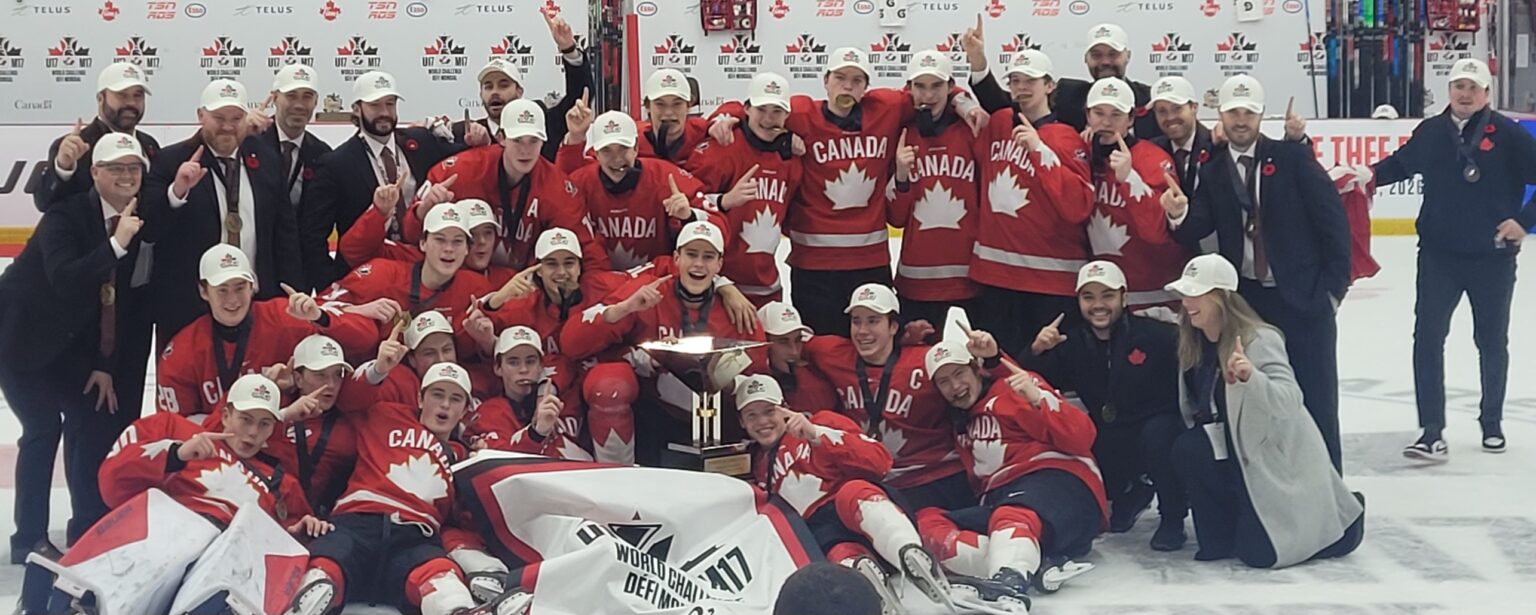
There is a distinct mid-August magic that blankets any Canadian rink when the premier under-18 talent in the world descends, and that feeling was evident in Edmonton, Alberta.
The Hlinka Gretzky Cup isn’t just the unofficial opening bell of the scouting calendar; it’s a high-stakes, pressure-cooker furnace where future NHL franchises are built, and where teenagers transform into blue-chip commodities right before our eyes.
This year’s edition provided a fascinating, multi-layered narrative. We saw a dominant, deeply structured Canadian squad put on an absolute clinic in the gold-medal game, executing a clinical 8-1 dismantling of their American rivals. But beyond the podium, the real value of this tournament lies in the individual evaluations.
From sub-six-foot defensive maestros to towering European physical forces, the ice in Edmonton was the premier location for high-end draft stock to showcase themselves.
Let’s dive deep into the notebook to break down at least one standout player from every single nation that competed in the tournament.
Team Canada: The Class of the Tournament
When you outscore your opponents 34-12 over a perfect 5-0 tournament run, your roster is naturally going to be littered with standouts. While the depth of this Canadian program was terrifyingly obvious, a few specific names completely stole the marquee.
Landon DuPont, D (2027 NHL Draft Eligible and in contention to become the 1st overall selection)
The Tape: 5-foot-11, 192 pounds | Michigan Wolverines (NCAA)
The Analysis: If there was any lingering doubt about DuPont’s status as a projected first-overall franchise pillar, he single-handedly erased it in Edmonton. Wearing the captain’s “C” with a quiet, mature confidence, DuPont anchored Canada’s blue line with a masterclass in modern transitional defense. He plays the game with an exceptionally high processing speed, rarely turning the puck over under heavy forechecking pressure. His performance in the gold-medal game, racking up four primary assists on the rush and from the blue line, showcased a flawless hockey IQ. He doesn’t just join the play; he commands it.
The Tape: Regina Pats (WHL) teammates playing as tournament underagers
The Analysis: It is difficult to separate the two, yet both stood out individually. It is almost unfair what these two did to older competition. Schultz exploded for 10 points (3 goals, 7 assists), while his partner-in-crime, Pue, led the entire tournament with six goals. Pue possesses a devastatingly quick release that he can uncork from almost any posture, allowing him to surpass Sidney Crosby’s Canadian U17 tournament goal-scoring record of 5 goals. Schultz, meanwhile, was a multi-situational monster, thriving on the power play, at five-on-five, and on the penalty kill. They carried themselves like 10-year pros.
Team USA: The Resilient Silver Medalists
The United States brought a highly competitive development group that rightfully earned its spot in the final, proving that their grassroots depth continues to rise even when navigating split summer rosters.
Gavin Burcar, C (2027 NHL Draft Eligible)
The Tape: 6-foot-1, 185 pounds | Spokane Chiefs (WHL)
The Analysis: Burcar was the undisputed engine of the American offense, finishing right behind the top Canadians with a spectacular nine points. He set the tone on day one with a ferocious hat trick against Czechia and never looked back. Burcar projects beautifully as a high-end NHL power center; he has a legit 40-goal upside because of how cleanly he protects the puck down low and the sheer heavy velocity of his shot.
Nash Roed, F (2028 NHL Draft Eligible)
The Tape: 5-foot-11, 187 pounds | USNTDP
The Analysis: When the lights were brightest in the tournament’s knockout stage, Roed delivered. His clutch, single-game hat trick in the 5-2 semifinal victory over Slovakia was a pure exhibition of hunting soft ice and executing under immense pressure.
Team Finland: The Bronze Finishers
Finland executed their classic, suffocating tactical system to precision, ultimately grinding their way to a hard-fought 3-2 bronze-medal win over tournament underdog Slovakia.
Luca Santala, RW/C (2027 NHL Draft Eligible)
The Tape: 6-foot-2, 190 pounds | London Knights (OHL)
The Analysis:Santala used this tournament as a perfect bridge before making his highly anticipated North American transition to the OHL. He is a pure, unadulterated sniper who leans heavily into a volume-shooting mentality. What impresses is his spatial awareness; Santala has an innate ability to let the play develop around him before drifting into dangerous mid-range shooting lanes to release a heavy, heavy wrist shot.
Team Slovakia: The Underdogs
Slovakia fell just short of the podium, but they played an incredibly entertaining brand of fast, transitional, highly skilled hockey.
Tomáš Selič, F (2027 NHL Draft Eligible)
The Tape: 6-foot-4, 198 pounds | Flint Firebirds (OHL)
The Analysis: Selič was an absolute joy to watch in the offensive zone. Finishing the tournament with eight points, he proved to be one of the most creative playmakers in Edmonton. He plays with an aggressive pace, using deceptive shoulder shakes to freeze defenders at the blue line before slipping precise passes through seams. He is a primary puck-transporter who elevates his linemates.
Team Switzerland: The High-Minute Workhorses
The Swiss team secured a highly respectable fifth-place finish with a somewhat surprising 5-1 win over Czechia, heavily anchored by their veteran junior leadership.
Jonah Neuenschwander, C (2027 NHL Draft Eligible)
The Tape: 6-foot-4, 185 pounds | Biel NLA (Switzerland)
The Analysis: Neuenschwander played heavy, demanding minutes against every country’s top defensive pairings and never faltered. Finishing with six points (3 goals, 3 assists), he demonstrated a complete two-way profile. He uses his long reach to disrupt plays in his own zone and possesses the vision to transition those turnovers into instant odd-man rushes. He looks completely ready to impact pro hockey back home this fall.
Team Czechia: The Physical Ground Game
While Czechia faced a tough placement round, their roster showcased an identity built on heavy, imposing physical traits.
Maxmilian Mares, C(2027 NHL Draft Eligible)
The Tape: 6-foot-6, 229 pounds | Rimouski Oceanic (QMJHL)
The Analysis: You simply cannot miss Mares when he steps onto the ice. He is an absolute mountain of a teenager who completely understands how to leverage his massive frame to protect the puck. Tallying three goals and three assists, Mares anchored the middle of the ice with a punishing power-forward game. If he can continue to refine his short-area foot speed in the QMJHL this season, NHL general managers will be lining up to draft his rare athletic profile.
The Analysis: If you want pure, unadulterated hockey fun from the blue line, Kachlíř is your guy. At 5-foot-8, he immediately faces the obvious size and structural strength questions that NHL scouts obsess over, and yes, there are shifts where he can get pinned down or outmuscled in his own zone, but he is rarely, if ever, outworked. But the second the puck lands on his stick? He transforms into a one-man breakout machine. Kachlíř possesses some of the most fluid, deceptive edge-work in this entire draft class, allowing him to dance away from heavy forecheckers and walk the blue line with total lateral freedom. He finished tied as one of Czechia’s most lethal offensive drivers, logging five points in four games, including a massive power-play one-timer that nearly blew the back of the net out against the Americans. His east-west passing lane vision is elite, and though he occasionally gets caught trying to pull off the extra move, his capacity to dictate the absolute tempo of an offensive possession is undeniable. Having been selected by the Edmonton Oil Kings in the CHL Import Draft, a full season adjusting his quick-strike game to North American ice will tell us exactly how high his draft ceiling can climb.
Team Sweden: The Undersized Innovators
Sweden’s tournament didn’t go quite as planned, finishing seventh with a 4-2 win over Germany, but their developmental pipeline remains incredibly intriguing.
Douglas Johnsson, D(2027 NHL Draft Eligible)
The Tape: 5-foot-10, 169 pounds | Skellefteå J20 (Sweden)
The Analysis: Johnsson is yet another example of the modern, undersized, highly intelligent puck-moving defenseman that Sweden is becoming famous for developing. He mitigates his lack of raw physical size with elite edge-work, an active defensive stick, and an incredibly fast outlet pass. He rarely absorbs direct physical contact because his lateral mobility allows him to dance away from oncoming forecheckers, making him a fascinating long-term project.
Team Germany: The Resilient Foundation
Germany found themselves outmatched on the scoreboard at times, but individual bright spots showed clear high-end development.
Max Calce, C
The Tape: 5-foot-11, 190 pounds | Brantford Bulldogs (OHL)
The Analysis: Calce was the heart and soul of the German squad. Playing a relentless, 200-foot style, he constantly forced turnovers through sheer work ethic and heavy backchecking. He didn’t get a ton of offensive support, but his ability to win defensive-zone faceoffs and clear the front of his net against massive opposing forwards showed immense character and a projectable pro floor.
Storyline: Turning a long rebuild into real NHL production
Anaheim’s rebuild has been one of the longest-running in the league, but also one of the most methodical. The Ducks have accumulated an impressive collection of young talent at nearly every position, particularly on defense and in the middle of the ice. What remains missing is high-end offensive finishing ability on the wing.
The organization generates enough young puck-moving talent to drive possession, but the next step in their evolution is converting that control into consistent scoring. That is where elite wingers become essential. Without them, progress remains theoretical rather than tangible.
The Ducks’ front office now faces a shift in philosophy. The question is no longer whether they are rebuilding, but how quickly they want to transition into competitiveness. Drafting for upside rather than safe depth may be necessary at this stage.
The broader storyline is conversion. Anaheim has spent years building the foundation. The draft now becomes about turning that foundation into a roster capable of producing results.
Calgary Flames
Primary Need: Franchise center
Secondary Need: Long-term offensive identity
Storyline: Searching for the player to define the next era
Calgary enters the draft at a crossroads. The organization has retooled its roster and accumulated respectable depth, but it still lacks the most important piece in hockey: a true franchise center.
Without that player, long-term contention becomes significantly more difficult. The Flames have enough complementary talent to remain competitive at times, but not enough elite offensive drivers to consistently dictate games.
The draft represents one of the most important opportunities in years to change that trajectory. The challenge is that franchise centers are rare, and drafting one often requires both luck and conviction.
The broader storyline is identity. Calgary is still searching for the player who will define its next competitive window.
Edmonton Oilers
Primary Need: Goaltending future stability
Secondary Need: Defensive prospect pipeline
Storyline: Winning now while quietly addressing long-term uncertainty
Edmonton is fully locked into its current championship window, led by two of the most dominant offensive players in the league. As a result, the organization’s priorities are heavily weighted toward the present.
However, even elite contenders must address long-term structural questions. Goaltending consistency and defensive depth remain the most persistent organizational concerns.
The Oilers’ draft strategy is therefore less about immediate impact and more about long-term insurance. Developing a future starter or reliable defensive contributor could help extend the window beyond the current core’s prime years.
The broader storyline is balance. Edmonton is built to win now, but the draft is where tomorrow is quietly shaped.
Los Angeles Kings
Primary Need: High-end offensive talent
Secondary Need: Game-breaking skill in transition
Storyline: Breaking through a competitive ceiling
The Kings have built a strong, structured team that consistently competes in the Western Conference. However, despite their defensive stability and depth, the organization continues to search for elite offensive game-breakers.
Without high-end skill capable of changing playoff series, the Kings risk remaining competitive without taking the next step into true contention.
The draft becomes a critical opportunity to add dynamic forwards who can elevate the team’s offensive ceiling. Los Angeles has depth, structure, and experience, but still lacks enough top-tier scoring talent.
The broader storyline is evolution. The Kings must decide whether to continue relying on structure or take more aggressive swings at offensive upside.
San Jose Sharks
Primary Need: Top-pair defenseman
Secondary Need: Defensive foundation building
Storyline: Completing the rebuild from the back end out
San Jose’s rebuild has been defined by patience and asset accumulation. The organization has already made significant strides in building out its forward pipeline, but the defensive side remains the final major piece of the puzzle.
A top-pair defenseman is essential for long-term balance. Without one, even strong forward depth can struggle to translate into sustained competitiveness.
The Sharks are now in the stage where drafting is about shaping structure, not just collecting talent. The emphasis shifts toward long-term roster construction and identity formation.
The broader storyline is completion. The Sharks are no longer starting their rebuild. They are finishing it.
Seattle Kraken
Primary Need: Elite offensive star
Secondary Need: Franchise-defining scorer
Storyline: Searching for a true identity driver
Seattle has built a balanced, competitive roster in a relatively short period of time. The organization is strong in depth, structure, and team play. What it still lacks is a true superstar.
Most successful NHL teams eventually rely on at least one elite offensive driver capable of dictating games and carrying playoff series. The Kraken are still searching for that player.
The draft is the most realistic path to acquiring that level of talent. Seattle has enough supporting pieces already in place to take a swing on high-end offensive upside.
The broader storyline is identity creation. The Kraken are competitive, but still defining what kind of team they ultimately want to be.
Vancouver Canucks
Primary Need: Center depth and long-term sustainability
Secondary Need: Prospect pipeline reinforcement
Storyline: Protecting a competitive window
Vancouver has worked hard to return to competitiveness after years of inconsistency. The current roster has shown it can compete, but sustaining that success requires continued investment in the prospect pipeline.
Center depth is particularly important. Without it, teams often struggle to maintain consistency over long NHL seasons and playoff pushes.
The Canucks must balance present expectations with future planning. Drafting well will determine whether this current competitive phase becomes a sustained window or a short-lived peak.
The broader storyline is sustainability. The Canucks are no longer rebuilding, but they must ensure they do not stall out after returning to relevance.
Vegas Golden Knights
Primary Need: Organizational depth replenishment
Secondary Need: Long-term prospect sustainability
Storyline: Can the model keep working indefinitely?
Vegas has built its identity on aggressive roster construction and constant pursuit of high-end NHL talent. That strategy has delivered immediate success, including a Stanley Cup, but it has also consistently reduced draft capital and prospect depth.
The organization does not have many glaring NHL roster weaknesses. The concern is more about what the system looks like three to five years from now.
Drafting for depth and sustainability becomes increasingly important, even for a contender. Maintaining a steady pipeline of contributors is essential to avoiding long-term stagnation.
The broader storyline is sustainability versus aggression. Vegas has mastered winning now, but the draft will determine how long that approach remains viable.
Primary Need: Elite offensive talent to complement the core
Secondary Need: Long-term top-six winger depth
Storyline: Building properly around a franchise cornerstone
Chicago’s rebuild is no longer theoretical. With a franchise center already in place, the Blackhawks are now in the phase every rebuilding team dreams about: building support around a true cornerstone player. That shifts the draft conversation away from “who might become a star someday” toward “who can help maximize the window of a generational talent.”
The organization still lacks enough high-end finishing talent on the wings. While there is promising depth in the system, there remains a gap between potential and elite offensive production. That gap becomes more noticeable when projecting playoff-caliber hockey, where scoring depth is essential.
Chicago’s front office must also decide how aggressive to be in accelerating the rebuild. There is temptation to supplement the roster through trades or free agency, but long-term sustainability still depends on internal development through the draft.
The broader storyline is alignment. The Blackhawks finally have a direction again, but success will depend on how effectively the rest of the roster is built around their central piece. This draft is less about discovery and more about optimization.
Storyline: Staying elite while the salary cap tightens
Colorado remains one of the NHL’s premier contenders, anchored by elite top-end talent and a proven championship core. However, sustained success brings a familiar challenge: cap pressure and thinning depth.
The Avalanche no longer draft from a position of need at the top of the roster. Instead, the focus has shifted toward maintaining a steady flow of affordable depth players who can step into NHL roles without disrupting the salary structure.
Defensive depth is also an organizational priority. While the top of the roster remains strong, the pipeline behind it requires continuous reinforcement to ensure long-term stability.
The front office dilemma is straightforward. Do they continue targeting safe, NHL-ready players or take higher-upside swings that may take longer to develop?
The larger storyline is sustainability. Colorado has already proven it can win at the highest level. The challenge now is ensuring the window remains open as long as possible.
Dallas Stars
Primary Need: Goaltending succession planning
Secondary Need: Defensive depth development
Storyline: Preparing for the eventual transition in net
Dallas has built one of the NHL’s most complete rosters, combining high-end offensive talent with strong defensive structure. The organization is firmly in win-now mode, but even contenders must plan ahead.
The most pressing long-term concern is goaltending succession. While the current roster remains competitive, the organization must eventually identify a future starter capable of maintaining that standard.
The Stars also need continued defensive depth development to support long playoff runs. Depth at all positions becomes increasingly important as postseason expectations grow.
The challenge for Dallas is timing. Drafting for the future while competing in the present requires disciplined roster planning.
The broader storyline is stability. The Stars are built to contend now, but the next great team is always being shaped in the draft.
Minnesota Wild
Primary Need: High-end center depth
Secondary Need: Right-shot defensive stability
Storyline: Breaking through the playoff ceiling
Minnesota has been a consistently competitive team, but the organization continues to search for the final pieces needed to become a true contender. Center depth remains the most important gap.
While the Wild have strong veteran leadership and defensive structure, the lack of elite center talent limits offensive ceiling in high-pressure playoff environments.
The organization also continues to seek right-shot defensemen who can complement its existing blue line structure.
The front office must decide whether to maintain a patient approach or become more aggressive in acquiring elite talent.
The broader storyline is progression. Minnesota is no longer rebuilding, but it has not fully broken into the league’s top tier either. The draft remains the most reliable path toward that next step.
Nashville Predators
Primary Need: Dynamic offensive skill
Secondary Need: High-end forward creativity
Storyline: Shifting identity toward skill and speed
Nashville has traditionally built its identity around structure, defense, and work ethic. While that approach has produced consistent competitiveness, it has not always translated into elite offensive production.
The organization is now in a phase where adding high-skill forwards is essential to modernizing its lineup. Without more dynamic offensive players, the team risks remaining competitive but limited.
The draft provides an opportunity to inject creativity and offensive upside into a system that has often prioritized safety over explosiveness.
The larger storyline is evolution. The Predators are attempting to adapt to a league that increasingly rewards speed and skill over structure alone.
St. Louis Blues
Primary Need: Top-pair defenseman
Secondary Need: Long-term defensive stability
Storyline: Rebuilding without fully resetting
The Blues find themselves in an interesting middle ground. The organization is not undergoing a full teardown, but it is clearly in a transition phase.
Defensive structure remains a key concern. A top-pair defenseman would provide long-term stability and help anchor the next competitive iteration of the roster.
St. Louis must also balance competitiveness with development. The challenge is avoiding the pitfalls of remaining “in between” contending and rebuilding for too long.
The broader storyline is direction. The Blues are reshaping their identity while attempting to remain relevant in the standings.
Utah Mammoth
Primary Need: Franchise offensive talent
Secondary Need: Identity-defining skill player
Storyline: Establishing a new hockey identity
Utah is still in the early stages of defining its long-term organizational identity. Expansion-era teams often face the challenge of turning depth into star power, and that is where the Mammoth currently stand.
While the roster contains promising young pieces, the organization still lacks a clear offensive centerpiece capable of defining the franchise’s direction.
The draft is critical in shaping not just the roster, but the identity of the team moving forward. A true high-end forward could accelerate that process significantly.
The broader storyline is establishment. Utah is not refining an identity yet. It is still building one.
Winnipeg Jets
Primary Need: Top-six center
Secondary Need: Forward depth sustainability
Storyline: Maximizing a shrinking window
Winnipeg has remained competitive through strong drafting, development, and elite goaltending at times. However, maintaining that level of success requires continuous reinforcement at key positions.
Center depth remains the most important long-term need. Without it, sustaining offensive consistency becomes difficult over the course of a long season.
The Jets face a familiar small-market challenge: maximizing current competitiveness while ensuring the pipeline does not thin out over time.
The broader storyline is urgency. Windows in the NHL are rarely permanent, and Winnipeg must ensure it continues to refresh its roster with impactful young talent.
Storyline: Can structure alone win in the playoffs?
The Hurricanes have built one of the NHL’s most analytically sound and structurally dominant teams. Year after year, they generate shot volume, control possession, and remain among the league’s most consistent regular-season teams. Yet the same question returns in every playoff cycle: where is the elite finisher?
Carolina’s system creates chances in waves, but the organization continues to lack a true game-breaking scorer capable of consistently converting high-danger opportunities in the postseason. The draft represents one of the few cost-controlled ways to add that level of talent.
The prospect pool is strong but leans toward high-floor, two-way players rather than elite offensive drivers. That creates a philosophical tension for management: continue drafting for system fit or take swings on high-upside scoring talent even if it does not perfectly align with the Hurricanes’ identity.
The broader storyline is whether Carolina’s model has a ceiling. Few teams are as consistent in the regular season, but playoff hockey often rewards star power over structure. This draft is another opportunity to close that gap.
Columbus Blue Jackets
Primary Need: Top-pair defenseman
Secondary Need: Goaltending stability
Storyline: Turning raw talent into a coherent identity
Columbus has quietly accumulated a strong collection of young forwards, but the organizational structure remains incomplete. Defensive depth and goaltending consistency continue to lag behind the forward pipeline.
The Blue Jackets need a true top-pair defenseman capable of handling heavy minutes against elite competition. Without that anchor, the team struggles to transition from promising offensive performances to consistent results.
The front office dilemma is whether to continue prioritizing skill or shift toward defensive structure. Columbus has often leaned toward drafting upside, but long-term competitiveness may require more balance.
The broader question is identity. The Blue Jackets have spent years oscillating between rebuild and contention without fully establishing a foundation. This draft represents another opportunity to correct that imbalance.
New Jersey Devils
Primary Need: Defensive depth and shutdown capability
Secondary Need: Goaltending consistency
Storyline: Balancing firepower with structure
The Devils have built one of the most dynamic young offensive cores in the NHL. Their speed, skill, and transition game make them a constant threat offensively. However, defensive inconsistency and goaltending uncertainty continue to limit their ceiling.
The organization does not need more scoring talent. It needs balance. Specifically, defensive players capable of handling difficult minutes against elite competition.
The draft provides an opportunity to address those structural weaknesses without sacrificing long-term offensive strength.
The central question is whether New Jersey can evolve from an exciting young team into a complete contender. That evolution almost always requires difficult roster balancing decisions.
New York Islanders
Primary Need: Offensive skill and transition ability
Secondary Need: Younger forward core injection
Storyline: Modernizing a traditional identity
The Islanders have long been defined by structure, defensive discipline, and goaltending. While that approach has delivered playoff appearances, it has also limited offensive upside.
The organization now faces pressure to modernize its roster composition. Adding high-skill forwards is essential to avoid stagnation in a rapidly evolving league.
The challenge is philosophical. The Islanders’ identity has been built on low-event hockey, but long-term success may require more creativity and offensive risk-taking.
This draft represents an opportunity to begin shifting that balance.
New York Rangers
Primary Need: Center depth and future top-six stability
The Rangers remain in a strong position to start a retool on the fly, but they must also prepare for eventual roster turnover. Center depth is particularly important given the demands of long playoff runs.
The organization’s prospect pipeline contains intriguing talent but lacks certainty in key middle positions. The draft provides a chance to address that gap while maintaining competitive balance. A focus on Centers will be their best use of the two first round picks.
Philadelphia Flyers
Primary Need: Franchise center
Secondary Need: High-end offensive upside
Storyline: The missing piece of the rebuild
Philadelphia’s rebuild has produced a solid foundation of young players, but the organization still lacks the most important piece in hockey: a true first-line center.
Without that cornerstone, long-term contention remains difficult. The Flyers have multiple complementary pieces, but the draft remains their best path toward acquiring elite talent down the middle.
The challenge is patience versus urgency. Franchise centers are rarely available outside the draft, making each selection at the top of the board critical.
Pittsburgh Penguins
Primary Need: Organizational reset across all positions
Secondary Need: Future core identification
Storyline: Life after a generational era
The Penguins are transitioning out of one of the most successful eras in modern NHL history. As their core ages, the organization must begin identifying the next generation of foundational players.
This draft is less about immediate impact and more about long-term direction. Pittsburgh’s prospect pool must be rebuilt with an eye toward sustainability rather than short-term fixes.
The central question is how aggressively the organization commits to that transition.
Washington Capitals
Primary Need: Top-pair defenseman
Secondary Need: Long-term structural balance
Storyline: Building beyond a legendary era
Washington has already secured its place in NHL history, but now faces the challenge of building its next identity. With aging core pieces, the focus shifts toward long-term roster balance.
A top-pair defenseman would help anchor the next competitive phase of the organization.
The broader question is whether Washington can successfully transition from one era to the next without entering a prolonged rebuild.
Secondary Need: High-end offensive skill and scoring upside
Storyline: Finding the next franchise cornerstone
For nearly two decades, the Bruins enjoyed a luxury that many NHL organizations spend generations searching for: elite talent down the middle. That stability helped define the club’s identity and fueled one of the league’s most successful runs. Today, Boston faces a challenge that every contender eventually encounters. The organization must begin identifying the players who will lead the next era.
The Bruins still possess enough veteran talent to remain competitive, but the long-term outlook remains uncertain at center. Franchise pivots are difficult to acquire through trades or free agency, making the draft the most realistic path toward finding a future top-line player. Boston’s prospect pool contains useful pieces, particularly on defense, but lacks the type of elite offensive prospect capable of becoming a franchise cornerstone.
The front office faces an interesting dilemma. Does management continue prioritizing players who fit the Bruins’ traditional identity of responsibility and structure, or does it pursue more dynamic offensive talent with higher ceilings and greater risk?
The larger question extends beyond the draft itself. The Bruins have spent years avoiding a full rebuild while remaining competitive. At some point, however, every organization must transition from one core to the next. This draft presents an opportunity to take a meaningful step toward that future. Whether Boston can identify a player capable of eventually leading the franchise will be one of the organization’s most important long-term objectives.
Buffalo Sabres
Primary Need: Two-way center
Secondary Need: Defensive reliability and leadership traits
Storyline: Turning potential into results
Few organizations have accumulated as much young talent as the Sabres over the past decade. Through high draft selections and patient rebuilding efforts, Buffalo has assembled a roster that appears capable of competing on paper. Yet despite years of prospect accumulation, the organization continues searching for the consistency necessary to become a legitimate playoff team.
The Sabres possess offensive talent throughout the lineup and have developed several exciting young players. Their greatest organizational need is no longer simply adding skill. Instead, the focus shifts toward identifying players who can strengthen the team’s overall structure and help establish a more complete identity.
A responsible two-way center could address several organizational concerns simultaneously. Such a player would provide support in all three zones, ease defensive pressure on younger forwards, and contribute to the type of winning culture Buffalo has struggled to establish.
The front office faces a difficult balancing act. Drafting for organizational need can be tempting, but Buffalo must also remain committed to selecting the best available talent whenever possible. The challenge lies in finding players who satisfy both objectives.
The larger storyline surrounding the Sabres remains unchanged. At what point does potential translate into meaningful results? The organization has accumulated enough talent to generate optimism. The next phase of the rebuild depends on adding players capable of helping transform that promise into sustained success.
Detroit Red Wings
Primary Need: Elite offensive talent
Secondary Need: Additional scoring depth and power-play weapons
Storyline: Has the rebuild produced enough stars?
The Red Wings have spent years rebuilding through patient drafting and prospect development. As a result, Detroit now possesses one of the league’s deepest organizational pipelines. The question facing the franchise is no longer whether it has enough prospects. The question is whether it has enough elite prospects.
Depth remains one of Detroit’s greatest strengths. The organization has accumulated quality players at nearly every position and appears well-positioned for long-term success. What remains uncertain is whether the roster contains enough game-breaking talent to compete with the NHL’s elite teams once championship expectations arrive.
The draft presents an opportunity to target high-ceiling offensive players capable of becoming top-line contributors. Such prospects often carry greater developmental risk, but they also possess the type of upside that can change the trajectory of a franchise.
Detroit’s prospect pool already contains several promising young players, allowing management the flexibility to take a more aggressive approach. Rather than simply adding depth, the organization may be better served by pursuing players with star potential.
The broader storyline revolves around the next stage of the rebuild. The Red Wings have successfully rebuilt the foundation of the organization. Now they must determine whether that foundation is strong enough to support a future contender. Drafting another impact offensive player could help answer that question and move Detroit one step closer to becoming a perennial threat in the Eastern Conference.
Florida Panthers
Primary Need: Defensive prospects
Secondary Need: Organizational depth throughout the system
Storyline: Replenishing the pipeline without sacrificing contention
Few organizations have embraced an aggressive win-now philosophy as successfully as the Panthers. Years of bold acquisitions and strategic roster management have transformed Florida into one of the NHL’s premier contenders. The cost of that success, however, has been a prospect system that requires replenishment.
The Panthers are fortunate in that they do not enter the draft with glaring NHL roster holes. Instead, their focus can remain firmly on the future. Building depth on the blue line should be a priority, particularly as defensemen often require longer development timelines than forwards.
Florida’s prospect pipeline still contains promising pieces, but continued success requires a steady influx of talent. Championship windows rarely remain open forever, making it essential to identify future contributors before they become immediate necessities.
The front office faces an interesting challenge. How aggressively should a contender invest in long-term development when the current roster remains capable of competing for championships? Striking that balance is one of the most difficult tasks in professional sports.
The larger storyline involves sustainability. Many teams can contend for a few seasons. Far fewer can remain among the league’s elite for an extended period. The Panthers have established themselves as a championship-caliber organization. This draft provides another opportunity to ensure that success continues long after the current core begins to age.
Montreal Canadiens
Primary Need: Top-six scoring talent
Secondary Need: Right-shot defensive depth
Storyline: When does a rebuild become a contender?
The Canadiens have spent four years accumulating assets, stockpiling prospects, and patiently constructing one of the NHL’s deepest development systems. That work has produced impressive results. The organization’s system now boasts promising young players at center, on defense, and in goal. For the first time in years, Montreal enters the draft from a position of strength rather than necessity.
That shift changes the conversation considerably. The Canadiens no longer need to draft every position equally. Instead, they can focus on specific areas that could help elevate the roster from playoff hopeful to legitimate contender.
A dynamic scoring forward would provide additional offensive firepower for an emerging young core. On defense, right-shot blueliners remain among hockey’s most valuable assets and represent an area where organizational depth could still improve.
The front office also faces perhaps the most intriguing dilemma in the division. At what point should draft capital be converted into NHL talent? Montreal possesses enough prospects and future assets to pursue significant roster upgrades if management believes the competitive window is opening sooner than expected.
The broader storyline centers on timing. Rebuilds are often measured by the accumulation of talent. Contenders are measured by their willingness to take calculated risks. The Canadiens appear to be approaching the point where those two realities intersect. This draft could provide important clues regarding how management views the next phase of the organization’s evolution.
Ottawa Senators
Primary Need: Right-shot defenseman
Secondary Need: Organizational depth on the blue line
Storyline: Strengthening the foundation
The Senators spent years assembling a talented young core through the draft. Unlike many rebuilding organizations, Ottawa’s primary objective is no longer identifying cornerstone players. That work has largely been completed. The focus now shifts toward surrounding those players with the support necessary to sustain long-term success.
A right-shot defenseman represents one of the organization’s clearest needs. Such players remain difficult to acquire and highly valued throughout the NHL. Developing one internally would provide Ottawa with both stability and flexibility moving forward.
The Senators’ prospect system still contains several intriguing pieces, but the organization has reached a stage where drafting for fit becomes more realistic than drafting purely for volume. Management can now focus on identifying players whose skill sets complement the existing roster.
The larger question facing Ottawa involves turning potential into consistency. The franchise has spent years discussing future success. Expectations are beginning to shift toward actual results. Every draft pick must now be viewed through the lens of helping support a competitive NHL roster rather than simply extending a rebuild.
This draft may not define Ottawa’s future, but it can help strengthen the foundation that has already been built. The Senators appear closer to contention than they have in years. Adding the right supporting pieces could accelerate that process.
Tampa Bay Lightning
Primary Need: NHL-ready forwards
Secondary Need: Center depth and cost-controlled contributors
Storyline: Extending the championship window
The Lightning have spent more than a decade operating as one of the NHL’s model organizations. Consistent success, however, creates unique challenges. Years of deep playoff runs, trades, and aggressive roster management have reduced the number of premium draft opportunities available to the organization.
As a result, Tampa Bay’s greatest need is not necessarily star power. The Lightning need affordable players capable of contributing meaningful NHL minutes while still on entry-level contracts. Those players become increasingly valuable as more salary-cap space is devoted to established stars.
The organization’s prospect pool remains respectable, but maintaining long-term success requires a constant flow of contributors. Tampa Bay’s drafting record suggests management understands this reality as well as any franchise in the league.
The front office dilemma is straightforward. Continue drafting high-floor players who can support the current roster, or pursue higher-upside prospects who may contribute later but offer greater long-term rewards.
The broader storyline involves sustainability. Championship windows eventually close for every franchise. The Lightning have spent years finding ways to keep theirs open. This draft provides another opportunity to identify players capable of helping extend one of the NHL’s most impressive modern runs.
Toronto Maple Leafs
Primary Need: NHL-ready forwards and a future top-four defenseman
Secondary Need: Organizational depth and salary-cap flexibility
Storyline: Can Toronto finally build a supporting cast from within?
Few organizations face greater pressure to maximize every draft selection than the Maple Leafs. Toronto’s commitment to a star-driven roster construction has created one of the NHL’s most talented cores, but it has also increased the importance of developing inexpensive contributors internally.
The Leafs require NHL-ready forwards capable of filling supporting roles while remaining affordable under the salary cap. At the same time, the organization continues searching for a homegrown defenseman capable of playing significant top-four minutes. Developing such a player internally would reduce the need for costly acquisitions and provide long-term roster stability.
Toronto’s prospect pipeline has improved in recent years but remains thinner than many competing organizations due to years of aggressive win-now moves. Every draft selection therefore carries added significance.
The front office must decide whether to prioritize immediate contributors or prospects with higher ceilings who may require additional development time. Both approaches carry merit, particularly for a team attempting to balance present contention with future sustainability.
The larger storyline extends beyond any individual prospect. The Leafs have consistently demonstrated a willingness to sacrifice future assets in pursuit of immediate success. Eventually, however, contenders must replenish their pipelines. This draft offers Toronto an opportunity to strengthen the organizational depth necessary to support its core and sustain success over the long term.
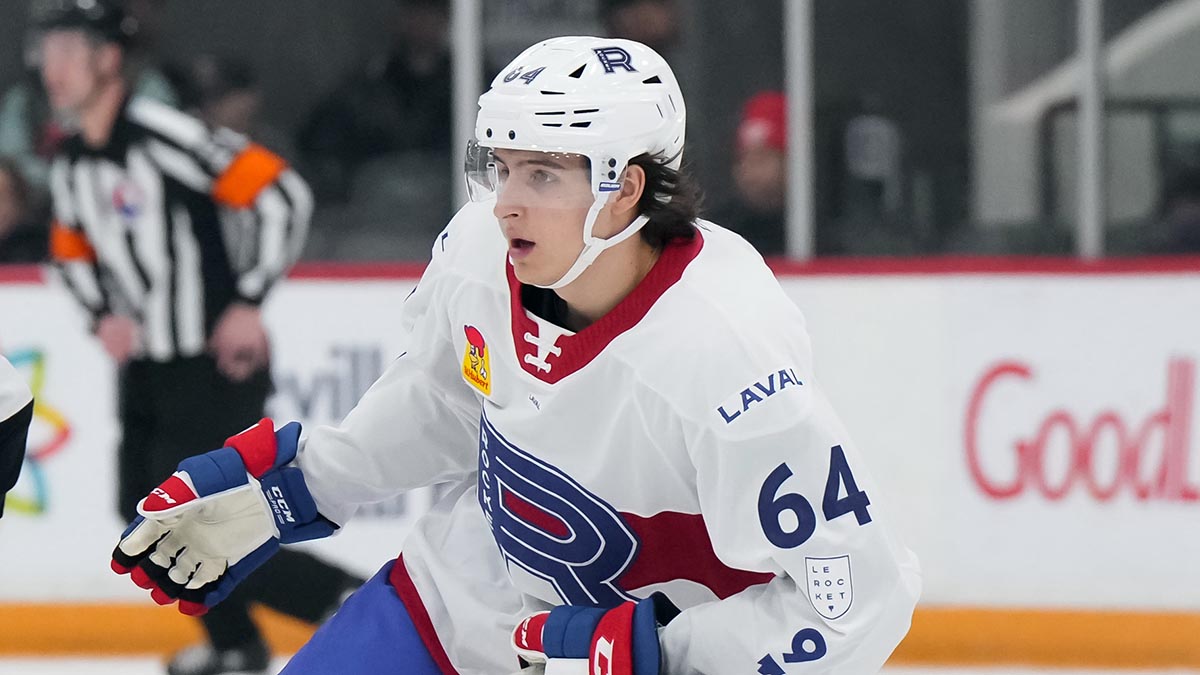
The Montreal Canadiens have another high-quality prospect down on the farm, right-handed defenceman David Reinbacher. Now, his selection in Nashville at the 2023 NHL Entry Draft was controversial among the Canadiens fanbase, as many were hoping to add the Russian offensive winger Matvei Michkov. However, with the arrival of Ivan Demidov, it seems that the gamble paid off for team management as they now also await someone who is seen as a defenseman who can be a number-two in the NHL alongside Lane Hutson.
Part of the problem is that he doesn’t play a flashy style, which limits any fanfare he would otherwise get. His style is highly effective. He plays with a defence-first approach, mobility and ability to launch transitional plays means he will be an impact player that coaches will love. At 21 years old, the 6-foot-3, 207-pound right-shot defenseman maintains a rare profile.
Photo: Jana Chytilova/Freestyle Photography
In 2025-2026 with the Laval Rocket, he has 10 points in 19 games, plus-3, and 8 penalty minutes. Last season, he had 5 points in 10 games with Laval, showing progression in his offensive play. The problem with Reinbacher is that he has missed time, and that slows his curve. Yet, since the recall of Adam Engstrom by the Canadiens, the Rocket have leaned heavily on the Austrian-born defender, and he is responding by playing his best hockey since arriving in North America. Now that he is the go-to defender in Laval, he is playing heavy minutes in all situations, regularly topping 25 mins per game.
Defensively, Reinbacher excels. His defensive reads on the rotation and switches inside his own zone within the team’s defensive scheme are still a work in progress, which will become far more effective the more games he can play at the AHL level before his jump to the NHL. But these things can come with time and the sort of structure that he’s likely to find himself in at the NHL level
He maintains a tight gap, matching his opponent’s footwork and staying inside their reach. He identifies opportunities to attack the opponent and then drives through their hands or uses a strong defensive stick to strip them of the puck. Physically, he uses his footwork to guide them to the outside ,where he can then seal them off along the boards.
Once he gains possession of the puck, he quickly transitions from defence to offence.
At the net-front, he easily boxes out opponents and wins rebounds and loose pucks with urgency and physicality
Offensively, his game isn’t as polished as his defensive game, but he does have quite a lot of untapped potential. The expectation is not for him to become a dominant offensive defenseman in the NHL; instead, the expectation is that he will be a stabilizing force that complements an offensive defenceman while also providing 40-plus point offensive defenceman well while also providing 40 plus point seasons regularly.
Reinbacher is already a capable puck-mover. His first step and smooth edgework all him to explode past any forecheckers. He can make a quick and accurate first pass or activate the rush if he sees a lane open up.
He is still a more straightforward north-south attacker and will need to add more east-west movements in his game to become more deceptive, as well as gain more experience in identifying when pressure is being applied on him as the puck carrier, for him to become a more effective player at the NHL level.
Reinbacher is finally on the right track to becoming the steady 2-way defender that the Habs expected when they drafted him 5th overall in 2023? After starting the past two seasons with an injury, he has never been able to keep good momentum with his progression. This is why he has not been able to get to the level expected of him yet. Nonetheless, it is looking like it is all falling together slowly.
Mental toughness has been on display since his time at the 2023 World Junior Championships in his draft year. There, he played the entire tournament while suffering from an illness that forced him to take fluids and rest between games. Since then, he has suffered multiple injuries that have forced him to miss significant time. His steady and positive approach has been the key to his ability to navigate the pressures of those issues, as well as being a top-five pick. The organization can afford to be patient, ensuring he is given the time to be fully prepared before making a permanent jump to the NHL.
The USHL has become a major source of NHL talent: the league continues to produce dozens of Draft-eligible players every year and remains the top junior league in the U.S.A. for players who often then go on to the NCAA. The USHL has consistently produced a large group of NHL draftees annually. It is more than just depth picks as the USHL has 18 first-round picks from the 2024 and 2025 draft classes alone.
For Montreal, drafting from the USHL represents a pathway toward adding skilled players who may need more time to develop before making the leap to the professional ranks. Historically, until this past year, USHL graduates were taking the NCAA path. Now that the NCAA is accepting players from the CHL, this may affect some decisions in the future. Over the years, several Canadiens picks have come from USHL clubs; some have gone on to become important NHL players, others remain in the prospect pool. Below are some key examples and how they influenced (or may influence) the Canadiens.
USHL franchises are known for strong coaching standards, nutrition and conditioning programs, and the use of video systems. Montreal has publicly emphasized character, maturity, and professionalism, and USHL development programs have a history of development that fits their desired cultural blueprint.
Notable Past USHL Players
Cayden Primeau
Montreal’s 2019 199th overall selection, Primeau, had an award-filled NCAA career, but there is an argument that he was rushed to the pro ranks too quickly. Better to be overripe than underdeveloped.
Louis Leblanc
Leblanc has become a cautionary tale when it comes to development and media pressure. He was the symbolic “hometown pick”. Drafted in Montreal at the 2009 draft, which coincided with the franchise’s centennial. He was selected partly because Montreal felt significant pressure to draft a francophone first-rounder. This decision became a lesson in avoiding political or emotional influence in drafting, reinforcing the need to prioritize best-player-available over market expectations.
His tenure became a developmental system cautionary tale. His rushed, inconsistent development path with limited stability (playing in five different leagues within four seasons) highlighted flaws in Montreal’s development model at that time. The organization later acknowledged this internally, leading to changes in how they handle young prospects (more individualized plans, better patience, clearer development roles).
Jeff Petry
While Petry was not drafted by the Canadiens, the USHL alumnus had a massive impact over his eight seasons in Montréal. Once acquired from the Edmonton Oilers, Petry became the backbone of the Canadiens’ blue line, frequently leading all team defenders in points, with multiple 40-point seasons while playing heavy minutes.
Son nom est Jeffrey Petry et il a 10 buts en 25 matchs.
His presence gave the Canadiens a reliable puck-moving, two-way defender capable of contributing offensively and stabilizing the power play. Petry helped the Canadiens reach their first Stanley Cup Final in over 30 years in 2021. His eventual trade (to Pittsburgh in 2023) also solidified the transition for Montreal to be committed to a full rebuild.
Max Pacioretty
Pacioretty was selected 22nd overall in 2007 by Montreal. He is perhaps the most impactful USHL alumnus to ever be drafted by the Canadiens, so far. Pacioretty was a north-south skater who had a powerful stride. The 2007 USHL Rookie of the Year relied on his outside speed and quick release to score regularly in the NHL. He was the Canadiens’ most consistent offensive weapon from 2011–2018, posting multiple 30-goal seasons and finishing among the NHL’s top even-strength scorers during that stretch.
Despite his size (6’2’’ 215lbs), he was not a classic power forward. Instead, Pacioretty defined the modern power winger in Montreal: fast, heavy, goal-driven, and dangerous off the rush. His success influenced the type of forwards the Canadiens have targeted after him, scoring wingers with size, pace, and shooting talent. Pacioretty finished his Montreal tenure with 226 goals, placing him among the franchise’s top goal scorers of the post-1970s dynasty era. Despite the polarized discourse around him during difficult team stretches, his on-ice production and the long-term value of the trade (to Vegas for current captain Nick Suzuki) give him a legacy that remains both significant and positive.
Current Canadiens USHL Alumnus
Montreal’s roster would look vastly different without the USHL graduates that currently wear La Sainte Flannelle. Each plays an important role in the current rebuild and possible future success of the organization.
Mike Matheson
Matheson is the team’s “elder statesman” at only 31 years of age. He provides top-pair minutes, elite transitional skating, and veteran stability to a blue line that is still dominated by young and still developing defenders. His ability to drive offence, play heavy minutes in all situations, and mentor players like Lane Hutson, Kaiden Guhle, and, in the future, David Reinbacher, makes him both a competitive cornerstone in the short term and a developmental anchor for the franchise’s future.
Lane Hutson
Lane Hutson, drafted 62nd overall in 2022, is currently a foundational, game-changing offensive defenseman for the Montreal Canadiens, a role expected to grow as he becomes the quarterback of the power play and an offensive “engine” at five on five.
In his rookie season he tied the NHL single-season record for assists by a rookie defenseman with 60 and set a Canadiens franchise record for points by a rookie defenseman with 66, surpassing the previous mark held by Chris Chelios which led to him winning the 2024-25 Calder Trophy as the NHL’s top rookie ahead of players like Matvei Michkov, Dustin Wolf and forward Macklin Celebrini for that honor. Hutson is viewed as the Canadiens’ top offensive defenseman of the future
Jakub Dobes
The former Omaha Lancers goaltender, Jakub Dobes, was selected 136th overall (5th round) in 2020. Currently, the Canadiens rely upon his play to remain competitive and in the hunt for their second consecutive playoff berth. He is still young (24) and retains the potential to become a long-term starting goaltender. His athleticism, size (6’4’’) and highly competitive nature have allowed him to challenge Samuel Montembeault for the number one job.
Cole Caufield
Cole Caufield is a cornerstone, elite goalscorer for the Montreal Canadiens, serving as a primary offensive “engine” for the team’s present success and future competitiveness. His roots trace back to the USA Hockey National Team Development Program (NTDP) in the USHL, where he set NTDP goal-scoring records for single season (72) and career (126) goals. Previous record holders were Auston Matthews (55) and Phil Kessel (104), respectively.
He is projected to be a consistent 40-plus goal scorer, a milestone the Canadiens have not seen since Vincent Damphousse scored exactly 40 goals in the 1993-94 season. That makes him a central piece of the Canadiens’ rebuild; he is signed to a team-friendly, long-term contract extension. His line with Suzuki and Juraj Slafkovsky has become one of the most entertaining and offensive lines in the NHL.
Current Canadiens’ USHL Prospects
Sam Harris
133rd overall, 2023 NHL Entry Draft. Since being drafted, he committed to the University of Denver Pioneers (NCAA). At Denver, he’s already shown promise, winning a national title and becoming one of the team’s top offensive threats. He could become a middle-six forward option for Montreal in the future.
Michael Hage
Hage is another example of the Canadiens betting on U.S. juniors, even though he is from Canada and grew up as a fan of the Canadiens. He spent two seasons with the USHL’s Chicago Steel before being selected 21st overall in the 2024 NHL Draft by Montréal before joining the University of Michigan. Last season, he scored 34 points in 33 games, earning Big 10 Rookie of the Year honours, and this year he is on pace to more than double his offensive output.
Jacob Fowler
Drafted in the third round, 69th overall in 2023. He played two seasons in the USHL, where he was named the USHL Goaltender of the Year and won the Clark Cup championship in 2023. He went on to play two seasons with Boston College. He currently plays for the Laval Rocket in the American Hockey League (AHL) and is considered the netminder of the future for the franchise.
Sean Farrell
The undersized forward was selected by Montreal with 124th overall (4th round) in the 2020 draft. Farrell is an adept passer and a highly mobile and elusive skater. Following his draft year, he continued in the USHL, winning the 2021 USHL Player of the Year. He continues to develop in the AHL.
Luke Tuch
Luke Tuch was selected 47th overall by the Montreal Canadiens in the 2020 NHL Draft, valued for his size, physicality, and north–south power-forward game. His projection remains that of a bottom-six NHL winger who can provide forechecking pressure, defensive reliability, and complementary scoring.
LJ Mooney
L.J. Mooney was drafted 113th overall (4th round) by Montreal in 2025. He projects as a high-skill, high-tempo playmaker. He is a dynamic, creative forward who could develop into a top-six offensive option if he can overcome his smaller stature, something the Canadiens have had success in developing in past prospects.
He was drafted 197th overall (7th round) in 2023 by Montreal. He is a mobile puck-moving defender who thrives in creating offence in transitional play. He projects to be a depth defenceman if he can refine his defensive play and add strength.
Emmett Croteau
He was drafted 162nd overall in the sixth round in 2022. He is, at best, a long-term, developmental goaltending project. He is a big, athletic netminder who has shown upside (good mobility, size, and occasional strong performances).
The USHL Strategy
For the Canadiens, drafting from the USHL seems to have been a deliberate part of their strategy to add skilled players who required more time to mature physically or to solidify their skill sets. This also allowed the franchise to retain player rights for four years, instead of the two years for CHL players, allowing them to stagger signing prospects and to manage the 50-player contract limits the NHL imposes. The high level of skill and competition in the USHL means that there were no additional concerns about prospect development or skill levels compared to other junior leagues
The USHL has emerged as a meaningful and occasionally fruitful pipeline for the Montreal Canadiens. From former captain and top goal-scorer Max Pacioretty to promising recent picks like Jacob Fowler and Michael Hage, USHL players will continue to make significant contributions to the franchise. As Montréal continues its rebuild and seeks young, dynamic talent, its USHL connections may pay off, but only if those prospects are given time, proper development, and realistic expectations.
The QMJHL fell on some lean years at the NHL Entry Draft as they went without seeing even one player from the league be selected in the first round in 2023 or 2024. The drought came to an end in 2025 when three QMJHL players were selected in the first round and 19 in total were selected, which was an increase from 12 in 2023 and 15 in 2024.
The 2026 class looks to be stronger than the 2025 class, which could indicate the discussions to overhaul the development systems in Quebec should slow down. Here is a list of five QMJHL players who are challenging to become first-round picks in 2026.
Xavier Villeneuve – Left Defence – Blainville-Boisbriand Armada
Based purely on his offensive skill, Villeneuve is a top-10 pick. This season, he is on pace for more than 80 points and has been the source of most of the offence for the Armada. He oozes confidence when carrying the puck, and he has excellent offensive hockey IQ, anticipating plays and openings before they happen, even forcing player movements that open up those opportunities that he then exploits.
“Xavier is an electrifying offensive-minded defenseman with great agility and dazzling puck-handling abilities up the rush, showing significant potential for the 2026 NHL draft as a 1st round pick.” – Tyler Ballesteros-Willard
He is a smooth skater with good edgework and mobility, using quick punch turns and change-ups in speed to create space. But his risk-taking does come at a cost defensively. Villeneuve is much smaller than you’d want from a top defenseman.
Standing at 5’11’’ and 157 pounds, his size and strength deficiencies will be an issue, as they can limit his effectiveness defensively. He can’t rely on strength to win physical battles in the corners or in front of the net; instead, he will need to use body positioning and quick reactions to win leverage in any battle. He will be a bit of a project for teams, but the Lane Hutsons and Quinn Hughes’ of the world show how even smaller offensive defencemen can transform a team’s offensive potential.
Egor Shilov – Centre, Victoriaville Tigres
Shilov is a skilled 200-foot center who has a high hockey IQ and can be used in any situation. He’s also quick and aggressive, but lacks consistency from game to game as at times he can be slow to react defensively or to take advantage offensively of a misstep by his opponent. When he is on his game, his defensive play is impressive. He can be difficult to handle along the boards, but also in open ice, where he can adeptly funnel opponents to the outside before cutting them off along the boards or allowing his defencemen to do the job. He is also active low in his own zone, helping to provide support for his defenders, and providing a target to help launch the transition game with a controlled zone exit.
Offensively, after 27 games in the 2025-26 season, Shilov sits second in team goals (14) and tied for first in total points (35) with Victoriaville, putting him on an 80+ point pace on the season. He uses his frame effectively in the offensive zone as well, where he excels in the cycle game, winning board battles before creating offensive opportunities for his linemates.
He is a pass-first player, with a preference to make centring plays from below the goal line, but he does possess a heavy and accurate shot, especially off the rush. His game translates well to the professional levels, and his faceoff abilities and defensive game will be his ticket to breaking through to the top 32.
Olivers Murnieks – Centre – Saint John Sea Dogs
Murnieks has been Latvia’s top player on the international stage and is a lock for the Under-20 World Junior Championship team in 2026. He already plays a pro-style game, keeping it simple with a north-south style, which allows him to backcheck effectively and engage physically. His defensive positioning in his own zone is consistently excellent, and he uses his 6’1’’ 190-pound frame to break up the cycle with well-timed pinches. He has a strong hockey IQ, allowing him to anticipate developing plays and react accordingly.
He is relied upon for important faceoffs and can be trusted to play in any situation. His skating form does look inefficient, but with some refinement, it could become a strength. In the meantime, his edgework and mobility issues are made up for with good straight-line speed. Offensively, he is a threat in the slot, using his size to battle into the high danger areas. He boasts above-average playmaking skills as he can place accurate passes through traffic and has a good release with his shot in close. Murnieks translatable two-way game and ability to engage in all three zones points to a ceiling of a two-way, penalty killing third-line centre.
Oleg Kulebyakin – Right Wing -Halifax Mooseheads
This player has forced his way into this conversation. He was not seen as a top prospect at the start of the season with a W rating from NHL Central Scouting as a potential 6th/7th-round pick, but has since forced his way into the conversation in the top two rounds. Drafted ninth overall by Halifax in the CHL import draft, Kulebyakin was well-travelled in 2024-25 playing for five teams across five leagues. Yet he consistently remained a scoring threat, scoring 47 goals in 55 games played between those five teams. This season, the trend continues as he has 17 goals in the first 25 games played with the Mooseheads, leading the team in goals (is eighth in the QMJHL) and leading in total points (31).
Offensively, the Russian winger shines. He plays at a high pace, using that to his advantage, cutting time and space from defenders, causing them to rush plays. He excels at generating small-area plays. Once he has the puck on his stick, while he does have excellent puck handling and one-on-one skills, he prefers to keep to the simple plays, using speed to get past defenders and using give-and-go passes before letting loose a hard and accurate shot with a quick and deceptive release. He also has the confidence and skills to hold possession for that extra second to draw out defenders from their established defensive positions, opening up new lanes that he can exploit with a quick pass or use as a shooting lane. He is also adept at finding gaps in high danger zones and is unafraid of battling through coverage to get to scoring areas.
He can play a physical style, not initiating contact but battling through it in the offensive zone. He will need to add some strength to his 5’ 11’’ and 176-pound frame if he wants to remain effective at the next level. Kulebyakin plays with a high pace and brings energy to every shift, showing an ability to jump from one battle to the next along the boards, to the front of the net. His skating abilities are still raw as he needs to elongate his stride to add power and speed, as well as improve his edgework to allow him the ability to change directions without losing speed, which is necessary for his offensive game to translate to the pro ranks. Defensively, he is still a work in progress as he does miss assignments in his own zone and is still cheating to the offensive side of the puck in the hopes of a quicker zone exit pass. He has top-six upside but is still seen as a long-term project to refine his game.
Lars Steiner, Right Wing, Rouyn-Noranda Huskies
Lars Steiner had a strong D-1 campaign as he had 60 points in 57 games and was named to the CHL’s All-Rookie team. This season, the 5-foot-10, 176-pound forward is an offensive threat, scoring five goals and 14 points in 15 games. He unfortunately missed 12 games due to an upper-body injury. He is also relied upon to play a leadership role, as he was named an assistant captain. The Swiss import plays with no fear, going to the dirty areas and paying the physical toll to do it. He is a skilled playmaker with a good shot, which he uses to keep defenders guessing on which tool he will use, a pass or a shot, forcing them to respect the shot, and buying himself an extra split second to allow the play to develop. He has good vision and anticipation, allowing him to make the right play without risking a costly turnover.
He is able to play at a high pace, but he can also slow the play down depending on what the team needs in the moment. He brings a strong and consistent work ethic to every shift. He has good skating ability, displaying a good first step and excellent top speed, at which he can still anticipate and complete plays effectively. Defensively, he is responsible, tracking back quickly to assist in cutting off the middle of the ice in the neutral zone, then playing a positionally sound defensive game in his own zone, where he can play physical if necessary but also use his stick to cut off lanes and stifle the attack. The injury may hurt his chances to break into the first round, but his skill set and consistency could be enough to have him break the top 32.
The Under-17 World Hockey Challenge is the introduction for these young players to international competitions. Most of these players will not be eligible for the NHL Entry Draft until 2027 or 2028. There have been hundreds of young men who have gone on from this tournament to the NHL, many top picks such as Alex Ovechkin, Nathan MacKinnon, Mats Sundin and Connor McDavid included. We saw some surprising performances and outcomes during the preliminary round of the U17 World Hockey Challenge. Team Czechia delivered a gritty and spirited performance and, along with the United States, finished at the top of their division, earning a bye into the semifinals. Canada White and Canada Red both finished second in their division and will face Finland and Sweden in the quarterfinals.
I will provide some insight into two players per team
Czechia
Adam Nemec – Right Wing
Adam Nemec (no relation to the NHL Nemec brothers) was Czechia’s leading goal scorer with two goals at the tournament. While that may not seem like much, his entire team scored only seven goals total in this tournament.
Offensively:
Nemec used his speed along the outside to generate controlled zone entries, which allowed him to generate most of Czechia’s offensive chances. The first game of the tournament was when he did his best and scored two goals in the upset win against Canada White. He has good skating mechanics and a good first step, but it is his ability to glide with pace and to explode with speed changes that create separation from defenders, allowing him to either carry pucks into optimal lanes or to get into open space when playing off puck. He uses this skill to maintain a breakaway threat that is used to stretch defenders further from their positions than comfortable for them to support the offence.
He also handles the puck very well, demonstrating his ability to weave his way through traffic while maintaining control of the puck. This pairs well with his offensive vision, while he does identify shooting lanes quickly, despite not having any assists in the tournament, he can also thread passes to linemates in optimal scoring positions. But his play away from the puck needs work, as his hockey IQ does allow him to read developing plays in which he can then pounce onto loose pucks, or to cut off the breakout and reattack, but it is more often leaving him over committed to the attack when a better defensive position would allow him to take advantage of his strengths in transitional play.
Defensively:
While he is a breakaway threat and does well to stretch the defence, it’s a double-edged sword as he was regularly cheating on the offensive side of the puck by edging away from his best possible defensive position to try and gain a step on the defenceman. This would pay off with the breakaway if his team can win the puck battle happening lower in the zone, but if they don’t, it prevents him from defending against the opposition forward from circling over to the slot with control. He’s still a raw prospect defensively, but his scoring ability will make him a player to watch
He wasn’t as effective as a rush passenger forcing his way into the blue paint for a close-range deflection or rebound, working better as the offensive-zone entrant sniping a shot from the half-wall or weaving into the slot with skill. In cycle offence, he showed some flashy high-end passing, able to recover from movement and rotation to reliably land long passes across the zone.
Lukas Kachlir – Left Defence
With the puck on his stick in the offensive zone, there are few prospects in this age group who are as dynamic as him. Dynamic footwork paired with quick hands, good vision, and passing skill. A prototypical PP quarterback who will put up tons of points in his junior career before making the jump to the pro level sooner rather than later. However, he displayed the same concerns we’ve seen in the past again in this game, too. He knows what to do to defend the rush, but still frequently struggles against bigger, faster, skilled players, who often find ways around or through him. In-zone, his size limits him against bigger, stronger players protecting the puck. He also isn’t as quick and effective on retrievals or in open ice as some of his peers. Purely as an O-zone player, I think Kachlíř is more skilled than Tomáš Galvas was at the same age, so there’s still a lot that can happen in the next two years; but getting drafted, and especially getting drafted as high as his skill level suggests, will be an uphill battle just like it was for the undrafted Galvas.
In this game, Kachlíř was as offensive a defenseman as they come. Making a statement early on his first O-zone activation, he looped wide around the net to launch a shot saved only by a Swedish defender. He showed good puck-handling skills on zone entries in those frequent activations, although some flashier moves led to clean takeaways by competent defenders. He had a standout defensive moment in this game as well, getting away with some light hooking on a breakaway, which in turn highlights some defensive deficiencies. Kachlíř is a prolific offensive defenseman prospect who has often been playing beyond his age group, but even on a level playing field, the same habits and evaluations emerge. He’s on the long list of players to watch for the 2027 NHL Draft, but the pressure will soon be on to show more promising pro projectability via defence, strength, and details.
Finland
Lenni Kokkonen – Right Defence
Kokkonen is a promising puck-moving offensive defenceman. During the U17s, he was used heavily in all situations, especially on the power play. What stood out was the confidence he has with the puck and his mobility. He was able to walk the blue line using his edges, be deceptive in transition using hip mobility, and his ability to pivot to reverse was fluid, allowing him to keep his speed.
Offensively:
His puck-moving ability stood out thanks to his mobility, but also due to his above-average puck-handling skills, which he was able to use in conjunction with body positioning to protect the puck, to cut through traffic, and to set the table for a quick pass on either his forehand or backhand. He made good use of his mobility on the power play. He was able to walk the blue line to change angles, forcing defenders to reposition and open shooting/passing lanes. He would attack open space and smartly reload when those gaps closed. His vision was on display as he identified the most advantageous play, distributing pucks to teammates in high danger areas or taking the shot himself. He can be depended on to find lanes through traffic, getting shots on net through traffic from the point, but also make quick and accurate passes in the neutral and offensive zones.
He was the quarterback of the top PP unit, directing the movement of all his linemates. Also, he displayed an intense desire to make a difference in the outcome, consistently pushing the pace by jumping up on the rush, on the PP or at 5v5. His offensive game is still raw, and there is room for better attention to detail that would improve his offensive effectiveness.
Defensively:
Overall, he plays a solid, but not mistake-free, defensive game. This stems from his desire to get the offensive game moving, as he did have some turnovers on breakouts stemming from rushing the play. That said, it was clear he was purposefully trying to remain below the puck; one reason is to be able to hold good defensive positioning in the event he would need to shut down a rush attack in transition, but also to keep the play in front of him so as to better assess his offensive opportunities.
His mobility and good overall speed comes into play defensively as well, as he is a very capable rush defender, using stick and body positioning to maintain tight gap control and to funnel the attacking player towards the boards, where he can close him off along the wall or attempt to strip him of the puck. He did overcommit at times to lay a crushing hit on attackers who tried to outskate him wide, which caused him to miss or give them a lane to the middle of the ice. He needs to identify and communicate more with any backchecking teammate who could help him cut off his side of the ice without sacrificing a stronger defensive position.
His hockey IQ isn’t all offence-focused as he does identify the best method of attack, a board battle, to be the first on the puck, playing through the hands, or to simply pin the opponent and wait for support. His backtracking defensively does need work, as he wasn’t consistently chasing the puck into his zone and did have problems handling larger forwards in front of his net. He needs to add strength to handle those physical players, but also find ways of tying up their sticks, as there were rebounds and tipped pucks that were available that he couldn’t defend against.
He is most effective when he is using his edges to shake off forecheckers on puck retrievals and using deception with his punch turns to create lanes to let him carry pucks into transition. His overall game is very enticing, he has excellent offensive instincts, is coachable and at 6-foot-1 and 176 pounds at only 16 years old, has good size. Being a right-shot puck mover with potential to become a good two-way player, there is going to be interest in this player.
Luka Santala – Right Wing
Santala was not only one of the top Finns, but he was also one of the better players in this tournament. While his five points in four games didn’t get him into the top 10 in points, Finland only scored 11 goals total, and he factored into nearly half of their offence.
Offensively:
Santala is a big, 6-foot-2, 176-pound, right-handed centre, which immediately makes him a desirable prospect. His offensive game helps that as he is a consistent play driver. He is highly effective playing a no-nonsense style of two-way game. His skating is good for this level, but it is an area that will need improvement as he moves up. He tends to prefer slowing the pace of play to take control and will need to learn to play with more speed and pace.
Physically, he uses his frame well to protect the puck and to initiate contact when needed. He has a high IQ, which is evident when watching his off-puck play. When not directly involved in generating the cycle or in a board battle, he was quietly moving through the offensive zone, looking for any soft spot that he could exploit in a high-danger area. When that wasn’t the case, he showed he isn’t reliant on only one trick; he also consistently identified when he would need to drive to the net or look for rebounds.
He did well in the faceoff dot. If he didn’t win his matchup, he was quick to tie up his counterpart, using his frame to shield his area of responsibility and allow for a teammate to jump in and gain possession. Santala wasn’t a passive rider, looking to strike with an opportunistic play; instead, he was deliberate, showing an ability to read evolving plays and to choose the correct action to his and his team’s advantage.
As with most Finnish players, he isn’t a flashy offensive player, instead relying on a full set of tools. His size and physicality make him most effective when making plays off the cycle, using his good vision and passing skills to create offensive opportunities. He is consistently above the puck, rarely, if ever, cheating to the offensive side of the puck. His calm and calculated nature allows him to remain patient with the puck, even under pressure. Combine his size with his vision to let him absorb the contact, protect possession and complete a quick and accurate pass, or release a quick shot.
Defensively:
Santala was highly effective defensively. As in the offensive zone, his hockey IQ is an asset here, as his off-puck play is very strong. He showed consistency, pursuing attackers deep into his own zone, initiating contact or providing support to his defencemen. He was also quick to identify his best use defensively, as he also took care of net-front responsibilities when the defenders were engaged in one-on-one battles.
He continually scanned his surroundings, allowing him to be prepared to anticipate pressure and time to select the highest percentage play ready to be executed. This allowed him to identify when to release and find open ice and become a reliable outlet to receive a quick pass from his defenders, making the transition game smoother and more effective. He was also highly capable in transition, controlling zone exits and entries, helping to defend by moving the puck 200 feet from his own net.
Overall, he showed himself to be an effective two-way centre with some additional offensive potential to be unlocked, making him an interesting player to watch for 2027.
Canada Red
Alexis Joseph – Centre
Alexis Joseph, first overall in the QMJHL Draft in 2025, the Saint John Sea Dogs forward may be the best prospect coming out of the QMJHL in the last few years. He definitely has the highest potential at this point; he has top-line centre, possibly even franchise centreman potential. At the Under 17s, he was the player all of the media and scouts had their eyes on.
Offensively:
His long, smooth strides mean he can keep pace with the quickest skaters; despite that, he still has room to improve. He does have good edge work, which allows him to make quick direction changes, but he tends to glide instead, sometimes moving away from the puck. This is something he has identified as an issue in his game when I spoke with him, demonstrating a very mature and cerebral approach to his game. He is coachable, he can identify weaknesses in his own game and seek out help from the staff and accept critiques and direction as well. Joseph possesses a high hockey IQ, allowing him to anticipate plays and create opportunities for his teammates with precise and deceptive passes. He is also very effective in the faceoff circle, winning the majority of his faceoffs.
The 16-year-old is already 6-foot-5 and 201 pounds, making him very difficult to defend due to his leverage and reach. While he isn’t a player that will regularly initiate contact, he is one that can play through that side of the game, battling for positioning, playing a cycle, and winning his share of board battles.
Once he graduates to the professional levels, he will need to become a little more aggressive in order to keep his opponents honest and generate more space for himself. He is an offensively gifted player who has a powerful shot with a quick and deceptive release; however, even for a player scoring as much as he has, he needs to be more consistent in his use, as it would force defenders to stop cheating in covering the pass, opening more scoring opportunities for himself and his teammates. Especially with his high-end puck skills, which enable him to control the puck effectively even at high speeds and protect it from defenders. The coordination between his stick and feet stood out as he used his entire body to protect and handle the puck.
Defensively:
His size is an advantage defensively, yet as he himself identified, power and speed are areas he still wants to improve in, which would allow him to become even more effective defensively. Currently, he is consistent in his ability to provide support down low while also remaining a passing option, which helps the transition game, especially as he is highly capable of generating controlled zone exits. His skating skill set allows him to cover a lot of area in the defensive zone as well as cut off lanes. If he can improve his maneuverability in tight spaces (edge work), he would become even more effective in support of his defencemen. He is trusted by coaches to be used in all situations.
His faceoff ability makes him a logical choice to take important draws when his team is down by a goal late in periods, or to help defend. He is an obvious choice on any PP, but his defensive game is sound enough that he can be trusted on the PK as well. This means he will chew up a lot of ice time every game, and his consistent work ethic off the ice allows him to maintain and improve his cardio and strength in season.
Joseph was over a goal per game average with six goals in five games he played at the U17s on his way to leading Canada Red to a Gold medal. He also averaged nearly three points per game pace with 13 points. While he looked dominant offensively against players in his age group, when he returns to playing against older, more experienced defenders, he could work on varying his pace more frequently and attacking defensive structures more strategically. On the defensive side of the puck, that same approach would help him counter top offensive lines. While some see defenceman Landon DuPont as the current favourite to challenge for the top pick in 2027, however, Joseph is forcing his way into that discussion, especially as the 2026 draft class is seen as thin at centre.
Brock Cripps – Right Defence
Brock Cripps was the WHL’s 2nd overall pick in 2024 and was one of the biggest standouts in the U17 tournament as he was able to make an impact at both ends of the ice. The basis of his entire game is his skating ability. He is a quick, evasive skater who is highly mobile and uses speed changes and edgework to deceive defenders and attacking forwards. He has an ability to move laterally and change directions sharply. His use of stutter steps confuses his opponents; this makes him elusive and difficult to defend, allowing him to create separation from opponents in all three zones.
Offensively:
Cripps pairs his skating with a poised demeanour, especially under pressure. His excellent hockey IQ is aided by his habit of constantly scanning the ice, allowing him to read emerging plays and better anticipate where pressure will be applied. His transitional play stands out thanks to a good first step, allowing him to reach top speeds more quickly (which will improve as he gains strength). His edgework, coupled with his puck skills, is on full display when he is in the offensive zone, as he creates space for himself while walking the blueline, evading defenders and creating open spaces that teammates can exploit. Cripps also has a very hard and accurate point shot, which makes him a scoring threat at distance, and paired with his puck handling skills, a very strong PP quarterback as well.
His IQ also allows him to identify the best opportunities to pinch at the point, or to slide down the weakside to an open area I the slot where he can use that heavy shot to beat a goaltender clean. His offensive instincts and excellent skating allow him to be an effective puck mover who can confidently and effectively skate the puck out of danger and through the neutral zone.
Defensively:
At only 5-foot-10 and 161 pounds, the 16-year-old still has room to grow to be more durable once he reaches the professional ranks, but that doesn’t mean he was afraid of physical contact; quite the opposite, he relished it. Cripps is highly competitive, and this meant he initiated contact regularly, and did so to gain possession, not just to lay a big hit. Despite how often he initiated contact, he was rarely penalized, demonstrating his calculated and disciplined defensive style.
That defensive style stems from his skating and mobility, which he uses to gain positional advantages in open ice and along the boards. It allows him to break up plays, including using an active stick to take away lanes. Cripps displayed strong rush defence, using his mobility to help him keep tight gaps as he matched speed with the attacking player, and used his body and stick positioning to angle them to the boards, killing the rush.
While he was one of the top defencemen in points, he is capable of being even more impactful on that end, but it was his all-around performance, two-way style, that impressed and makes him a player to watch for the 2027 draft.
Canada West
Liam Pue – Centre
Liam Pue and linemate and Regina Pats teammate Maddox Schultz were the only two underage players at the tournament. Pue is a natural centreman, who displays intelligence, creativity and high-end skating ability to be an impact forward in all three zones. He is a really good skater with powerful strides to generate excellent speed in direct lines, but is also able to use his edges to make direction changes while maintaining speed. Standing at 6-foot-2, he has an NHL frame already, and weighing over about 154 pounds just means he will need time to add mass and strength, which is to be expected of a 15-year-old.
Offensively:
Pue plays with a physical edge and a sniper’s touch. Pue has an elite offensive hockey IQ. He uses it as he stalks the offensive zone like a hunter tracking his prey. His acute peripheral vision is a tool that helps to augment his excellent offensive IQ, letting him scan the zone and identify weaknesses and the best times to pounce onto loose pucks, but also when to jump into a battle and help gain possession. His puck protection is elite at this level. He uses a combination of patience, quick stops and starts, lower body strength, his close-quarter stickhandling, and vision to generate scoring opportunities. He handles the puck effectively and is deceptive with his movements.
He handles the puck quickly and does so with his head up at all times. This assists him in identifying opportunities, but it also helps him avoid being targeted physically. His shot is a weapon that he uses often and effectively. He is able to shoot at distance with a heavy and accurate shot, but also, he is effective in tight quarters, using his puck protection and handling skills to allow him to fire pucks with a quick release in tight to the net.
Defensively:
In his own zone, Pue is active and effective. He is already showing an ability to not rush the defenceman at the blue line, instead, skating in the same direction and angling them towards the boards while using his stick position to prevent them from backtracking with a tight punch turn. He is also consistently placing himself in a position to be an outlet for the transition game, but this, at times, does make him seem too passive in his own zone. That said, he doesn’t make low percentage plays in his own zone. He is still inconsistent with his neutral zone pressure; he lacks the experience to more consistently identify the times to meet attackers at centre to angle them off, helping his defencemen with funnelling pucks to more easily defensible positions.
He did have some defensive lapses, but that is expected of much younger players. Again, experience is all that is needed to clean this area of his game up, as his work ethic and competitive nature are not in question.
Pue is a prospect with an attractive blend of skills and physical attributes. He won’t be eligible for the NHL draft until 2028, which means junior hockey fans will get to see this player for a few more seasons, including this one. Normally, 15-year-old affiliate players would only be eligible to play up to 10 games with their WHL Club, but due to Pue being granted exceptional status by his provincial hockey body to play in a U18 league, he will be allowed to play 34 games in the WHL despite being only 15 years old.
Maddox Schultz – Left Wing/Centre
Maddox Schultz was a standout at the tournament, and being only 15 years old made his performance as a top five-point scorer at the U17s with 9 points in 5 games even more impressive. He and Pue were paired up and helped to lead Canada White to a Silver medal. At 5-foot-10 and 181 pounds, he is built like a tank, which helps translate to a player with incredible core strength and control. Especially in his elite skating, which is considered his best attribute, providing the foundation for his two-way potential. His exceptional ability on the ice is a direct result of his background in figure skating and focused edgework training with his parents, who are both skating instructors.
Schultz’s training provides him with excellent command of his edges, providing him with superior agility and the ability to execute precise turns even at high speeds. This makes him evasive and difficult for defenders to contain.
Offensively:
Schultz is a high-end playmaker and goal scorer with exceptional skating ability. This provides him with the time and space needed to use his ability to read the ice and anticipate plays, allowing him to create scoring chances for himself and his teammates. His vision, combined with his elite skating, allows him to find teammates in dangerous areas in the offensive zone. His evasiveness makes life hard for defenders trying to contain him; that and his puck skills draw in opponents, leaving large gaps in coverage that he then exploits by feeding pucks to open teammates.
His shot is another weapon he can use. It is hard and accurate, pair that with a quick and deceptive release, and it makes it difficult for goalies to track, especially when he uses the defenceman or net front traffic to act as a screen. His puck protection is another skill in his toolbox, as he is highly effective at moving the puck through traffic and controlling the play. Thanks to his control at top speeds, he is also able to play at a high pace, which is translatable to the next level.
Defensively:
His constant training on his skating techniques has given him an innate understanding of weight distribution and how to generate speed efficiently. That means he uses less energy, allowing him to maintain top speeds for longer periods. This skill contributes to his strong two-way game. His compete level adds to his skating, which makes his ability to track hard on the backcheck more effective. His off-puck play displays his high hockey IQ as he is rarely ever out of an optimal defensive position. He is unafraid of physicality; instead, he prefers to play a more physical brand of hockey. He can mark his man in the defensive zone, even when teams are trying to play the cycle.
He wins most of his puck battles as well, and, while he is highly responsible in his own zone, his biggest value is in transition. His speed and puck possession ability mean he generates controlled zone exits and entries, which in turn help to keep the puck 200 feet from his own goal. His defensive play is used to transition into generating offence, and his offensive game is a tool he uses to defend by keeping the puck away from his own goal.
Sweden
Loui Karlsson – Left Wing/Centre
Loui Karlsson brings clear offensive upside, especially with his shot execution. The 5-foot-9, 168-pound forward was the offensive lynchpin for the Swedish team, scoring six goals, tied for first at the tournament with Joseph and Schultz, and eight points in 4 games.
Offensively:
This is the strength of his game; he provides his club with an offensive weapon, especially on the PP. His shot can be lethal; if he finds any space in the offensive zone, his release is quick and accurate. Despite his size, he generates surprising power on his wrist shot and one-timer. He’s especially dangerous in high-tempo, quick-transition plays. His offensive hockey IQ is high; he has the ability to find soft ice in the offensive zone, reading plays quickly and positioning himself to capitalize on rebounds or passing lanes.
Unfortunately, he can be physically outmatched along the boards or net-front against larger defenders. While his best attribute is as a shooter, his playmaking skills are also advanced; however, he doesn’t utilize them as often, making it easier for defenders to anticipate his next move.
Defensively:
Karlsson can play a two-way game, staying on the right side of the puck and tracking back quickly after turnovers, but it is still inconsistent. His size is an issue as he can be outmuscled in front of the net and along the boards, especially in the defensive zone. Despite his size, he’s willing to battle in his own zone. He is able to use quick reads to disrupt passes and force turnovers. When he does, he turns them into counterattacks. If he misses, it provides his opponent with a more advantageous scoring position. He will need to become better at his positioning to avoid this happening. For long-term success, being reliable without the puck (back checking, positioning, defensive reads) will matter, especially in his draft year.
His skating is a strength at this stage of his development, and if he can work on his consistency, improve his skating mechanics to keep pace with his age group, he has top-six upside.
Douglas Johnsson -Right Defence
Douglas Johnsson plays in the Skellefteå system and fits into the mould of a prototypical Swedish puck-moving, offensive-minded blue-liner and power-play quarterback.
Offensively:
Johnsson is a smooth, confident skater with solid edgework and mobility. This mobility allows him to join the attack and to recover defensively if there is a turnover. He is a good passing option, making a quick first pass and shows a willingness to use his shot from the point, which is used to generate tip-ins and rebounds that increase scoring chances. He excels on the PP, using his mobility to effortlessly walk the blue line and look for seam passes. He is also effective when using the give and go, stepping into open space to release a one-timer and remain a shooting threat.
Defensively:
He competes and is willing to engage in traffic, but added strength will be needed if he hopes to consistently win battles along the boards and in front of his net at the next level. Through the neutral zone and against a rush offence, he uses positioning, tight gaps and an active stick to guide forwards to the outside and to cut off passing lanes. This pressure has forced turnovers that turn into a quick transition offence. Continued refinement of angling and timing will increase his defensive reliability.
Johnsson is consistently looking to generate offence on the transition by moving the puck up from the defensive zone with a quick pass or to take possession and jump up on the rush. This desire means he must work to gain possession. At 154 pounds, he can’t rely on physicality to make that happen; instead, he is highly capable of maintaining tight gaps, remaining between the puck and his goal, and playing through the hands of the attackers, making it difficult for them to complete plays around him.
As a mobile, puck-first defenseman who defends with skating and anticipation rather than physical dominance, he fits in with the prototypical offensive defenceman seen in the NHL today
Why is everyone bullish on Canadiens’ rookie Ivan Demidov? His skill? Yes, because Demidov is one of the most exciting, skilled players to have landed on the shores of the island of Montreal in many years. But more than that, it’s the way he is being deployed because he is not confined to just a fourth line or marginal role. Martin St. Louis eases rookies into the lineup by focusing on their main skill set, in this case, Demidov’s offensive talent, and gives them more opportunities than a restrictive defensive role, a philosophy he has used before with other rookies such as Lane Hutson. He puts a priority on playing collectively, where players are expected to play a defensive scheme that is designed to launch a transitional play. This allows individuals to use their speed and offensive skills to stand out. This allows him to build their confidence while adding to their responsibilities and ice time incrementally, allowing them to minimize their errors while showcasing the skills that got them to the NHL.
Why is he seen as a Calder Trophy-calibre rookie? Because Demidov’s game has a natural flair. What becomes obvious as soon as he steps onto the ice is his excellent puck-handling skills. Demidov has an incredible set of hands, but it is his impressive level of puck control and creativity that has set him apart from most young players today.
He manages not only to maintain control even in tight areas or when being marked closely but he also manages to adapt quickly. He can change his angle of attack with some edgework or a punch turn. He can do this due to his confidence with the puck, which allows him to generate scoring opportunities seemingly out of thin air.
He is skilled at making controlled zone entries. His use of speed and puck-handling skills allows him to open lanes. He uses speed changes to create separation and has the confidence to attack the net immediately. While this play didn’t amount to a shot on net, it is a scoring chance he generated on what seemed to be a harmless rush.
While he will improve his top speed and first-step explosiveness as he adds strength, it is Demidov’s skating mechanics that are his main strength in this area. He is proficient with the “10-2 skating style” (also called a mohawk), where he uses a heel-to-heel motion to turn by shifting weight from one foot to the other, with the “10” and “2” referring to the feet’s position in a clock-like face. He is also adept with the use of the “anchor point” as a stabilization technique, where the top hand is kept near the hip while the player uses the heel of the foot on which he wants to change direction. His deceptive edgework, offensive vision and his unpredictability keep his opponents on their heels, and that provides him an additional split second that allows him to find seams most players wouldn’t, which is another attribute that has set him apart.
Demidov displays several skills all in this one play. He joins the transitional attack, building speed up in the neutral zone. He makes a quick reaction to the broken play, a missed pass to Carrier at centre. He was able to corral the bouncing puck by reaching back behind his body and bringing it forward under control, all while retaining speed and keeping his head up the entire sequence. He then forces the defender back over the blue line because of that speed, allowing for a controlled zone entry. Once he draws Dunn in, he identifies Newhook streaking to the net. Once he sees Dunn go off balance, Demidov makes a hard stop, takes one step inwards to reset himself, turns in and places a hard, accurate pass through traffic, to an open Newhook who only needs to have his stick on the ice to redirect the puck into the net
He is still a rookie, so fans will need to remember that he’s still learning how to employ those skills on every shift. In the first five games of the season, he has averaged only 14:21 per game, but 2:44 of that has been on the power play. He still needs to improve his defensive play, but his desire to be a difference maker at both the offensive and defensive end has been on display.
He is set in his position on the power play, doing his job in helping win the faceoff. Once he is set on the half wall, he is positioned to scan the entire ice surface. He quickly identifies that the pass from Laine will be cut off and quickly adjusts from offence to defence. He turns up ice and uses strong, long strides while cutting at an angle to reduce the distance to the puck carrier on the breakaway and build speed. He overtakes not only Dobson but also catches Foligno as he reaches the high slot. Most rookies would use their stick to hamper the puck carrier, or even take a penalty; instead, Demidov uses his body positioning to force Foligno to his backhand, then uses physical contact to gently separate the player from the puck. More plays like this will allow the coaching staff to trust him in any situation, allowing him to gain more ice time
Demidov is learning what it takes to compete at the NHL level. It isn’t just about systems or talent; it is mental, it is about confidence. His belief and ability to remain calm when he is in control of the puck give him an edge as he is not only capable of creating plays in the offensive zone, but also willing to make the attempt when most players would make the safest play or dump the puck into a corner. It is this poise that will allow him to accelerate his development and make him a favourite for the Calder Trophy in 2025-26.