Tag: CHL

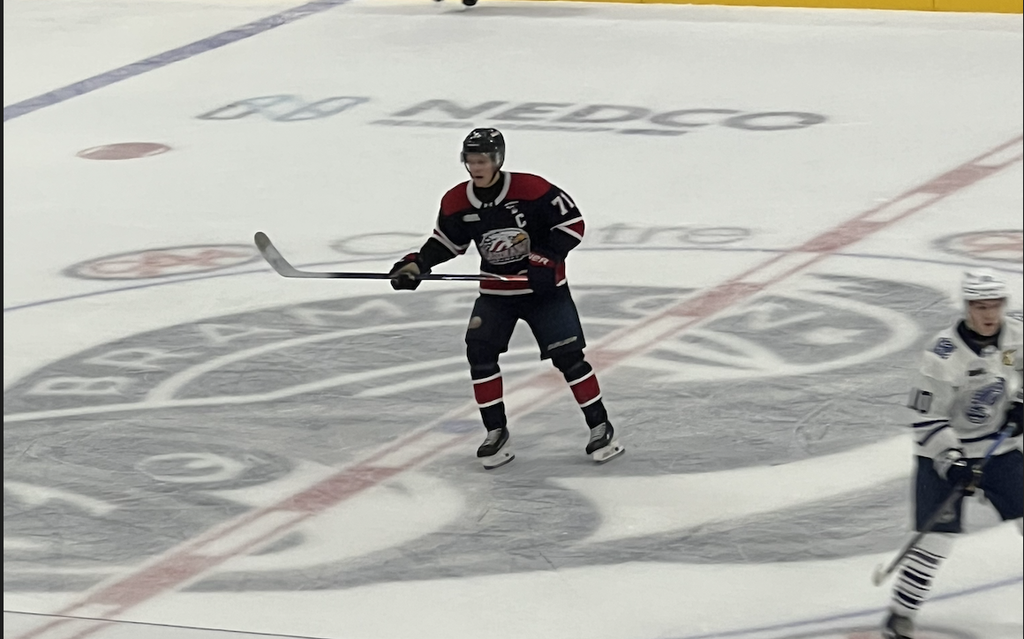
  • Boston Tait (D) – 2027 NHL Draft Prospect Report

    Boston Tait (D) – 2027 NHL Draft Prospect Report

    Tait quietly played one of the most complete games on Canada’s blue line, impacting the game in all three zones.

    His puck movement was a constant throughout the game, helping Canada sustain its dominant performance by consistently moving the puck in the direction it needed to go.

    Rather than forcing difficult plays, he showed the poise to make the correct read, highlighted by a fantastic stretch pass that started the sequence leading to Camryn Warren’s goal.

    Offensively, Tait activated when the opportunity presented itself, but never at the expense of his defensive responsibilities.

    He looked most comfortable creating from the blue line, playing aggressively when needed to extend possessions before seamlessly recovering to his position.

    That balance allowed him to contribute offensively without leaving Canada vulnerable in transition.

    Tait consistently closed gaps and broke up plays through excellent stick and body positioning, including one sequence where he completely shut down an attacker one-on-one before immediately turning the play back up ice.

    Tait looked like your modern two-way, do-it-all defenceman, not shying away from any aspect of the game.

  • 2026 NHL Draft Prospect Report – Lucas Ambrosio (LD)

    Lucas Ambrosio:
    Projection: Bottom Pair Defence
    Strengths: Defensive attributes, Hockey IQ, Mobility
    Weaknesses: Offensive impact, Straight line speed, Active stick in
    defensive zone

    Analysis:

    Lucas Ambrosio will become an excellent defensive defenceman for
    whichever NHL team drafts him. The biggest thing that stands out in
    his game is how effective he is as a defender. He utilizes his size to
    his advantage, whether that be battling along the boards or in front
    of the net, defending the rush with his extreme reach, or sacrificing
    his body to block shots. His size helps him become a super-effective
    defender in any situation. His hockey IQ is amazing too, reading and
    anticipating plays with ease to disrupt passing lanes or interrupt a
    pass entirely, jumping up on his assignment when needed, and even
    joining the rush or carrying the puck himself out of his own zone when
    necessary. It helps that he is very agile for a guy of his size, using
    good edges and lower-body strength to maneuver around the ice with
    relative ease. His passing is also a strong suit of his, being able to
    break out or find open teammates in the offensive zone with crisp and
    clean passes.

    The biggest flaw in his game for me would be his offensive impact.
    Apart from joining the rush or pinching in the offensive zone when
    appropriate, he doesn’t provide a whole bunch in terms of offence. He
    also needs to work on his straight-line speed, as he’s not the
    quickest at being able to retrieve dumps in pucks or blow by defenders
    if he chooses to rush the puck himself. My only schtick with his
    defensive game is that I wish he used his long reach more often when
    keeping opponents to the perimeter and taking away passing lanes. He
    does it occasionally, but he would be even more effective than he is
    now if he did it constantly.

  • The Final Weekly 2026 Draft Eligible Three Stars

    By Stuart Miller-Davis

    The 2025-26 season has officially come to a close for NHL Draft prospects around the world. The Kitchener Rangers capped off an undefeated run at the Memorial Cup by capturing the franchise’s third title, while Finland closed out the World Championship in Switzerland by defeating the host nation for gold.

    With the season now complete, scouts and NHL front offices will spend the coming weeks relying on video review for final evaluations ahead of the 2026 NHL Draft. With only a limited number of draft-eligible players still active over the past week, this edition of the three stars serves as a season-ending look at the prospects who made the biggest impact in this column throughout the year.

    Here are Draft Prospects Hockey’s 2026 Draft-Eligible Three Stars for the 2025-26 season.


    Gavin McKenna | LW | Penn State (NCAA)

    The top-ranked prospect on Draft Prospects Hockey’s 2026 NHL Draft Rankings also claims the top spot in the season-ending three stars.

    After taking some time to adjust to the college game, Gavin McKenna quickly established himself as one of the most dangerous offensive players in the NCAA. The Whitehorse, Yukon native finished his freshman campaign at Penn State with 51 points (15 goals, 36 assists) in 35 games, ranking fourth in NCAA scoring as an 18-year-old freshman.

    McKenna also played a major role for Team Canada at the World Junior Championship in Minnesota. Following a limited role in his first tournament appearance in 2024-25, where he recorded just one point in five games, the former Medicine Hat Tigers star returned with a dominant showing. He produced 14 points (four goals, 10 assists) in seven games to help Canada capture the bronze medal.


    Ivar Stenberg | LW/RW | Frölunda HC (SHL)

    Ivar Stenberg’s remarkable draft season earns him the second star of the year.

    The Swedish winger produced near-historic numbers in the SHL, recording 33 points (11 goals, 22 assists) in 43 games. Since 1990, only Daniel Sedin, Markus Näslund, and Henrik Sedin have produced more points in their 18-year-old season in Sweden’s top professional league.

    The second-ranked prospect on Draft Prospects Hockey’s 2026 NHL Draft Rankings also excelled internationally. The Stenungsund native recorded 10 points (four goals, six assists) in seven games at the World Junior Championship, helping Sweden capture gold.

    Stenberg later debuted with Sweden’s senior national team during the European Hockey Tour, where he averaged a point per game across five contests before earning a roster spot at the World Championship.

    At the tournament in Switzerland, the younger brother of St. Louis Blues forward Otto Stenberg continued to impress against elite competition. His eight points in eight games ranked behind only Patrik Laine, Auston Matthews, Juraj Slafkovský, and Paul Kariya among draft-eligible players in tournament history.


    Viggo Björck | C | Djurgårdens IF (SHL)

    While Viggo Björck did not produce the same offensive totals as fellow Swede Ivar Stenberg in the SHL, his overall body of work cemented him as one of the premier prospects in the 2026 class.

    The Stockholm native recorded 15 points (six goals, nine assists) in 42 SHL games during his draft season, but his progression throughout the year was equally notable. Björck earned increased responsibility as the season progressed and eventually rose into Djurgårdens’ top-line center role late in the campaign.

    After the club’s professional season ended in the opening round of the playoffs, Björck joined Djurgårdens’ U20 squad and immediately dominated. The undersized center recorded 20 points (eight goals, 12 assists) in nine playoff games while helping lead the team to a U20 championship.

    Björck also enjoyed a standout international season. Skating alongside Stenberg on Sweden’s second line at the World Junior Championship, he contributed nine points (three goals, six assists) in seven games during the gold-medal run.

    Like Stenberg, Björck also earned his first call-up to Sweden’s senior national team. He recorded two goals in five European Hockey Tour games before adding six points (one goal, five assists) in eight appearances at the World Championship.


    Daxon Rudolph | RHD | Prince Albert Raiders (WHL)

    Few draft-eligible defensemen were more entertaining or productive during the 2025-26 season than Daxon Rudolph.

    The Prince Albert Raiders blueliner finished third among WHL defensemen in scoring with 78 points (28 goals, 50 assists) in 68 games. Wearing an “A” in his second season with the club, the Lacombe, Alberta native helped lead Prince Albert to first place in the WHL’s Eastern Conference.

    The 6-foot-2, 203-pound defender carried that offensive production into the postseason. Rudolph tied Seattle Kraken prospect Julius Miettinen for the WHL playoff scoring lead with 27 points in 19 games.

    Behind the leadership of Rudolph and Vancouver Canucks prospect Braeden Cootes, the Raiders advanced all the way to the WHL Final before falling to the Everett Silvertips in five games.


    Honorable Mentions

    Caleb Malhotra | C | Brantford Bulldogs (OHL)

    Carson Carels | LHD | Prince George Cougars (WHL)

    Liam Ruck | RW | Medicine Hat Tigers (WHL)

  • 2026 NHL Draft Prospect Report – Chase Reid (RD)

    Chase Reid:
    Projection: Top 4 Defenceman
    Strengths: Offensive instincts, Vision and playmaking, Release and
    shot placement, Skating
    Weaknesses: Defensive aspects of the game, Positioning/Decision making

    Analysis:
    Chase Reid is an offensively gifted defenceman. He is never afraid to
    jump up on the play and use his strong skating to help generate an
    odd-man rush. He also uses his speed to blow by defenders along the
    boards and threaten to drive the net if given the opportunity. Once he
    is given the puck in the offensive zone, he tends to use his skating
    and mobility to create seams and gaps within the defenders so that he
    can use his great vision and passing abilities to find the wide-open
    player. If the defenders don’t offer up an opportunity for a pass, he
    isn’t afraid to shoot the puck through screens with his lethal and
    precise release.

    Reid struggles when it comes to the defensive aspects of the game. He
    often gets caught up ice when he decides to jump up on the rush at a
    bad time, which typically ends up in a scoring opportunity against.
    Within his own zone, he’s not afraid to use his body to get the puck
    back. He isn’t always in the proper position to retrieve the puck once
    he knocks his player off it, but at least he disrupts his opponent.
    Additionally, I would be slightly worried about his work ethic, as
    when I watch him, he isn’t always giving it one hundred percent.

  • Weekly 2026 NHL Draft Eligible Three Stars

    As the calendar turns deeper into May, the road to a championship continues to narrow across Canadian major junior hockey. With league titles and Memorial Cup berths on the line, draft-eligible players are being tested in the highest-pressure environments of their seasons, while every standout performance carries added weight ahead of the 2026 NHL Draft.

    This week’s three stars feature two highly mobile, offensive-minded defensemen from the Quebec Maritimes Junior Hockey League (QMJHL) who have played central roles in their teams’ postseason runs, along with an overage Ontario Hockey League (OHL) goaltender whose combination of regular-season consistency and playoff resilience should earn him renewed draft attention.

    Here are the draft-eligible three stars for the week of May 4 to 11.


    Tommy Bleyl | RHD | Moncton Wildcats (QMJHL)

    Slick-skating defenseman Tommy Bleyl has taken the QMJHL by storm in his first season north of the border. The Schenectady, New York native led all league defensemen in regular-season scoring with 81 points (13 goals, 68 assists) in 63 games and has carried that production into the postseason, where his 22 points (six goals, 16 assists) in 17 games lead the league.

    Bleyl delivered several key moments in the deciding game of Moncton’s semifinal series against the Blainville-Boisbriand Armada, helping propel the Wildcats to their second consecutive trip to the QMJHL Final. Just under five minutes after the Armada tied the game at two, the 6-foot, 170-pound blueliner jumped into open space in the offensive zone and wired a wrist shot past the goaltender to restore Moncton’s lead. He added an empty-net goal late in the third period to seal a 6-2 victory.

    The 12th-ranked defenseman on Draft Prospect Hockey’s 2026 NHL Draft Rankings is still searching for his first point of the QMJHL Final, though he has remained active offensively, registering seven shots on goal through the opening two games.


    Xavier Villeneuve | LHD | Blainville-Boisbriand Armada (QMJHL)

    Xavier Villeneuve’s draft season was interrupted by injury, but the dynamic defender still managed to leave a strong impression. Despite missing time from early January through mid-March, the Laval, Quebec, native recorded 38 points (six goals, 32 assists) in just 37 regular-season games.

    The 2025 U18 gold medalist continued to lead from the back end during the postseason, producing 14 points (six goals, eight assists) in 17 games while serving as one of the Armada’s most important contributors.

    The fifth-ranked defenseman on Draft Prospect Hockey’s 2026 NHL Draft Rankings appeared in just one game this week, but he made his presence felt. With Blainville-Boisbriand trailing Moncton 2-1 early in the second period, Villeneuve joined the rush, found open ice, and finished a pass into a nearly open cage to briefly tie the game.

    Though the Wildcats ultimately pulled away for a 6-2 win, Villeneuve’s ability to create offense and influence play in critical moments remained evident throughout the postseason.


    Ben Hrebik | G | Barrie Colts (OHL)

    Overage goaltender Ben Hrebik has played a pivotal role in Barrie’s run to the J. Ross Robertson Cup Final. The Milton, Ontario native posted a .920 save percentage in 43 regular-season games, tied for the third-best mark in the OHL, and has elevated his game considerably after a difficult postseason in 2024-25.

    After finishing last year’s playoffs with a 1-5 record, a 4.87 goals-against average, and an .867 save percentage, Hrebik has responded with a much stronger showing in 2025-26.

    The 20-year-old netminder was outstanding in the deciding game of the Eastern Conference Final against the Brantford Bulldogs, turning aside all 40 shots he faced in a 5-0 shutout to clinch the series.

    Barrie now faces a difficult challenge after dropping the opening three games of the OHL Final against the Kitchener Rangers, but Hrebik has remained the team’s brightest spot. After allowing four goals on 31 shots in Game 1, the 31st-ranked North American goaltender on NHL Central Scouting’s final rankings responded with back-to-back standout efforts.

    In Game 2, Hrebik made 39 saves on 42 shots through regulation and added another 19 stops in overtime before Kitchener found the game-winner.

    He followed that performance with another exceptional outing in Game 3, making 32 saves in regulation — including a diving stop while shorthanded — to push the game beyond three periods. The Rangers generated 14 shots across two overtime frames before finally scoring the deciding goal.

  • U18 World Championship – Goaltending Review: Who Rose, Who Fell, and Who Came Out of Nowhere

    The goaltending picture at the 2026 U18 World Championship was, as usual, a mix of
    confirmation, disappointment, and genuine surprise. Some prospects used the tournament as a
    launching pad. Others reminded us why evaluation is never a straight line. And at least one
    name that wasn’t on anyone’s radar deserves serious attention heading into June.

    Here is my breakdown of the goaltenders who stood out, who underwhelmed, and who made
    the most unexpected impression of the tournament.

    Who stood out
    Martin Psohlavec — CZE

    I had been watching Psohlavec in the Czech U20 league for a while, quietly impressed but
    wondering how the step up in competition would treat him. International play at this age group is
    a different animal. The pace is faster, the reads have to come quicker, and the mental load is
    heavier. He answered every question.

    What struck me first against Sweden was his engagement level. He wasn’t passive in his
    crease. He was active, challenging shooters with controlled aggressiveness while still
    communicating with his defenders through consistent shoulder checks. That kind of awareness,
    the willingness to act as an extra set of eyes on the ice, is something you can’t really teach. He
    plays a mature game for his age.

    Technically, his puck tracking was reliable and his rebound control was effective throughout the
    tournament. Against Finland, he showed improved quickness and well-positioned hands that
    maximized his save radius. His post integration was strong, mixing RVH and overlap at
    appropriate moments rather than defaulting to one option. His anticipatory habits were also
    evident: reading passes early and arriving set without oversliding.

    The main technical flag is his cross-crease slide trajectory, which was too linear at times,
    creating exploitable openings. And he did struggle on some clean perimeter shots in the
    Sweden semifinal, reacting a tick late. Extended recoveries can also cost him structure
    occasionally. These are refinement issues, not foundational ones.

    By the end of the tournament, Psohlavec had significantly elevated his draft stock. He came in
    as an underrated name and left as a legitimate middle to late with clear upside. This is the kind
    of tournament performance scouts remember.


    Patriks Plūmiņš — LAT

    If you asked me to cast ballot with the name of the most valuable goaltender at this tournament,
    it would be Plūmiņš without hesitation. Latvia is not a hockey powerhouse, and the league and
    competition level he plays in during the regular season makes it genuinely difficult to evaluate
    him properly throughout the year. You’re always left wondering how much of what you’re seeing
    is quality and how much is context.

    He answered that definitively in this tournament.

    Forty-eight saves in a high-pressure QF elimination game, with the Americans throwing
    everything at him: traffic, physical play, sustained zone time. He remained composed and
    confident from start to finish. His puck tracking through traffic was excellent: seeing pucks
    cleanly, reacting quickly to releases, and keeping his hands decisive. Very few dangerous
    rebounds. That kind of performance, under that kind of pressure, against that level of
    competition, tells you a lot about a goaltender’s character.

    Across the tournament, his athletic base was his biggest calling card. Strong lower-body power,
    excellent flexibility, an ability to widen his stance and seal the ice effectively. Against Finland, he
    stopped 32 of 34 shots and showed a solid athletic foundation that allowed him to cover large
    areas of the net. Against Norway, he highlighted both his upside and his rawness: the lower
    body impressive, the upper body and hands more rigid, his compact stance occasionally limiting
    him.

    The main concern remains his structure on extended recoveries. In several sequences, he lost
    his balance and ended up on his back or seated, which becomes a problem when better teams
    generate second and third chances. His edge control and movement efficiency also need some
    refinements.

    But here is the reality: if Plūmiņš was not on draft boards before this tournament, he needs to be
    now. If he was, he’s now definitely higher. A mid-round selection appears to be locked, and
    depending on how teams weigh tournament performance, he could even exceed that. He is a
    hot commodity heading into June.

    Who did not


    Pyry Lammi — FIN

    I wanted Lammi to prove people wrong. NHL Central scouting did not include him in their
    preliminary list, and I thought there was a real chance this tournament could change that. His
    speed and athleticism are genuine and they catch your eye immediately. But being a smaller
    goaltender means the margin for error is narrower, and the technical details matter even more.
    You need to be fundamentally ahead of plays, not reactive to them.

    Against Latvia, even in a shutout, the concerns were visible. Lammi plays a reactive style rather
    than an anticipatory one. He was gathering information after the fact, leading to suboptimal
    positioning. There was a rush sequence where he defaulted to RVH despite no legitimate
    passing threat, the correct read there is an overlap for better coverage. Those details, small as
    they seem, compound over a full game against better competition.

    Against Canada, it fell apart. He looked overwhelmed by sustained pressure, losing sight of the
    puck frequently and breaking down structurally on passing plays and rebounds. His play
    recognition and recoveries were problematic. After goals, he appeared disoriented, suggesting
    difficulty processing sequences in real time. For a smaller goalie, where positioning and reads
    are the great equalizer, these are significant issues.

    This tournament did not help his cause. He could fall outside the draft range entirely, and it
    would be hard to argue against that assessment based on what I saw here.


    Viggo Tamm — SWE

    Tamm came into the tournament with some expectation attached to his name in a weaker
    Swedish goalie draft class, but he never established himself as the starter Sweden needed. The
    time he did play, he looked lost, unable to impose himself on the game or give his team the
    confidence that a top goaltending performance can provide.

    There is not much more to say. At a tournament where you need to seize your opportunity, he
    didn’t. His draft stock will reflect that.

    Special mention
    Anton Wilde — DEN

    I will be honest: I did not have Anton Wilde on my radar before this tournament. Denmark does
    not typically produce goaltenders who draw serious NHL draft attention, and there was nothing
    in his pre-tournament profile that demanded a closer look.

    Then he stopped 54 shots against the United States.

    What made the performance remarkable was not just the shot volume , it was how he managed
    the game. Against a high-powered USA offense that generated sustained pressure from start to
    finish, Wilde remained calm and composed. He kept his game simple and controlled, relying on excellent patience on his edges and sound positioning. He consistently arrived set and square
    to shooters, making it difficult for the Americans to catch him off guard. His rebound control was
    a key factor as well, slowing the pace in the defensive zone and giving his defenders the time
    they needed to reset.

    Coming off a strong first start against Germany, his confidence was evident. This was not a
    goaltender hanging on. It was a goaltender competing, and competing well.

    The realistic outcome here is a late-round selection, and even that would be based almost
    entirely on these tournament performances rather than a deep body of work. But at minimum,
    Wilde has now put himself on the map. If nothing else, this should generate genuine interest in
    bringing him to North America to continue his junior career, and that conversation, a few weeks
    ago, would not have happened at all.

    Sometimes a tournament creates a player. For Wilde, that’s exactly what happened here.

    Final Thought

    Goaltending evaluation at the U18 level is always imprecise. Sample sizes are small,
    competition quality varies, and development timelines for goaltenders are notoriously long. The
    key is not to overreact on good or bad performances. But tournaments like this one are
    valuable precisely because they strip away context and this year performances were too
    impressive to ignore. Everyone is playing under the same pressure, against the same
    competition, at the same time. The draft will tell us how much of it stuck or not for these
    prospects.

  • 2026 NHL Draft Prospect Report – Ethan Belchetz (LW)

    Ethan Belchetz:
    Projection: Middle 6 Winger
    Strengths: Physically mature game, Ability to drive the play, Strong shot
    Weaknesses: Needs to grow into his skates, Lack of creativity and
    adaptability, Weak transition game

    Analysis:
    Ethan Belchetz is another big power forward in this draft class. He
    has a very physically mature game for being 6’5 230lbs and isn’t
    afraid to use it to his advantage. He likes to lean on defenders along
    the boards, forcing the puck to his stick before driving the net.
    Through the use of his size, he is also a force when planted in front
    of the goalie for rebounds, deflections, or backdoor passes. Where he
    is the most dangerous is inside the circle without the puck, where he
    can make use of his very powerful shot.

    That’s kind of where I see his strengths begin to fall off. Apart from
    his size and heavy shot, he lacks anything that is super outstanding
    or noteworthy. I find that he still hasn’t found his stride due to his
    size, so he lacks any monumental speed or dangerous explosiveness. He
    doesn’t have any special stickhandling or vision abilities, so the
    only way I find he beats defenders is by making use of his body to
    protect the puck and drive wide or cut to the middle before releasing
    his shot. He also has a very weak transition game in my eyes. He
    struggles to make pinpoint passes on the rush, and when he decides on
    what he’s going to do, he has a hard time adapting and deviating from
    that plan based on how the play develops. With some extra time and a
    good development path, he has the potential to be a solid middle-six
    play driver.

  • 2026 QMJHL’s New England Prospects Showcase Standouts

    The QMJHL’s New England Prospects Showcase returned to Wellesley, Massachusetts for a two‑day evaluation event featuring some of the region’s top 2010‑born players eligible for upcoming the QMJHL draft along with some 2009 prospects. Split into two teams of 20, the prospects were already on QMJHL team radars after their respective regular seasons and participation for some in the US Nationals. Several late‑season risers were looking to solidify their status ahead of the June draft to be held in Halifax, Nova Scotia.

    91 White F Owen Lundin – Feb 26, 2010 (Bolton, MA) – 5’11, 165lbs
    Owen Lundin was one of the most active forwards across the two games, constantly popping up in dangerous areas and using his quick angle changes to shake defenders. A right shot who plays with purpose, he stayed open for rebounds and second‑chance looks while showing solid puck‑handling through traffic. His motor kept him involved all over the offensive zone, and his ability to pressure, retrieve pucks, and immediately turn plays toward the net made him a consistent problem for opposing defenders.

    29 Blue goalie Jesse Bernardinelli – Mar 04, 2010 (Wakefield, MA) – 6’2, 159 lbs
    Jesse Bernardinelli stands out as an imposing right‑handed catching goalie. He used his stature and composure to command his crease, regularly stepping out to the top of his arc to challenge shooters and take away space. He stayed calm while facing heavy volume, sealing the bottom of the net on close‑range scrambles and making multiple second‑ and third‑effort stops. Bernardinelli tracked plays well and covered his angles effectively throughout the weekend, though he was beaten on a difficult side‑to‑side 2‑on‑1 sequence. Overall, his poise, positioning, and ability to manage chaos in tight stood out amongst the goaltenders at the event.

    77 Blue D Mason Stonacek – Dec 26, 2010 (Stamford, CT) – 5’10, 161 lbs
    Mason Stonacek was the most active defenseman I noticed, using a quick, efficient stick to jumpstart breakouts and disrupt plays in the neutral zone with well‑timed sweeps. He retrieved pucks cleanly under pressure and protected them confidently around the net. He repeatedly kept plays alive at the offensive blue line with sharp reactions and good footwork. Stonacek regularly joined the rush with calculated timing and showed comfort shooting from distance, identifying open options in the zone and calling for pucks on the power play. His only real blemish came on Day 2, when a rushed distribution led to a costly 2‑on‑0 against, but overall he played with assertiveness and strong instincts that made him one of the more noticeable players throughout the weekend.

    16 White D Mason Wohlers – May 20, 2010 (Somers, CT) – 6’00, 165 lbs
    Mason Wohlers is probably the only player taking part I had seen play before, albeit in a small sample at the Whitby Silver Stick tournament. This time he defended the middle of the ice with authority, repeatedly closing down oncoming rushes and planting himself to deliver heavy, well‑timed hits. His stick was active in the neutral zone, breaking up plays with long sweeps, and he showed confidence jumping into offensive sequences—though his decision‑making there could feel unpredictable. Wohlers tried to open shooting lanes from the point but didn’t always recognize when space wasn’t truly available, leading to several blocked attempts, and he never really uncorked his big right‑shot release. He identified open options in the offensive zone but a few sequences, including some odd shot choices, reflected a player still refining his reads. This performance showed both his physical strengths and the areas where added patience will elevate his game.

    7 Blue F Chase Warsofsky – Jun 20, 2009 (Northborough, MA) – 5’08, 159 lbs
    Chase Warsofsky was among the 2009-born prospects included. He brought real dynamism, pushing play with pace and attacking the offensive zone with quick cuts and a fast, compact shot release without obvious windup. He contributed on draws and showed strong compete, hustling back hard after missed chances and staying engaged in all three zones. Warsofsky drove the middle with speed, once cutting inside to set a screen before firing through traffic. He later buried a rebound by battling at the net front. His blend of pace, effort, and opportunistic offense made him one of the more noticeable smaller forwards in the event.

    22 Blue F Jameson Needham – Jan 6, 2010 (Woburn, MA) – 5’11, 175 lbs
    Jameson Needham had an energetic showing, taking a few high‑risk routes on exits that forced him to scramble to maintain possession before pushing play into the neutral zone. Once settled, he consistently got himself into the thick of the offensive action, showing a willingness to drive into traffic and stay connected to developing plays. Needham came out with extra pop early in the second game, noticeably raising his compete level, tracking back hard after turnovers, and re‑engaging quickly on the forecheck. His shift‑to‑shift urgency stood out, and while some decisions carried risk, his overall pace and willingness to battle left me with a solid impression in the end.

    20 Blue F Jackson Luedke – Jul 2, 2010 (Ridgefield, CT) – 6’01, 182 lbs
    Jackson Luedke was consistently hard to play against, especially along the boards, where he denied opponents time and space and won a lot of small‑area battles. He was reliably the first man up on the forecheck during opposing breakouts, pressuring puck carriers early and forcing rushed decisions. With the puck, Luedke showed good patience—lifting his head, scanning for options, and waiting out defenders before moving it to the right spot. As a whole, he possesses a nice combination of pressure, competitiveness, and composed puck touches .

    11 White F Kai Scranton – May 3, 2010 (West Hartford, CT) – 5’09, 144 lbs
    Kai Scranton showed a nice work rate, breaking up plays and immediately transitioning them into offense with quick, purposeful touches. When sequences broke down, he didn’t quit on them—driving pucks deep, extending possessions, and creating secondary chances through sheer persistence. Scranton stayed active around the net, keeping his stick available for redirects and positioning himself well for rebound opportunities. In the offensive zone he chased down loose pucks with energy, applying pressure that disrupted opposing breakouts and kept his line in control. He’s a player to keep an eye on as he matures physically.

    Over the course of two competitive days at the QMJHL NE Showcase, Team Blue emerged victorious in both matchups, though the second game tightened considerably as players settled in. With this portion of US evaluations now complete, attention shifts to the final stage of the 2026 QMJHL Cup. This event took place April 22–25 at the Centre Gervais Auto in Shawinigan. Four teams took part, featuring 80 2010‑born prospects, selected by the CSR. For the first time, American‑born players participated in this final stage of the QMJHL Cup, highlighted by Logan Cotter (St. Mark’s), Robert Dekleine (Belmont Hill), and Mason Stonacek (Mount St. Charles). Their inclusion marks an important step in the league’s expanding reach beyond Quebec and the Atlantic provinces

  • Game Report – Moncton Wildcats 6 vs Blainville-Boisbriand Armada 2 – April 27th, 2026

    April 27th, 2026

    Round 3, Game 3

    Moncton Wildcats 6 VS Blainville Boisbriand Armada 2

    Venue: Centre Excellence Sports Rousseau

    #21 D, Jan Golicic
    Team: Blainville-Boisbriand Armada, QMJHL
    Height/Weight: 6’5″, 201 lbs
    Shoots: Left
    DOB: June 30th, 2006

    Overview:

    Jan Golicic is a poised puck moving/defensive defenseman who relies on his size, reach, and patience to shut down opponents. Steady in his own zone, he plays with a sound mind, letting the game come to him and forcing the opposition to make the mistake. His shot is used intelligently. When discussing his mechanics though, although follow through’s low, he lacks emphasis on hip rotation which is why his shots are not powerful. Jan’s main weakness lies in his puck handling as he does maintain good control, but his stick movement is considered choppy. His passing is his best offensive trait as he keeps every pass very flat on the ice which eases transition greatly, especially from breakouts. Skating-wise, he has a strong forward stride but lacks explosiveness in his reverse and lateral movement, which can expose him against quicker opponents. Defensively, he uses his reach and stickwork well to disrupt plays and maintain strong positioning. What he will need to work on is becoming imposing physically. That first starts by putting a lot more weight on so he can build that confidence up. Then it’s the matter of knowing how to throw it.

    Player Projection

    Ceiling: Top 4 Puck Moving/Shutdown Defenseman 

    Floor: 7th Defenseman

    Special Teams: PK2

    Production Outlook: 5~ Goals, 25-30~ Points

    Pick Range: 118th overall

    Player Comp: Jamie Oleksiak (With Noah Dobson hands)

    Strengths:

    • Defensive Play: Strong positional awareness, great at using his reach and stick to break up plays and prevent offensive pressure.
    • Skating Strides: Strong stride generates speed for him to win races.
    • Puck Distribution: Displays great consistency at moving the puck crisply. Keeps his passes very flat which aids transition greatly.

    Weaknesses:

    • Puck Handling: Struggles when carrying the puck up the ice with confidence.
    • Shot Power: Displays great intelligence of walking into shoot and following through low, though lacks a lot of emphasis on hip rotation to get that power off.
    • Lateral Movement: Needs to improve reverse skating and lateral movement to handle faster, smaller players effectively.

    In-game observations: 

    • Throughout the 1st period, displayed poise in making simple yet effective decisions, becoming conservative for his teammates, aiding breaking the puck out.
    • At 4:00 of the 2nd, Jan displayed good patience when defending the 2-on-1, slid down and swatted at the puck to break up a dangerous scoring chance.
    • At 7:35 of the 2nd, needs to be mindful of his actions with his stick and needs to keep his feet moving, drew a hooking penalty on the play.
    • At 4:15 of the 3rd, on PK, displayed patience when defending the rush, letting the opposition create the mistake and place the puck in a safer environment.

    Skater Ratings:

    • Skating: 4.5
    • Puck Skills: 5
    • Scoring Ability: 3.5
    • Playmaking Ability: 5.5
    • Hockey Sense/IQ: 5.5
    • Character: 5
    • Physicality: 6
    • Defensive Play: 6.5

    #15 D, Spencer Gill
    Team: Blainville-Boisbriand Armada, QMJHL
    Height/Weight: 6’4″, 214 lbs
    Shoots: Right
    DOB: August 17th, 2006

    Overview:

    Spencer Gill is a poised, puck-moving defenseman who relies on his size, reach, and patience to shut down opponents. He plays a steady, composed game in his own zone, allowing plays to develop and forcing mistakes rather than overcommitting. His shot continues to improve and shows good hip rotation, though keeping his follow-through low will help generate more dangerous chances and consistency as he gains confidence through repetition. With the puck, he isn’t overly flashy, but his poise allows him to make calm, efficient decisions under pressure, helping him transition play quickly. His passing stands out as his best offensive asset as his passes are consistently flat and accurate, making breakouts smooth and reliable. Skating-wise, his lateral mobility is strong for his size, aiding his positioning and gap control, though improved leg extension would help increase his top-end speed. Defensively, he uses his reach and stickwork effectively to disrupt plays, and while he can lean on his reach at times, he has the frame and ability to be physical and punishing when engaged.

    Player Projection

    Ceiling: Top 4 Puck Moving/Shutdown Defenseman 

    Floor: Bottom Pair Defenseman

    Special Teams: PK, PP2

    Production Outlook: 8~ Goals, 35-40~ Points

    Pick Range: 59th Overall

    Player Comp: Low end Aaron Ekblad

    Strengths:

    • Defensive Play: Strong positional awareness, great at using his reach and stick to break up plays and prevent offensive pressure.
    • Skating Strides: Strong stride generates speed for him to win races.
    • Puck Distribution: Displays great consistency at moving the puck crisply. Keeps his passes very flat which aids transition greatly.

    Weaknesses:

    • Puck Handling: Struggles when carrying the puck up the ice with confidence.
    • Shot Power: Displays great intelligence of walking into shoot and following through low, though lacks a lot of emphasis on hip rotation to get that power off.
    • Lateral Movement: Needs to improve reverse skating and lateral movement to handle faster, smaller players effectively.

    In-game observations: 

    • At 4:35 of the 1st, Gill made a soft, yet flat breakout saucer pass directly on Carbonneau’s tape.
    • At 14:35 of the 1st, after making slightly too hard of a pass, he had to reverse back quickly to defend, read the play very well, intercepted a long breakout pass to prevent a breakaway.
    • At 1:20 of the 2nd, displayed tremendous poise and confidence making simple yet effective decisions on PP. Developing confidence shooting the puck through traffic, earned an assist on Lavigne’s goal.
    • At 14:00 of the 2nd, developed tremendous confidence with the puck in the o-zone, walked by the opposition and got a shot on goal.
    • At 6:45 of the 3rd, displaying confidence with the puck at the point, quickly yet crisply threads the puck over to Nobert for a dangerous chance.

    Skater Ratings:

    • Skating: 5.5
    • Puck Skills: 5
    • Scoring Ability: 4
    • Playmaking Ability: 5.5
    • Hockey Sense/IQ: 6.5
    • Character: 6
    • Physicality: 6
    • Defensive Play: 6.5

    #8 F, Justin Carbonneau
    Team: Blainville-Boisbriand Armada QMJHL
    Height/Weight: 6’1”, 201 lbs
    Shoots: Right
    DOB: November 25, 2006

    Overview:

    Carbonneau’s game is best described as explosive and powerful as he’s constantly in motion maneuvering his way by or through the opposition with ease. His hands are as quick his foot speed, creating opportunities for himself and his teammates, especially on the rush. A little bit about his skating, although he doesn’t fully extend his strides, he generates tremendous acceleration due to the explosive footwork, getting himself at top speed very quickly. His best trait by far however is no doubt about it is his shot as it is NHL ready. It packs tremendous punch due to how much emphasis he places on leveraging the strength of his hips. This is keeping in mind that his follow through is controlled for how much power he brings. For his size, he is very physically involved as his hits are very impactful when he throws them. Where his game needs work is in his own end as he isn’t sound defensively by any means which he needs to be a lot more conscious of. This also goes for his effort level in his own end. One aspect that could be noted too is that he could utilize his teammates more.

    Player Projection

    Ceiling: 1st Line Forward 

    Floor: Top 9 Scoring Forward

    Special Teams: PP1, Left Flank

    Production Outlook: 40~ Goals, 70-80 Points

    Pick Range: 19th overall

    Player Comp: Ilya Kolvalchuk

    Strengths:

    • Shot Release: Very powerful shot, with a near-instant release, strong emphasis on hip rotation.
    • Puck Handling: His quick hands are as agile as his feet, weaving his way by the opposition easily.
    • Offensive Zone Compete Level/Awareness: Displays relentless effort in the o-zone, understands how he needs to position himself to retrieve the puck via a pass or broken play.

    Weaknesses:

    • Defensive Positioning: He can sometimes get out of position defensively, creating openings for the opposition.
    • Lateral Skating: Although he has a quick stride, his transitions and crossovers occasionally lack smoothness.
    • Teammate Utilization: Although displays strong playmaking traits, he relies a bit too much on himself to make the big play.

    In-Game Observations

    • At 9:00 of the 1st, Carbonneau while 4-on-4 tried doing a bit too much with the puck, ultimately stripped by Bleyl, needs to utilize his teammates better.
    • At 19:45 of the 1st, although an energy ball on the ice, he does need to be conservative when it comes to his decision making at the blueline, gave the puck away to Desnoyers.
    • During the first PP of the 2nd period, first Carbonneau displayed strong hustle to get back hard on the backcheck. Moments later in the o-zone, displayed strong consistency in puck distribution, earned an assist on Blainville 2nd goal.
    • At 10:02 of the 2nd period, displayed his tremendous ability to snap pucks off in a hurry, catching the goaltender a bit off-guard, created a big rebound.

    Skater Ratings:

    • Skating: 6.5
    • Puck Skill: 7.5
    • Scoring Ability: 8
    • Playmaking Ability: 6.5
    • Hockey Sense/IQ: 6
    • Character: 6
    • Physicality: 6.5
    • Defensive Play: 4.5

    #9 F, Bill Zonnon
    Team: Blainville Boisbriand Armada, QMJHL
    Height/Weight: 6’2”, 190 lbs
    Shoots: Left
    DOB: October 3, 2006

    Overview:

    Bill Zonnon brings power and patience as a playmaker. His ability to read plays, along with his strong net-front presence, makes him a very intriguing and trustworthy player who can be used in any situation. He protects the puck well and is a constant menace around the net due to his high activity level. His elite vision stands out, as he can thread passes through multiple defenders, supported by his crisp, hard, and flat passing mechanics. When it comes to puck handling, he isn’t the quickest, but he remains very controlled. His shot shows solid mechanics on the follow-through, though he needs to be more confident in taking advantage of open lanes without hesitation. Defensively, he is reliable, plays with good positioning, and is willing to block shots. His main area for improvement is skating, where he needs better stride extension for higher top speed and improved lateral explosiveness.

    Player Projection

    Ceiling: Top 6 Playmaking Forward (2nd Line)

    Floor: Bottom 6 Scoring Forward

    Special Teams: PP2, Net Front

    Production Outlook: 20~ Goals, 50~ Points

    Pick Range: 22nd Overall

    Player Comp: Adam Henrique/Nick Bonino

    Strengths:

    • Playmaking and Vision: His awareness in the offensive zone sets him apart from the opposition by deep understanding of his teammate’s positioning.
    • Size and Physicality: At 6’2”, he’s already a physical presence, which makes him tough to handle around the net and good body positioning.
    • Patience with the Puck: Zonnon is calm under pressure and takes his time to find the best passing or shooting opportunity.

    Weaknesses:

    • Shooting Confidence: Although demonstrates his ability to really follow through on his shots with power, needs to use it more, allowing for him to be more unpredictable.
    • Skating Stride and Lateral Explosiveness: Even though he possesses a tall stance, allowing him to visualize the play, he needs to develop quicker but also more fully extended strides.
    • Strength/Balance: Although has good height and leverages it well fending off the opposition, needs to develop lower core muscle, providing stronger stability when receiving checks.

    In-Game Observations:

    • At 0:40 of the 1st period, Zonnon won a timely faceoff in the offensive zone, drove hard to the net, deflected the puck in for a huge first goal.
    • At 3:55 of the 2nd, displayed strong consistency at shielding the puck, then threaded the puck to Desjardins so he can then pass it to Lemieux for a dangerous chance.
    • Throughout the game, displayed tremendous consistency at winning board battles and being consistent in winning faceoffs. With that said, when it comes to his strides, doesn’t dig into the ice deep enough which makes him look slower.

    Skater Ratings:

    • Skating: 5
    • Puck Skill: 6
    • Scoring Ability: 5
    • Playmaking Ability: 7
    • Hockey Sense/IQ: 7
    • Character: 6
    • Physicality: 6
    • Defensive Play: 5

    #39 F, Maël Lavigne

    Team: Blainville Boisbriand Armada, QMJHL
    Height/Weight: 6’4”, 196 lbs
    Shoots: Left
    DOB: February 11th, 2005

    Overview:

    His ability to read plays and his strong net-front presence make him a very intriguing and trustworthy prospect who can play in many situations when asked. This is due to not his strength at protecting the puck and being a menace around the net but also utilizing a strong motor for someone at his size as it allows him to be impactful as well on the defensive side of the puck. When discussing about his puck skills, although he demonstrates good awareness when timing his puck handling, he isn’t very smoothest when controlling it. Even though his passes may not always be the crispest, he understands the mindset of where his teammates are going to be and utilizes them well. On the defensive end, he does showcase great commitment on the backcheck, though what will be key for him is to develop consistency of playing sound in position. His stride although quick for a bigger player, can emphasize more leg extension to create himself higher top speed. His shot, displays great bottom hand activation, though can follow through quicker. Can also build more muscle to be more impactful physically.

    Player Projection

    Ceiling: Top-9 Scoring Forward  

    Floor: AHL Top-6 Forward
    Special Teams: PP2 (Net-Front)
    Production Outlook: 15~ Goals, 35-40~ Points
    Pick Range: Undrafted

    Player Comp: Mason Marchment

    Strengths:

    • Physicality: When in use, really understanding how to throw his weight around and use his size to his advantage.
    • Offensive Awareness: Strong understanding of zone coverage, allowing him to navigate through the neutral zone with ease.
    • Versatility/Effort Level: Dynamic in any situation given, very consistent, high effort level both on the forecheck and on the backcheck.

    Weaknesses:

    • Skating Stride: For a bigger player, although displays quickness in his strides, needs to emphasize more leg extensions.
    • Inconsistent Puck Handling: Although possesses strong anticipation when to deke, isn’t consistent at smoothly weaving the puck quickly.
    • Strength: Although displays great physical engagement, can build more lower core muscle in order to generate stronger balance and generate stronger shot power.

    In-game Observations:

    • At 12:31 of the 1st, Lavigne active in the o-zone behind the net, was able to distribute the puck to Nobert for a dangerous scoring chance.
    • At 1:20 of the 2nd, displayed strong hustle on PP, drove and placed himself at the front of the net, scored by deflecting the puck in for Blainville’s 2nd goal.
    • At 3:30 of the 2nd, displayed tremendous will to sacrifice the body and stay committed defensively in position. Led to then him engaging on the o-zone rush for a key scoring chance.
    • At 3:15 of the 3rd period, Lavigne provided consistent pressure on the PK, forcing errors at the blueline.
    • Throughout the game, displayed strong consistency at winning the draw, was also very consistent with effort level on both the forecheck and the backcheck.

    Skater Ratings:

    • Skating: 4.5
    • Puck Skill: 5
    • Scoring Ability: 6
    • Playmaking Ability: 5
    • Hockey Sense/IQ: 7
    • Character: 7
    • Physicality: 6
    • Defensive Play: 6.5

    #72 D, Xavier Villeneuve

    Team: Blainville-Boisbriand Armada, QMJHL

    Height/Weight: 5’11”, 157 lbs

    Shoots: Left

    DOB: September 29, 2007

    Overview:

    Xavier is an electrifying offensive-minded defenseman with great agility and dazzling puck-handling abilities up the rush. Known for his tremendous confidence in carrying the puck and reading the offensive zone, Villeneuve brings a unique flair to the back end for the Armada as even though he is quite the risk taker, he is excellent at understanding when to take risks for the team’s own good. When looking at offensive defensemen, Villeneuve does an excellent job at utilizing his shot as much as he can to cause havoc, or even score. However, his small size limits his effectiveness in physical battles in the corners as, and he’ll need to add a lot of strength to succeed at the NHL level. Even though the league has many smaller players now, the league is now as physical as ever and he will need to get ready to endure long 82 game seasons. With that said though, he does possess tremendous heart in trying to win out puck battles as he has developed the mindset of becoming more physical with his frame.

    Player Projection

    Ceiling: First Pair Offensive Defenseman 

    Floor: Top 4/5 Offensive Defenseman, PP QB.

    Special Teams: PP1 Quarterback

    Production Outlook: 5-10 Goals, 55–65 Points

    Pick Range: 15th-30th Overall

    Player Comp: Lane Hutson

    Strengths:

    • Skating and Edgework: Villeneuve’s agility is elite, with quick pivots and tight turns.
    • Puck Skills and Passing: Soft hands make his passing smooth and effective, supporting his offensive style. 
    • Offensive Awareness: Villeneuve has the confidence and vision to be quite the quarterback from the blue line in any scenario (Not even on the powerplay).

    Weaknesses:

    • Physicality and Balance: Building strength is an absolute must for him to him to be more durable.
    • Defensive positioning and decision making with the puck in his own end. 
    • Discipline: Needs to be mindful of how he possesses himself, especially how he handles external factors.

    In-game observations: 

    • At 2:18 of the 1st, although displayed confidence in puck distribution, when he got puck back, he stickhandled way too much at the blueline. Got burned, needs to be mindful of decisions.
    • At 11:15 of the 1st, using his explosive footwork, performed a fast give and go play with Carbonneau, creating a lane into the o-zone with ease.
    • On Moncton’s 3rd goal, Villeneuve was not urgent enough at winning a puck battle at the front of the net, resulted in Cornforth scoring.
    • On Moncton’s 4th goal, Villeneuve was lackadaisical when defending the rush, allowed Mutryn to get a stick on the puck to deflect the puck in.
    • Throughout the game, hasn’t utilized his strength enough in his own end, wasn’t urgent enough in his own end at winning puck battles.

    Skater Ratings:

    • Skating: 7
    • Puck Skill: 7.5
    • Scoring Ability: 4.5
    • Playmaking Ability: 7
    • Hockey Sense/IQ: 5.5
    • Character: 5
    • Physicality: 3.5
    • Defensive Play: 4

    #42 F, Vincent Desjardins
    Team: Blainville-Boisbriand Armada, QMJHL
    Height/Weight: 5’11”, 172 lbs
    Shoots: Right
    DOB: September 8, 2006

    Overview:

    His passing ability and offensive awareness are top-notch, allowing him to create high-quality scoring chances under pressure. Desjardins’ skill in threading passes through tight spaces makes him a critical asset on the powerplay as he’s an excellent choice of a player who could get in the dirty areas, specifically in-front of the net like he does on the Armada powerplay. He will though have to deeply improve his physical play as a centerman as he gets outmuscled on many instances, however, he is one of the very best on his club at being responsible by covering his teammates when needed. He wins many faceoffs, performs the little plays as well, especially board coverage which he blocks pucks from escaping. His best trait however to encompass all of his skills, is his ability to utilize his teammates, which allows him to be a Swiss army knife in any given scenario.

    Player Projection

    Ceiling: Middle-6 Playmaking Forward 

    Floor: AHL Top-6 Forward

    Special Teams: PP2, PK

    Production Outlook: 10~ Goals, 35-40 Points

    Pick Range: Undrafted

    Player Comp: Alex Kerfoot

    Strengths:

    • Playmaking: His ability to thread the needle is very precise, distributing pucks flat and hard.
    • Offensive Awareness: Desjardins reads the play well and often lures defenders in, utilizes his teammates very well.
    • Defensive Support: Desjardins demonstrates himself being sound positionally in zone coverage along with clean faceoff work.

    Weakness:

    • Shot Power: Although displays quickness in wrist rotation getting shots off quick, needs to put a bit more emphasis on rotating his hips for power.
    • Physicality/Strength: Due to lack of strength, he can’t fully follow through on his checks with impact.
    • Stride Power: Lacks emphasis on leg extensions which limits him generating top end speed.

    In-Game Observations:

    • At 2:15 of the 2nd period, after Carbonneau picked up the loose puck, Desjardins displayed tremendous engagement on the rush, walked into the o-zone, threaded a pass across to his defenseman in the slot for a dangerous scoring chance.
    • At 4:55 of the 2nd, Desjardins playing sound in position, opened up a passing lane to Lemieux for a key scoring chance in the slot.
    • At 16:53 of the 2nd, threaded the needle over to Carbonneau for a dangerous chance.
    • At 9:15 of the 3rd, displayed his ability to stay sound in position to block a heavy shot, preventing chances in the slot.
    • Throughout the game, although sound in position, lacked urgency to engage physically and win puck battles.

    Skater Ratings:

    • Skating: 5
    • Puck Skill: 6
    • Scoring Ability: 5
    • Playmaking Ability: 6.5
    • Hockey Sense/IQ: 6.5
    • Character: 5
    • Physicality: 3.5
    • Defensive Play: 6

    #16 D, Tommy Bleyl
    Team: Moncton Wildcats, QMJHL
    Height/Weight: 6”, 165 lbs
    Shoots: Right
    DOB: December 1st, 2007

    Overview:

    He is a dynamic, and very fluid puck-moving defenseman who thrives with the puck and plays a confident, possession-focused game. Despite a smaller frame, he’s often Moncton’s most offensively involved blueliner, excelling in transition, and creates tremendous amounts of rushes with the use soft hands, deceptive head movement, and quick reads that create scoring chances. His skating is arguably his best trait as from step to step it is very fluid and displays excellent lateral mobility, especially showcasing 10-to-2 crossovers, allowing him to walk the blue line and sustain pressure. One small aspect that can be touched on is that he can display slightly quicker steps for higher explosion. Offensively, because of his high level of creativity, he brings a dual threat, threading passes through seams or firing accurate point shots. Defensively, his limitations show: he struggles in board battles, can be pushed off pucks, and his short reach hinders disruption, meaning he has to build a stronger core overall. While his positioning is solid, he must become more assertive in physical engagements and shot blocking.

    Player Projection

    Ceiling: Top 2 Offensive Defenseman

    Floor: Top 4 Offensive Defenseman
    Special Teams: 
    PP1 Quarterback
    Production Outlook: 
    10 Goals, 65~ Points
    Pick Range: 35th-50th Overall

    Player Comp: Erik Karlsson/Shayne Gostisbehere

    Strengths:

    • Offensive Activation and Anticipation with the Puck: Displays great confidence with the puck, understands how to assess his risks in his actions with the puck.
    • Reverse Skating/Lateral Movement: Smooth transitioning from one move to the next, helps him stay square in positioning when defending the rush.
    • Puck Skills: Although not the fastest, he does showcases smooth hands to knife his way around the opposition in tight spaces.

    Weaknesses:

    • Size and Reach: Gets muscled off the puck very easily, needs to build core strength to also improve balance.
    • Increase in Defensive Activation: Although pretty square in positioning and not always chasing, he needs to block shots more and getting involved more physically in the corners/board battles.
    • Explosiveness: Although smooth and dynamic skating, allowing him to carve his way, can develop quicker steps in order to create himself more space.

    In-Game Observations:

    • At 9:00, although Bleyl needs to be a bit more mindful of positioning when he’s chasing someone, he hustled hard on Carbonneau, won possession of the puck back.
    • From 17:20-17:30 of the 1st, Bleyl using his smooth yet shifty footwork, carved his way through the neutral zone into the o-zone with ease on the PP.
    • At 6:10 of the 2nd, displayed his smooth lateral movement to create space at the blueline to create shooting lanes.
    • At 7:45 of the 2nd, hustled hard to win puck back on the PP.
    • At 11:45 of the 2nd, on the PP from his own end, decides to display his shifty skating again, exploding through the opposition into the o-zone, creating sustained pressure.
    • With confidence at the blue line, Bleyl threaded the needle over to Tournas which led to Desnoyers scoring on a one-timer for Moncton’s 5th goal.

    Skater Category Ratings:

    • Skating: 7.5
    • Puck Skill: 6.5
    • Scoring Ability: 5
    • Playmaking Ability: 7
    • Hockey Sense/IQ: 6
    • Character: 5
    • Physicality: 3.5
    • Defensive Play: 4.5

    #18 F, Caleb Desnoyers

    Team: Moncton Wildcats, QMJHL

    Height/Weight: 6’2”, 180Ibs

    Shoots: Left

    DOB April 11th, 2007

    Overview:

    Caleb Desnoyers is a dynamic two-way/playmaking centerman with a complete game that blends offensive creativity, physicality, and defensive awareness. His exceptional playmaking and vision on the ice when it comes to understanding the positioning of his teammates is one of, if not his strongest attribute. He demonstrates solid puck skills and persistence, maintaining control under pressure due to him understanding how to use his frame very well. While his shot is powerful but less consistent than his passing, Desnoyers forces goaltenders to stay sharp with his strong pass-to-shot ratio. Defensively, he excels in positioning, faceoffs, and as mentioned, using his size effectively. However, his edgework needs improvement, as slow pivots and transitioning in tight spaces provides him some difficulty when it comes to generating explosiveness.

    Player Projection

    Ceiling: 1st Line Defensive Center

    Floor: Top 6 Forward

    Special Teams: PK1 / PP

    Production Outlook: 60–70 Points

    Pick Range: 4th Overall

    Player Comp: Jonathan Toews

    Strengths:

    • Playmaking and Offensive Awareness: Exceptional vision and anticipation make him a key offensive facilitator.
    • Defensive Awareness: Consistently positions himself well and disrupts plays with interceptions and shot blocks.
    • Puck Protection and Physicality: Uses his size effectively to shield the puck and deliver impactful checks.

    Weaknesses:

    • Edgework and Agility: Struggles with quick turns and maintaining momentum, providing himself no assistance in creating himself more space in shorter time periods.
    • Shooting Consistency: While powerful, his shot can miss the net at times and lacks the precision of his passing.
    • Slow Pace of Play: While powerful, his shot can miss the net at times and lacks the precision of his passing.

    In-Game Observations:

    • At 19:45 of the 1st, playing sound in position, was easily able to take advantage of Carbonneau, intercepting the puck, created a 3-on-2, dropped the puck to Voronin for a dangerous scoring chance late.
    • At 1:20 of the 2nd period, while Desnoyers understood his role of being the center, he was playing a bit too low, giving all of the space to Gill for him to walk in and shoot.
    • At 10:20 of the 2nd, displayed subtle yet quick vision by setting up a tic-tac-toe play which almost ended up being a goal on the PP.
    • At 12:05 of the 2nd, in the offensive zone, was patiently persistent on the loose puck, became active when it was loose, crisply feeding it to a wide-open Gabe Smith for Moncton’s 2nd goal.
    • At 1:30 of the 3rd, displayed sound positioning on the PP, scored on a quick one-timer.

    Skater Category Summarization:

    • Skating: 5
    • Puck Skill: 6
    • Scoring Ability: 5.5
    • Playmaking Ability: 7
    • Hockey Sense/IQ: 7
    • Character: 6
    • Physicality: 6
    • Defensive Play: 7

    #86 F, Niko Tournas

    Team: Moncton Wildcats, QMJHL

    Height/Weight: 6’2”, 200Ibs

    Shoots: Right

    DOB February 17th, 2006

    Overview:

    Defined by his poised awareness, he drives play with pressure on the opposition due to his quickness in his footwork and the way he reads the play. What needs work in his skating however is that his mechanical stride is lacking as he lacks putting major emphasis on his leg extensions as he doesn’t appear as fast as he should on the ice. His hands need slight work as he displays the quickness to perform dekes, though he needs to develop stronger control. Offensively, his shot is his best trait as he really puts emphasis in using his lower body but most importantly, does not take much time as he can shoot it very quick not even controlling the puck. Defensively, he’s reliable enough where he will make the proper read and create counter attacks, though he isn’t the most willing to sacrifice the body which is something for him that is key. That is to utilize his frame for the NHL level. He does display great hustle on a few occasions which allows him to draw penalties.

    Player Projection:

    Ceiling: Middle 6 Scoring Winger

    Floor: AHL 1st Line Forward

  • 2026 NHL Draft Prospect Report – Caleb Malhotra (C)

    Caleb Malhotra (Ranked #8 on my list):
    Projection: Top 6 Center
    Strengths: NHL Release, Physicality, 200-foot game, Deceptive
    playmaking, Skating
    Weaknesses: Faceoff ability, Defensive lapses

    Analysis:
    Caleb Malhotra is a very strong two-way center man who has elements of
    offensive creativity and prowess in his game. He is one of the most
    physically fit players in this draft, which allows him to outmaneuver
    and muscle opponents when driving the net or battling out front. He
    uses his size to generate chaos out front, which often leads to
    scoring opportunities for his teammates. When not planted in front, he
    has an NHL-calibre release to rifle the puck past goalies with power
    and precision or a talented amount of vision to see open teammates for
    easy backdoor tap-ins. Additionally, he is excellent at defending the
    rush and tying up open players, making him very well off in his own
    zone. Lastly, he has an excellent stride, which helps him generate
    speed down the wing and blow by or catch up to opponents.

    His biggest weaknesses to me are his faceoff abilities and the
    occasional defensive positioning lapse. He has one of the weaker
    faceoff numbers for centermen in this draft, which doesn’t mean he
    can’t improve upon it, but you’d want him to have more success in the
    circle considering his draft position. He also can get puck watching
    in his own zone from time to time, leading to a high danger chance
    against. Both of these can be improved upon, and being one of the
    younger players in this draft, he has a little extra time to improve
    upon them than others.