Tag: NHL

  • NHL All-Star Replacement Concept For 2029

    After 4 Nations it became apparent to me that the All-Star game needed a change and with my background in event creation and tournament organizing from working in esports, I decided to give it a shot myself. I originally finished my idea around late March of this year, but only put it all down in a PowerPoint pitch deck. After some free time over the summer I decided to put it into an article style format. For those wondering I will be talking about the new All-Star changes at the end of my article. Please enjoy.

    The Idea: Split NHL players into 8 teams based on birthplace. (4 NA & 4 EU) in a Winner Takes All tournament. Starting roster sizes: 8F, 4D, 2G.

    Team Makeup:

    • Canada East & West 
    • America East & West 
    • Europe East (Belarus, Latvia, Russia) 
    • Europe Central (Czechia, Germany, Slovakia, Switzerland)
    • Sweden-Denmark
    • Finland-Norway

    Format:
    A Group Stage will be held to determine seeding. Stating with two groups one in  North America and the other in Europe. Games in the Group Stage will be 3-on-3 with 10 minute periods until the end of the Group Stage. Once the Group Stage ends, elimination games begin. The winning teams will pick 2 forwards and 1 defenseman from the losing the team. Semi-Final games will be 4-on-4, with 15 minute periods and a roster size of 10F, 5D, 2G. The Final game will be a full 5-on-5 game with normal 20 minute periods and a full NHL roster size of 12F, 6D, 2G. All games are best of 1. Ties at the end of regulation will be determined by 5 Min OT and a shootout if needed, except for the Semi-Final and Final.

    Group Stage LocationsQF and SF LocationsFinals Location
    NA (Seattle, Calgary)NA (Detroit, Buffalo)Toronto or Montreal
    EU (Bern, Prague, Budapest)EU (Riga, Copenhagen)
    • Climate Pledge Arena (Seattle), Scotia Place (Calgary)
    • PostFinance-Arena (Bern), O2 Arena (Prague), MVM Dome (Budapest)
    • Little Caesars Arena (Detroit), KeyBank Center (Buffalo)
    • Xiaomi Arena (Riga), Royal Arena (Copenhagen)

    As you might have already put together, we start out West in North America and move East. In Europe we start in Switzerland and move East before going North to Latvia and finishing in Denmark. Know lets take a look at a possible schedule.

    Trade Freeze: Jan 30st 2029 –  Feb 12th 2029.

    Dates:

    Feb 1st
    – NA Media Day & Travel day for EU players

    Feb 2nd
    – EU Media Day & Game Day 1 NA (1v2,2v3,3v4)
    – Final Travel Day For EU Players

    Feb 3rd
    – Game Day 1 EU (1v2,3v4)
    – NA Travel to Calgary, EU Travel to Prague after

    Feb 4th
    – Game Day 2 NA (1v4,1v3,2v4), EU (1v3,2v4)
    – EU Travel to Budapest

    Feb 5th
    – Game Day 3 EU (1v4,2v3)
    – EU Travel to Riga, NA Travel to Detroit

    Feb 6th
    – Day Off

    Feb 7th
    – Game Day 4 NA (S1vS4,S2vS3), EU (S1vS4,S2vS3)
    – EU Travel to Copenhagen, NA Travel to Buffalo

    Feb 8th
    – Game Day 5 NA (SF1vSF2), EU (SF1vSF2)
    – EU Travels back to NA, NA Travel to TOR/MTL

    Feb 9th
    – Day Off (maybe Skills Comp)

    Feb 10th
    – Final Game

    Now I know what you’re thinking. What would some potential rosters look like for these teams? Well I threw some together for you just for the sake of seeing what they could be in 2029.

    Eastern Canada All-Stars

    F: Nathan MacKinnon, Connor McDavid, Mitchell Marner, Brad Marchand, Sidney Crosby, Wyatt Johnston, Mark Scheifele & Beckett Sennecke.
    D: Matthew Schaefer, Evan Bouchard, Thomas Chabot & Noah Dobson.
    G: Scott Wedgewood & Jet Greaves.

    Western Canada All-Stars

    F: Brandon Hagel, Brayden Point, Seth Jarvis, Macklin Celebrini, Connor Bedard, Jordan Eberle, Gavin McKenna & Dylan Cozens.
    D: Devon Towes, Cale Makar, Josh Morrissey & Travis Sanheim.
    G: Darcy Kuemper & Joel Hofer

    Eastern American All-Stars

    F: Kyle Connor, Jack Eichel, Alex Tuch, Matt Boldy, Jack Hughes, Clayton Keller, Trevor Zegras & Ryan Leonard.
    D: Quinn Hughes, Adam Fox, Jackson LaCombe & Zach Werenski.
    G: Jake Oettinger & Joey Daccord.

    Western American All-Stars

    F: Matthew Knies, Auston Matthews, Jason Robertson, Brady Thachuk, Tage Thompson, Matthew Thachuk, Jake Guentzel & Troy Terry.
    D: Jacob Slavin, Seth Jones, Jake Sanderson & Neal Pionk.
    G: Dustin Wolf & Jeremy Swayman.

    Central European All-Stars

    F: Leon Draisitl, Martin Necas, David Pastrnak, Kevin Fiala, Tim Stutzle, Juraj Slafkovsky, Marco Rossi & Dalibor Dvorsky.
    D: Roman Josi, Moritz Seider, Filip Hronek & Simon Nemec.
    G: Karel Vejmelka & Philipp Grubauer.

    Eastern European All-Stars

    F: Kirill Kaprizov, Aliaksei Protas, Nikita Kucherov, Matvei Michkov, Danila Yurov, Ivan Demidov, Pavel Dorofeyev & Vitali Pinchuk.
    D: Alexander Nikishin, Aytyom Levshunov, Dmitri Simashev & Alberts Smits.
    G: Ilya Sorokin & Arturs Silovs

    Finland-Norway All-Stars

    F: Artturi Lehkonen, Aleksander Barkov, Mikko Rantanen, Michael Brandsegg-Nygard, Sebastian Aho, Kaapo, Kakko, Benjamin Rautiainen & Anton Lundell.
    D: Miro Heiskanen, Henri Jokiharju, Esa Lindell & Emil Lilleberg.
    G: Juuse Saros & Ukko-Pekka Luukkonen.

    Sweden-Denmark All-Stars

    F: Ivar Stenburg, Leo Carlsson, William Nylander, Nikolaj Ehlers, William Eklund, Lucas Raymond, Oscar Fisker Molgaard & Anton Frondell.
    D: Philip Broberg, Rasmus Dahlin, Victor Hedman & Erik Karlsson.
    G: Filip Gustavsson & Mads Sogaard.

    Now lets tie everything up with a Q&A and address the new All-Start format for 2027.

    How are teams made?

    Teams are made up from players’ birth location or hometown. For Canada and the USA it would be best to define a line that splits the population of NHL players so that East and West side represent 50-50 of their NHL player populations. Exceptions may apply to a player like William Nylander who was born in Calgary but is known to play for Sweden so he may be a part of the Sweden-Denmark team. And if a player outside of NA or EU is voted in we can make adjustments to the teams requirements. Fans can vote from a list of player who they want to see play. A captain will be assigned to each team, they will choose the players they take from the other teams during the elimination games.

    Will PWHL players participate?

    This entirely depends on if schedules align. I for one think the PWHL should have its own All-Star game, but for the sake of the argument let’s say they do. I think each team would get 1 player with the same rules applying for selection  based off birth place.  However, they would only play in the group stage so that
    1) They aren’t away from their PWHL teams for too long. & 2) So final rosters remain 12F, 6D, 2G.

    Why are so many games in the EU?

    There are equal amount of games in the EU so that the NHL can generate more revenue and grow the game more in Europe by showing off its European talent. It would do good to spread the game as much as possible while the NHL seems to plan on expanding again very soon.

    Are Russians allowed to play?

    Yes, Russian players are allowed to play as this isn’t an international competition representing a single country, this is an All-Star game representing NHLers from  all over the world and those from Russia are welcomed to play.

    Why can’t European teams be made up of one country?

    The simple answer is that it makes representation from more European countries easier. Both Sweden and Finland could have their own teams but it’s about celebrating as many NHLers as possible. On top of making it easier to have 8 teams participating.

    Skills Competition?

    I think after 4 Nations it really showed that the Skills Competition is a really outdated concept and with NHL Edge we can see all the interesting aspects of fastest skater and harvest shot. That being said you could host it on the day before the Final Game.

    What do the winners get?

    This is TBD maybe a large sum of money (maybe even a charity donation to the winners choosing) but the 4 Nations trophy could be used for this event.

    Finally the NHL announced on June 2nd, 2026 that a new format for the All-Star will be introduced. At a first glance its a good step in the right direction. They are capitalizing on the success of the 4 Nations event by using 5 Nations (1 being the Rest Of World). However, I think if they are obviously playing it safe. I want them to go a step further, it needs to expand. An All-Star Weekend isn’t going to get the same amount of engagement and attention. Expanding to 8 teams and playing games across NA & EU, they will be able to sell more tickets and make the event more worthwhile. All while keeping it a similar length of break in the season that the Olympics causes to keep the schedule consistent every year would be a good thing. That being said, I’m excited to see how the 2027 All-Star event goes.

    That concludes my concept for the 2029 All-Star game. Thank you for spending the time to read it if you made it this far.

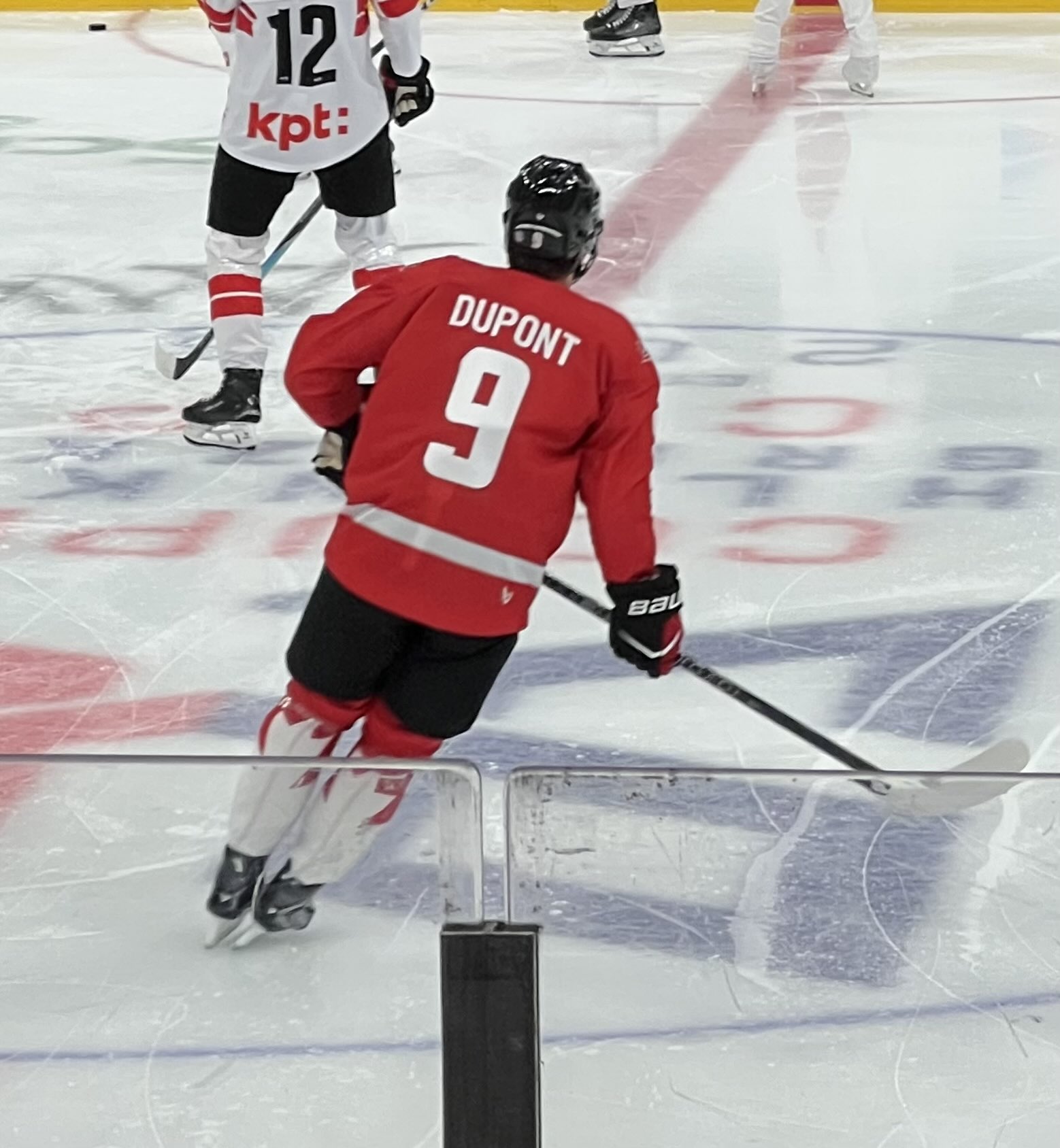
  • Landon DuPont Dominates Beyond the Scoresheet

    Landon DuPont Dominates Beyond the Scoresheet

    Landon DuPont had a game that was indicative of his entire tournament, finishing with only one point despite being by far the most dominant player on the ice. Canada was in rough shape early, being outshot 10-1, but DuPont never let that get to him and continued making plays on every shift even while the players around him were struggling. Earning the C on his jersey, he dragged Canada back into the game with a slap shot from the high slot to tie it late in the first period.

    While he didn’t find the scoresheet again, DuPont remained dynamic in the offensive zone, whipping the puck around and controlling play. His second point of the night nearly came when he set up Maddox Schultz in the dying seconds of the first period, but time ran out. He didn’t receive a point on Malik L’Italien’s goal to give Canada a 3-2 lead either, but the play couldn’t have happened without him. DuPont caused havoc in the offensive zone, crashed the slot and drew all the attention away from L’Italien, giving him the time and space to score.

  • 2026 NHL Draft Pacific Division Preview: The Biggest Need and Storyline for Every Team

    Anaheim Ducks 

    Primary Need: Top-six scoring winger 

    Secondary Need: Offensive finishing consistency 

    Storyline: Turning a long rebuild into real NHL production 

    Anaheim’s rebuild has been one of the longest-running in the league, but also one of the most methodical. The Ducks have accumulated an impressive collection of young talent at nearly every position, particularly on defense and in the middle of the ice. What remains missing is high-end offensive finishing ability on the wing. 

    The organization generates enough young puck-moving talent to drive possession, but the next step in their evolution is converting that control into consistent scoring. That is where elite wingers become essential. Without them, progress remains theoretical rather than tangible. 

    The Ducks’ front office now faces a shift in philosophy. The question is no longer whether they are rebuilding, but how quickly they want to transition into competitiveness. Drafting for upside rather than safe depth may be necessary at this stage. 

    The broader storyline is conversion. Anaheim has spent years building the foundation. The draft now becomes about turning that foundation into a roster capable of producing results. 

    Calgary Flames 

    Primary Need: Franchise center 

    Secondary Need: Long-term offensive identity 

    Storyline: Searching for the player to define the next era 

    Calgary enters the draft at a crossroads. The organization has retooled its roster and accumulated respectable depth, but it still lacks the most important piece in hockey: a true franchise center. 

    Without that player, long-term contention becomes significantly more difficult. The Flames have enough complementary talent to remain competitive at times, but not enough elite offensive drivers to consistently dictate games. 

    The draft represents one of the most important opportunities in years to change that trajectory. The challenge is that franchise centers are rare, and drafting one often requires both luck and conviction. 

    The broader storyline is identity. Calgary is still searching for the player who will define its next competitive window. 

    Edmonton Oilers 

    Primary Need: Goaltending future stability 

    Secondary Need: Defensive prospect pipeline 

    Storyline: Winning now while quietly addressing long-term uncertainty 

    Edmonton is fully locked into its current championship window, led by two of the most dominant offensive players in the league. As a result, the organization’s priorities are heavily weighted toward the present. 

    However, even elite contenders must address long-term structural questions. Goaltending consistency and defensive depth remain the most persistent organizational concerns. 

    The Oilers’ draft strategy is therefore less about immediate impact and more about long-term insurance. Developing a future starter or reliable defensive contributor could help extend the window beyond the current core’s prime years. 

    The broader storyline is balance. Edmonton is built to win now, but the draft is where tomorrow is quietly shaped. 

    Los Angeles Kings 

    Primary Need: High-end offensive talent 

    Secondary Need: Game-breaking skill in transition 

    Storyline: Breaking through a competitive ceiling 

    The Kings have built a strong, structured team that consistently competes in the Western Conference. However, despite their defensive stability and depth, the organization continues to search for elite offensive game-breakers. 

    Without high-end skill capable of changing playoff series, the Kings risk remaining competitive without taking the next step into true contention. 

    The draft becomes a critical opportunity to add dynamic forwards who can elevate the team’s offensive ceiling. Los Angeles has depth, structure, and experience, but still lacks enough top-tier scoring talent. 

    The broader storyline is evolution. The Kings must decide whether to continue relying on structure or take more aggressive swings at offensive upside. 

    San Jose Sharks 

    Primary Need: Top-pair defenseman 

    Secondary Need: Defensive foundation building 

    Storyline: Completing the rebuild from the back end out 

    San Jose’s rebuild has been defined by patience and asset accumulation. The organization has already made significant strides in building out its forward pipeline, but the defensive side remains the final major piece of the puzzle. 

    A top-pair defenseman is essential for long-term balance. Without one, even strong forward depth can struggle to translate into sustained competitiveness. 

    The Sharks are now in the stage where drafting is about shaping structure, not just collecting talent. The emphasis shifts toward long-term roster construction and identity formation. 

    The broader storyline is completion. The Sharks are no longer starting their rebuild. They are finishing it. 

    Seattle Kraken 

    Primary Need: Elite offensive star 

    Secondary Need: Franchise-defining scorer 

    Storyline: Searching for a true identity driver 

    Seattle has built a balanced, competitive roster in a relatively short period of time. The organization is strong in depth, structure, and team play. What it still lacks is a true superstar. 

    Most successful NHL teams eventually rely on at least one elite offensive driver capable of dictating games and carrying playoff series. The Kraken are still searching for that player. 

    The draft is the most realistic path to acquiring that level of talent. Seattle has enough supporting pieces already in place to take a swing on high-end offensive upside. 

    The broader storyline is identity creation. The Kraken are competitive, but still defining what kind of team they ultimately want to be. 

    Vancouver Canucks 

    Primary Need: Center depth and long-term sustainability 

    Secondary Need: Prospect pipeline reinforcement 

    Storyline: Protecting a competitive window 

    Vancouver has worked hard to return to competitiveness after years of inconsistency. The current roster has shown it can compete, but sustaining that success requires continued investment in the prospect pipeline. 

    Center depth is particularly important. Without it, teams often struggle to maintain consistency over long NHL seasons and playoff pushes. 

    The Canucks must balance present expectations with future planning. Drafting well will determine whether this current competitive phase becomes a sustained window or a short-lived peak. 

    The broader storyline is sustainability. The Canucks are no longer rebuilding, but they must ensure they do not stall out after returning to relevance. 

    Vegas Golden Knights 

    Primary Need: Organizational depth replenishment 

    Secondary Need: Long-term prospect sustainability 

    Storyline: Can the model keep working indefinitely? 

    Vegas has built its identity on aggressive roster construction and constant pursuit of high-end NHL talent. That strategy has delivered immediate success, including a Stanley Cup, but it has also consistently reduced draft capital and prospect depth. 

    The organization does not have many glaring NHL roster weaknesses. The concern is more about what the system looks like three to five years from now. 

    Drafting for depth and sustainability becomes increasingly important, even for a contender. Maintaining a steady pipeline of contributors is essential to avoiding long-term stagnation. 

    The broader storyline is sustainability versus aggression. Vegas has mastered winning now, but the draft will determine how long that approach remains viable. 

  • 2026 NHL Draft Central Division Preview: The Biggest Need and Storyline for Every Team

    Chicago Blackhawks 

    Primary Need: Elite offensive talent to complement the core 

    Secondary Need: Long-term top-six winger depth 

    Storyline: Building properly around a franchise cornerstone 

    Chicago’s rebuild is no longer theoretical. With a franchise center already in place, the Blackhawks are now in the phase every rebuilding team dreams about: building support around a true cornerstone player. That shifts the draft conversation away from “who might become a star someday” toward “who can help maximize the window of a generational talent.” 

    The organization still lacks enough high-end finishing talent on the wings. While there is promising depth in the system, there remains a gap between potential and elite offensive production. That gap becomes more noticeable when projecting playoff-caliber hockey, where scoring depth is essential. 

    Chicago’s front office must also decide how aggressive to be in accelerating the rebuild. There is temptation to supplement the roster through trades or free agency, but long-term sustainability still depends on internal development through the draft. 

    The broader storyline is alignment. The Blackhawks finally have a direction again, but success will depend on how effectively the rest of the roster is built around their central piece. This draft is less about discovery and more about optimization. 

    Colorado Avalanche 

    Primary Need: Cost-controlled depth forwards 

    Secondary Need: Defensive prospect pipeline replenishment 

    Storyline: Staying elite while the salary cap tightens 

    Colorado remains one of the NHL’s premier contenders, anchored by elite top-end talent and a proven championship core. However, sustained success brings a familiar challenge: cap pressure and thinning depth. 

    The Avalanche no longer draft from a position of need at the top of the roster. Instead, the focus has shifted toward maintaining a steady flow of affordable depth players who can step into NHL roles without disrupting the salary structure. 

    Defensive depth is also an organizational priority. While the top of the roster remains strong, the pipeline behind it requires continuous reinforcement to ensure long-term stability. 

    The front office dilemma is straightforward. Do they continue targeting safe, NHL-ready players or take higher-upside swings that may take longer to develop? 

    The larger storyline is sustainability. Colorado has already proven it can win at the highest level. The challenge now is ensuring the window remains open as long as possible. 

    Dallas Stars 

    Primary Need: Goaltending succession planning 

    Secondary Need: Defensive depth development 

    Storyline: Preparing for the eventual transition in net 

    Dallas has built one of the NHL’s most complete rosters, combining high-end offensive talent with strong defensive structure. The organization is firmly in win-now mode, but even contenders must plan ahead. 

    The most pressing long-term concern is goaltending succession. While the current roster remains competitive, the organization must eventually identify a future starter capable of maintaining that standard. 

    The Stars also need continued defensive depth development to support long playoff runs. Depth at all positions becomes increasingly important as postseason expectations grow. 

    The challenge for Dallas is timing. Drafting for the future while competing in the present requires disciplined roster planning. 

    The broader storyline is stability. The Stars are built to contend now, but the next great team is always being shaped in the draft. 

    Minnesota Wild 

    Primary Need: High-end center depth 

    Secondary Need: Right-shot defensive stability 

    Storyline: Breaking through the playoff ceiling 

    Minnesota has been a consistently competitive team, but the organization continues to search for the final pieces needed to become a true contender. Center depth remains the most important gap. 

    While the Wild have strong veteran leadership and defensive structure, the lack of elite center talent limits offensive ceiling in high-pressure playoff environments. 

    The organization also continues to seek right-shot defensemen who can complement its existing blue line structure. 

    The front office must decide whether to maintain a patient approach or become more aggressive in acquiring elite talent. 

    The broader storyline is progression. Minnesota is no longer rebuilding, but it has not fully broken into the league’s top tier either. The draft remains the most reliable path toward that next step. 

    Nashville Predators 

    Primary Need: Dynamic offensive skill 

    Secondary Need: High-end forward creativity 

    Storyline: Shifting identity toward skill and speed 

    Nashville has traditionally built its identity around structure, defense, and work ethic. While that approach has produced consistent competitiveness, it has not always translated into elite offensive production. 

    The organization is now in a phase where adding high-skill forwards is essential to modernizing its lineup. Without more dynamic offensive players, the team risks remaining competitive but limited. 

    The draft provides an opportunity to inject creativity and offensive upside into a system that has often prioritized safety over explosiveness. 

    The larger storyline is evolution. The Predators are attempting to adapt to a league that increasingly rewards speed and skill over structure alone. 

    St. Louis Blues 

    Primary Need: Top-pair defenseman 

    Secondary Need: Long-term defensive stability 

    Storyline: Rebuilding without fully resetting 

    The Blues find themselves in an interesting middle ground. The organization is not undergoing a full teardown, but it is clearly in a transition phase. 

    Defensive structure remains a key concern. A top-pair defenseman would provide long-term stability and help anchor the next competitive iteration of the roster. 

    St. Louis must also balance competitiveness with development. The challenge is avoiding the pitfalls of remaining “in between” contending and rebuilding for too long. 

    The broader storyline is direction. The Blues are reshaping their identity while attempting to remain relevant in the standings. 

    Utah Mammoth 

    Primary Need: Franchise offensive talent 

    Secondary Need: Identity-defining skill player 

    Storyline: Establishing a new hockey identity 

    Utah is still in the early stages of defining its long-term organizational identity. Expansion-era teams often face the challenge of turning depth into star power, and that is where the Mammoth currently stand. 

    While the roster contains promising young pieces, the organization still lacks a clear offensive centerpiece capable of defining the franchise’s direction. 

    The draft is critical in shaping not just the roster, but the identity of the team moving forward. A true high-end forward could accelerate that process significantly. 

    The broader storyline is establishment. Utah is not refining an identity yet. It is still building one. 

    Winnipeg Jets 

    Primary Need: Top-six center 

    Secondary Need: Forward depth sustainability 

    Storyline: Maximizing a shrinking window 

    Winnipeg has remained competitive through strong drafting, development, and elite goaltending at times. However, maintaining that level of success requires continuous reinforcement at key positions. 

    Center depth remains the most important long-term need. Without it, sustaining offensive consistency becomes difficult over the course of a long season. 

    The Jets face a familiar small-market challenge: maximizing current competitiveness while ensuring the pipeline does not thin out over time. 

    The broader storyline is urgency. Windows in the NHL are rarely permanent, and Winnipeg must ensure it continues to refresh its roster with impactful young talent. 

  • 2026 NHL Draft Metropolitan Division Preview: The Biggest Need and Storyline for Every Team

    Carolina Hurricanes 

    Primary Need: Elite finishing winger 

    Secondary Need: Power-play scoring consistency 

    Storyline: Can structure alone win in the playoffs? 

    The Hurricanes have built one of the NHL’s most analytically sound and structurally dominant teams. Year after year, they generate shot volume, control possession, and remain among the league’s most consistent regular-season teams. Yet the same question returns in every playoff cycle: where is the elite finisher? 

    Carolina’s system creates chances in waves, but the organization continues to lack a true game-breaking scorer capable of consistently converting high-danger opportunities in the postseason. The draft represents one of the few cost-controlled ways to add that level of talent. 

    The prospect pool is strong but leans toward high-floor, two-way players rather than elite offensive drivers. That creates a philosophical tension for management: continue drafting for system fit or take swings on high-upside scoring talent even if it does not perfectly align with the Hurricanes’ identity. 

    The broader storyline is whether Carolina’s model has a ceiling. Few teams are as consistent in the regular season, but playoff hockey often rewards star power over structure. This draft is another opportunity to close that gap. 

    Columbus Blue Jackets 

    Primary Need: Top-pair defenseman 

    Secondary Need: Goaltending stability 

    Storyline: Turning raw talent into a coherent identity 

    Columbus has quietly accumulated a strong collection of young forwards, but the organizational structure remains incomplete. Defensive depth and goaltending consistency continue to lag behind the forward pipeline. 

    The Blue Jackets need a true top-pair defenseman capable of handling heavy minutes against elite competition. Without that anchor, the team struggles to transition from promising offensive performances to consistent results. 

    The front office dilemma is whether to continue prioritizing skill or shift toward defensive structure. Columbus has often leaned toward drafting upside, but long-term competitiveness may require more balance. 

    The broader question is identity. The Blue Jackets have spent years oscillating between rebuild and contention without fully establishing a foundation. This draft represents another opportunity to correct that imbalance. 

    New Jersey Devils 

    Primary Need: Defensive depth and shutdown capability 

    Secondary Need: Goaltending consistency 

    Storyline: Balancing firepower with structure 

    The Devils have built one of the most dynamic young offensive cores in the NHL. Their speed, skill, and transition game make them a constant threat offensively. However, defensive inconsistency and goaltending uncertainty continue to limit their ceiling. 

    The organization does not need more scoring talent. It needs balance. Specifically, defensive players capable of handling difficult minutes against elite competition. 

    The draft provides an opportunity to address those structural weaknesses without sacrificing long-term offensive strength. 

    The central question is whether New Jersey can evolve from an exciting young team into a complete contender. That evolution almost always requires difficult roster balancing decisions. 

    New York Islanders 

    Primary Need: Offensive skill and transition ability 

    Secondary Need: Younger forward core injection 

    Storyline: Modernizing a traditional identity 

    The Islanders have long been defined by structure, defensive discipline, and goaltending. While that approach has delivered playoff appearances, it has also limited offensive upside. 

    The organization now faces pressure to modernize its roster composition. Adding high-skill forwards is essential to avoid stagnation in a rapidly evolving league. 

    The challenge is philosophical. The Islanders’ identity has been built on low-event hockey, but long-term success may require more creativity and offensive risk-taking. 

    This draft represents an opportunity to begin shifting that balance. 

    New York Rangers 

    Primary Need: Center depth and future top-six stability 

    Secondary Need: Organizational succession planning 

    Storyline: Retool on the fly 

    The Rangers remain in a strong position to start a retool on the fly, but they must also prepare for eventual roster turnover. Center depth is particularly important given the demands of long playoff runs.  

    The organization’s prospect pipeline contains intriguing talent but lacks certainty in key middle positions. The draft provides a chance to address that gap while maintaining competitive balance. A focus on Centers will be their best use of the two first round picks. 

    Philadelphia Flyers 

    Primary Need: Franchise center 

    Secondary Need: High-end offensive upside 

    Storyline: The missing piece of the rebuild 

    Philadelphia’s rebuild has produced a solid foundation of young players, but the organization still lacks the most important piece in hockey: a true first-line center. 

    Without that cornerstone, long-term contention remains difficult. The Flyers have multiple complementary pieces, but the draft remains their best path toward acquiring elite talent down the middle. 

    The challenge is patience versus urgency. Franchise centers are rarely available outside the draft, making each selection at the top of the board critical. 

    Pittsburgh Penguins 

    Primary Need: Organizational reset across all positions 

    Secondary Need: Future core identification 

    Storyline: Life after a generational era 

    The Penguins are transitioning out of one of the most successful eras in modern NHL history. As their core ages, the organization must begin identifying the next generation of foundational players. 

    This draft is less about immediate impact and more about long-term direction. Pittsburgh’s prospect pool must be rebuilt with an eye toward sustainability rather than short-term fixes. 

    The central question is how aggressively the organization commits to that transition. 

    Washington Capitals 

    Primary Need: Top-pair defenseman 

    Secondary Need: Long-term structural balance 

    Storyline: Building beyond a legendary era 

    Washington has already secured its place in NHL history, but now faces the challenge of building its next identity. With aging core pieces, the focus shifts toward long-term roster balance. 

    A top-pair defenseman would help anchor the next competitive phase of the organization. 

    The broader question is whether Washington can successfully transition from one era to the next without entering a prolonged rebuild. 

  • The Final Weekly 2026 Draft Eligible Three Stars

    By Stuart Miller-Davis

    The 2025-26 season has officially come to a close for NHL Draft prospects around the world. The Kitchener Rangers capped off an undefeated run at the Memorial Cup by capturing the franchise’s third title, while Finland closed out the World Championship in Switzerland by defeating the host nation for gold.

    With the season now complete, scouts and NHL front offices will spend the coming weeks relying on video review for final evaluations ahead of the 2026 NHL Draft. With only a limited number of draft-eligible players still active over the past week, this edition of the three stars serves as a season-ending look at the prospects who made the biggest impact in this column throughout the year.

    Here are Draft Prospects Hockey’s 2026 Draft-Eligible Three Stars for the 2025-26 season.


    Gavin McKenna | LW | Penn State (NCAA)

    The top-ranked prospect on Draft Prospects Hockey’s 2026 NHL Draft Rankings also claims the top spot in the season-ending three stars.

    After taking some time to adjust to the college game, Gavin McKenna quickly established himself as one of the most dangerous offensive players in the NCAA. The Whitehorse, Yukon native finished his freshman campaign at Penn State with 51 points (15 goals, 36 assists) in 35 games, ranking fourth in NCAA scoring as an 18-year-old freshman.

    McKenna also played a major role for Team Canada at the World Junior Championship in Minnesota. Following a limited role in his first tournament appearance in 2024-25, where he recorded just one point in five games, the former Medicine Hat Tigers star returned with a dominant showing. He produced 14 points (four goals, 10 assists) in seven games to help Canada capture the bronze medal.


    Ivar Stenberg | LW/RW | Frölunda HC (SHL)

    Ivar Stenberg’s remarkable draft season earns him the second star of the year.

    The Swedish winger produced near-historic numbers in the SHL, recording 33 points (11 goals, 22 assists) in 43 games. Since 1990, only Daniel Sedin, Markus Näslund, and Henrik Sedin have produced more points in their 18-year-old season in Sweden’s top professional league.

    The second-ranked prospect on Draft Prospects Hockey’s 2026 NHL Draft Rankings also excelled internationally. The Stenungsund native recorded 10 points (four goals, six assists) in seven games at the World Junior Championship, helping Sweden capture gold.

    Stenberg later debuted with Sweden’s senior national team during the European Hockey Tour, where he averaged a point per game across five contests before earning a roster spot at the World Championship.

    At the tournament in Switzerland, the younger brother of St. Louis Blues forward Otto Stenberg continued to impress against elite competition. His eight points in eight games ranked behind only Patrik Laine, Auston Matthews, Juraj Slafkovský, and Paul Kariya among draft-eligible players in tournament history.


    Viggo Björck | C | Djurgårdens IF (SHL)

    While Viggo Björck did not produce the same offensive totals as fellow Swede Ivar Stenberg in the SHL, his overall body of work cemented him as one of the premier prospects in the 2026 class.

    The Stockholm native recorded 15 points (six goals, nine assists) in 42 SHL games during his draft season, but his progression throughout the year was equally notable. Björck earned increased responsibility as the season progressed and eventually rose into Djurgårdens’ top-line center role late in the campaign.

    After the club’s professional season ended in the opening round of the playoffs, Björck joined Djurgårdens’ U20 squad and immediately dominated. The undersized center recorded 20 points (eight goals, 12 assists) in nine playoff games while helping lead the team to a U20 championship.

    Björck also enjoyed a standout international season. Skating alongside Stenberg on Sweden’s second line at the World Junior Championship, he contributed nine points (three goals, six assists) in seven games during the gold-medal run.

    Like Stenberg, Björck also earned his first call-up to Sweden’s senior national team. He recorded two goals in five European Hockey Tour games before adding six points (one goal, five assists) in eight appearances at the World Championship.


    Daxon Rudolph | RHD | Prince Albert Raiders (WHL)

    Few draft-eligible defensemen were more entertaining or productive during the 2025-26 season than Daxon Rudolph.

    The Prince Albert Raiders blueliner finished third among WHL defensemen in scoring with 78 points (28 goals, 50 assists) in 68 games. Wearing an “A” in his second season with the club, the Lacombe, Alberta native helped lead Prince Albert to first place in the WHL’s Eastern Conference.

    The 6-foot-2, 203-pound defender carried that offensive production into the postseason. Rudolph tied Seattle Kraken prospect Julius Miettinen for the WHL playoff scoring lead with 27 points in 19 games.

    Behind the leadership of Rudolph and Vancouver Canucks prospect Braeden Cootes, the Raiders advanced all the way to the WHL Final before falling to the Everett Silvertips in five games.


    Honorable Mentions

    Caleb Malhotra | C | Brantford Bulldogs (OHL)

    Carson Carels | LHD | Prince George Cougars (WHL)

    Liam Ruck | RW | Medicine Hat Tigers (WHL)

  • Weekly 2026 Draft Eligible Three Stars

    Weekly 2026 Draft Eligible Three Stars

    Draft-eligible talent across junior and professional leagues continued to deliver in high-pressure situations this week, with playoff hockey and international competition providing the perfect stage for prospects to elevate their stock. As the 2026 NHL Draft approaches, consistent production and timely performances remain key separators among the class.

    This week’s three stars feature a towering Quebec Maritimes Junior Hockey League (QMJHL) center finding his stride in a crucial push for a game 7, a Swedish pivot dominating at the U20 level following his SHL season, and a well-traveled Latvian defender who has found his offensive touch in the DEL playoffs.

    Here are the draft-eligible three stars for the week of March 30 to April 6.


    Maddox Dagenais | C | Quebec Remparts (QMJHL)

    Quebec Remparts center Maddox Dagenais put together an impressive draft season, positioning himself as a potential late first-round or early second-round selection. The 37th-ranked skater on Draft Prospects Hockey’s 2026 NHL Draft Rankings finished tied for third among QMJHL draft eligibles with 30 goals, while his 62 points (30 goals, 32 assists) ranked fifth in the group. The 6-foot-4 pivot also represented Team CHL at the second annual CHL USA Prospects Challenge, recording an assist across the three-game series.

    Dagenais has elevated his play as the stakes have increased in the postseason. Despite being held off the scoresheet in Games 1 and 2 against the Charlottetown Islanders — registering 11 shots on goal over that span — the Montreal native has responded with six points (three goals, three assists) in the following four games, helping the Remparts push their series to a decisive Game 7.

    In Game 3, with the score tied late in regulation, Dagenais helped initiate the sequence that led to a dramatic, last-second power-play goal as Quebec secured a crucial victory. He followed that up with a standout performance in Game 4, opening the scoring with a strong end-to-end rush capped by a precise wrist shot over the glove. Later in the game, with under a minute remaining, he added another goal to bring the Remparts within one, though the comeback ultimately fell short in a 3-2 loss.

    Dagenais recorded an assist in Game 5, continuing to generate offense despite another narrow 3-2 defeat. Facing elimination in Game 6, he delivered one of his most impactful performances of the series. He helped open the scoring by moving the puck to the point for a goal by defenseman Charlie Morrison. In the third period he moved the puck down low before finding space on a 4-on-3 power play, where he buried a one-timer over the glove to extend the lead and help force a winner-take-all Game 7.


    Viggo Björck | C | Djurgårdens IF (SHL)

    Swedish center Viggo Björck continues to reinforce his status as one of the top prospects in the 2026 NHL Draft class. Following the conclusion of Djurgårdens’ SHL season, the Stockholm native joined the club’s U20 side for the playoffs and has been a dominant offensive presence. His 12 points (six goals, six assists) in five postseason games for 2.40 points per game ranks as the best point-per-game mark for draft eligibles in the U20 Nationell. He has been playing a key role in pushing his team to the semifinals.

    Björck made an immediate impact in the series opener against Leksands. He evened the score at one midway through the second period, jumping into open space off the bench and finishing quickly with a wrist shot. The 2026 World Junior gold medalist struck again in the third period, breaking a 3-3 tie with a power-play goal after finding himself uncovered in the slot. He later added an assist on the empty-net goal to seal a 5-3 victory.

    The skilled forward followed that up with another strong showing in Game 2. Björck opened the scoring with an impressive individual effort, taking a pass through the neutral zone, driving wide while protecting the puck, and finishing with a smooth backhand-to-forehand move to lift the puck over the goaltender. He added a power-play assist later in the game as Djurgårdens secured a 2-0 win and took a two-game series lead.


    Albert Smits | LHD | EHC München (DEL)

    Latvian defender Albert Smits has taken an unconventional path in his draft year, gaining experience across multiple leagues and international stages. The December-born blueliner began the season in Finland with Jukurit, recording 13 points (six goals, seven assists) in 38 games. He later logged significant minutes for Latvia at the 2026 World Junior Championship and represented his country at the Olympic Games, where he contributed two assists in four contests.

    Following the Olympics, Smits joined EHC München on a loan for the stretch run and postseason. After a limited role in the regular season, the 6-foot-3, 205-pound defender has found another level offensively in the playoffs.

    In a back-and-forth contested series against ERC Ingolstadt, Smits broke through in Game 5, extending his team’s lead in the third period with a heavy point shot that beat the goaltender cleanly. He followed that performance with a three-point effort in Game 6, recording two secondary assists before adding an empty-net goal to help seal a 7-3 victory.

    Smits’ recent surge highlights his ability to adapt quickly and contribute in key moments, further strengthening his case as one of the more intriguing defensive prospects in the 2026 class.

  • Weekly 2026 NHL Draft Eligible Three Stars

    The final opportunities for NHL Draft prospects to make their case on the ice are here, with the Memorial Cup underway and the IIHF World Championship entering its medal rounds. For many players, these games represent one last chance to leave a lasting impression before NHL teams make their selections in June.

    This week’s three stars feature a Latvian defenseman with a chance to make history for his country, a Finnish winger whose breakout first season in the WHL is translating to success on junior hockey’s biggest stage, and an OHL blueliner whose steady postseason play continues to push him up draft boards.

    Here are the draft-eligible three stars for the week of May 18 to 25.


    Albert Smits | LHD | Latvia (WC)

    Latvian defenseman Albert Smits has taken a unique path through his draft year. The Valmiera native left home at just 13 years old to pursue his hockey dreams, and five years later, he finds himself on the doorstep of an NHL career.

    The 18-year-old began the season with Jukurit in Liiga, appearing in 38 games and recording 13 points (six goals, seven assists). From there, he represented Latvia at the World Junior Championship in Minnesota and the Olympic Games in Italy before joining EHC München in the DEL on loan for the remainder of the season and its playoff run.

    Now wearing Latvia’s colors one final time in his draft season, Smits has continued to make an impression at the IIHF World Championship in Switzerland. The 6-foot-3, 204-pound blueliner recorded three assists in four games this past week.

    Smits picked up an assist against Austria while leading Latvia’s defense in ice time in a 3-1 loss. He was held off the scoresheet in a 7-1 defeat against Finland and again against the United States, though he finished as a plus-2 while leading the team in ice time during Latvia’s 4-2 upset victory.

    The potentially highest-drafted Latvian in NHL history closed out his week with a two-assist performance in a 6-0 win over Great Britain.


    Matias Vanhanen | LW | Everett Silvertips (WHL)

    Matias Vanhanen went undrafted after posting 47 points (17 goals, 30 assists) in 42 games in Finland’s U20 league and producing at a point-per-game pace at the U18 World Championship. His decision to move to the WHL has proven to be a valuable one, positioning him to hear his name called this time around.

    The September 2007-born winger led the WHL champion Everett Silvertips in regular-season scoring with 87 points (21 goals, 67 assists) in 62 games. He followed that with 24 points (12 goals, 12 assists) in 18 playoff contests, finishing second on the team behind Seattle Kraken prospect and fellow Finnish standout Julius Miettinen.

    The Nokia native opened the Memorial Cup in impressive fashion. He recorded a secondary assist on a goal by Detroit Red Wings prospect Carter Bear to extend Everett’s lead to 4-2.

    Vanhanen later sealed the victory with a shorthanded empty-net goal with just 20 seconds remaining, helping the Silvertips secure a 5-3 win and continue his standout postseason.


    Alexander Bilecki | LHD | Kitchener Rangers (OHL)

    Alexander Bilecki may not carry the offensive flair of some of the more prominent defensemen in the 2026 draft class, but his steady play has made him an important piece of a championship-caliber Kitchener Rangers team.

    In his second season with the Rangers, the former Mississauga Rebel recorded 29 points (nine goals, 20 assists) in 66 regular-season games and added another 11 points in 18 playoff appearances.

    The 49th-ranked North American skater on NHL Central Scouting’s final rankings continued that production in Kitchener’s Memorial Cup opener against the host Kelowna Rockets.

    Bilecki picked up a secondary assist on Tampa Bay Lightning prospect Sam O’Reilly’s third-period goal before adding a primary assist on another late tally, helping the Rangers pull away for a convincing 5-0 victory.

  • Weekly 2026 NHL Draft Eligible Three Stars

    By Stuart Miller-Davis

    With playoff runs coming to an end across much of the hockey world, the draft year is officially winding down for many NHL hopefuls. While a select few still have opportunities to impress at the Memorial Cup or the IIHF World Championship, most prospects have already completed the most important campaigns of their young careers.

    This week’s three stars feature two Swedish forwards continuing to prove they can thrive against significantly older competition, along with an overage QMJHL forward whose strong finish helped deliver a championship for his club.

    Here are the draft-eligible three stars for the week of May 11 to 18.


    Ivar Stenberg | RW/LW | Sweden (WC)

    Swedish winger Ivar Stenberg has shown throughout his draft year that no stage is too big. After producing one of the strongest seasons ever by an 18-year-old in the SHL and playing a major role in Sweden’s gold medal run at the World Junior Championship, the Stenungsund native is now making his mark at the IIHF World Championship.

    The 6-foot forward recorded three assists in as many games this past week in Switzerland and has looked right at home on Sweden’s top line alongside Detroit Red Wings standout Lucas Raymond and fellow draft-eligible forward Viggo Björck.

    The second-ranked skater on Draft Prospects Hockey’s 2026 NHL Draft Rankings recorded a pair of assists in Sweden’s dominant win over Denmark. His playmaking ability was on full display, particularly on a setup to Björck, who converted with a one-timer past the Danish goaltender.

    Stenberg also added a secondary assist on a goal by Toronto Maple Leafs defenseman Oliver Ekman-Larsson in Sweden’s comeback attempt against Czechia, though the Swedes ultimately fell short.


    Viggo Björck | C | Sweden (WC)

    Viggo Björck continues to strengthen his draft stock with every opportunity against older competition. The Swedish center emerged as Djurgården’s top-line pivot late in the season before dominating the U20 playoffs, where he recorded 20 points (eight goals, 12 assists) in nine games and helped lead his club to a league championship.

    Though slightly undersized at 5-foot-10 and 172 pounds, the Stockholm native has continued to prove that his skill and hockey sense allow him to thrive against more physically mature competition.

    That trust has carried over to the international stage, where Sweden has deployed Björck at center on its top line at the World Championship.

    Both of his tournament points came against Denmark, but his impact has extended well beyond the scoresheet. Among Swedish forwards, only established NHL players Lucas Raymond, Joel Eriksson Ek, and Adrian Kempe have averaged more ice time than the younger brother of Vancouver Canucks prospect Wilson Björck.


    Liam Lefebvre | C | Chicoutimi Saguenéens (QMJHL)

    Overage forward Liam Lefebvre has made a seamless transition from United States prep school hockey to Canadian major junior, emerging as an important contributor during a championship run.

    The Montreal native recorded 29 points (15 goals, 14 assists) in 35 games with the Rimouski Océanic before being acquired by the Chicoutimi Saguenéens ahead of the trade deadline.

    The 6-foot-3, 203-pound center elevated his production after the move to one of the QMJHL’s top clubs, recording 30 points (17 goals, 13 assists) in 25 games. Despite averaging just 14:32 of ice time per game, the Trinity-Pawling alumnus finished third on the team in points per game among skaters who appeared in at least 45 contests.

    Lefebvre added four points in four games this past week, helping the Saguenéens secure their first league championship since 1994. His ability to provide secondary scoring and consistent two-way play proved to be an important part of Chicoutimi’s title-winning run.

  • Weekly 2026 NHL Draft Eligible Three Stars

    As the calendar turns deeper into May, the road to a championship continues to narrow across Canadian major junior hockey. With league titles and Memorial Cup berths on the line, draft-eligible players are being tested in the highest-pressure environments of their seasons, while every standout performance carries added weight ahead of the 2026 NHL Draft.

    This week’s three stars feature two highly mobile, offensive-minded defensemen from the Quebec Maritimes Junior Hockey League (QMJHL) who have played central roles in their teams’ postseason runs, along with an overage Ontario Hockey League (OHL) goaltender whose combination of regular-season consistency and playoff resilience should earn him renewed draft attention.

    Here are the draft-eligible three stars for the week of May 4 to 11.


    Tommy Bleyl | RHD | Moncton Wildcats (QMJHL)

    Slick-skating defenseman Tommy Bleyl has taken the QMJHL by storm in his first season north of the border. The Schenectady, New York native led all league defensemen in regular-season scoring with 81 points (13 goals, 68 assists) in 63 games and has carried that production into the postseason, where his 22 points (six goals, 16 assists) in 17 games lead the league.

    Bleyl delivered several key moments in the deciding game of Moncton’s semifinal series against the Blainville-Boisbriand Armada, helping propel the Wildcats to their second consecutive trip to the QMJHL Final. Just under five minutes after the Armada tied the game at two, the 6-foot, 170-pound blueliner jumped into open space in the offensive zone and wired a wrist shot past the goaltender to restore Moncton’s lead. He added an empty-net goal late in the third period to seal a 6-2 victory.

    The 12th-ranked defenseman on Draft Prospect Hockey’s 2026 NHL Draft Rankings is still searching for his first point of the QMJHL Final, though he has remained active offensively, registering seven shots on goal through the opening two games.


    Xavier Villeneuve | LHD | Blainville-Boisbriand Armada (QMJHL)

    Xavier Villeneuve’s draft season was interrupted by injury, but the dynamic defender still managed to leave a strong impression. Despite missing time from early January through mid-March, the Laval, Quebec, native recorded 38 points (six goals, 32 assists) in just 37 regular-season games.

    The 2025 U18 gold medalist continued to lead from the back end during the postseason, producing 14 points (six goals, eight assists) in 17 games while serving as one of the Armada’s most important contributors.

    The fifth-ranked defenseman on Draft Prospect Hockey’s 2026 NHL Draft Rankings appeared in just one game this week, but he made his presence felt. With Blainville-Boisbriand trailing Moncton 2-1 early in the second period, Villeneuve joined the rush, found open ice, and finished a pass into a nearly open cage to briefly tie the game.

    Though the Wildcats ultimately pulled away for a 6-2 win, Villeneuve’s ability to create offense and influence play in critical moments remained evident throughout the postseason.


    Ben Hrebik | G | Barrie Colts (OHL)

    Overage goaltender Ben Hrebik has played a pivotal role in Barrie’s run to the J. Ross Robertson Cup Final. The Milton, Ontario native posted a .920 save percentage in 43 regular-season games, tied for the third-best mark in the OHL, and has elevated his game considerably after a difficult postseason in 2024-25.

    After finishing last year’s playoffs with a 1-5 record, a 4.87 goals-against average, and an .867 save percentage, Hrebik has responded with a much stronger showing in 2025-26.

    The 20-year-old netminder was outstanding in the deciding game of the Eastern Conference Final against the Brantford Bulldogs, turning aside all 40 shots he faced in a 5-0 shutout to clinch the series.

    Barrie now faces a difficult challenge after dropping the opening three games of the OHL Final against the Kitchener Rangers, but Hrebik has remained the team’s brightest spot. After allowing four goals on 31 shots in Game 1, the 31st-ranked North American goaltender on NHL Central Scouting’s final rankings responded with back-to-back standout efforts.

    In Game 2, Hrebik made 39 saves on 42 shots through regulation and added another 19 stops in overtime before Kitchener found the game-winner.

    He followed that performance with another exceptional outing in Game 3, making 32 saves in regulation — including a diving stop while shorthanded — to push the game beyond three periods. The Rangers generated 14 shots across two overtime frames before finally scoring the deciding goal.