The 2026 edition of the World Junior Championship has brought plenty of excitement in Minnesota, and the 2026 draft eligibles have been quite impressive at the tournament. Team Sweden advanced to the final in a thrilling shootout victory over Finland, with draft eligibles Ivar Stenberg and Viggo Björck playing big roles. Team Czechia continued its streak of dominance over Canada in elimination games at the tournament. With a stunning pair of late third-period goals, the Czechs will play against the Swedes to try to win the country’s first gold medal at the event since back-to-back wins in 2000 and 2001. Canada will look to capture its first medal in the tournament since 2023 in a bronze medal game with Finland. Here is the second group of three stars for the 2026 World Junior Hockey Championship.
Gavin McKenna | LW | Team Canada (U20)
Gavin McKenna hasn’t been a necessarily dominant force at his second world junior championship but has still demonstrated throughout the tournament why many still have him as the number one prospect in the 2026 class. The Whitehorse, Yukon native led all draft eligibles in the tournament in points before the gold and bronze medal games with ten (three goals, seven assists) in six games.
The top-ranked skater on the Draft Prospect Hockey 2026 NHL Draft Prospect Rankings had his big breakout game of the tournament in a 9-1 rout of Denmark. McKenna opened the scoring with a perfect power play goal. After taking a pass from Montreal Canadiens prospect Michael Hage in the right faceoff dot, McKenna fired a perfectly placed wrist shot into the top corner before the Danish keeper could move over. In the second period, with Canada ahead 4-1, the Penn State prodigy found himself alone in the right faceoff circle yet again. This time it was Nashville prospect Brady Martin feeding him a dish that he served straight to the back of the net in a goal that was eerily similar to his first. With the game already well out of hand with Canada leading 6-1 and outshooting the Danes 35-8, McKenna showed off his slick hands to add insult to injury. Hage found McKenna with a slick cross-ice breakaway-like pass, and after faking a wrist shot, the 2024 CHL Player of the Year tucked the puck in behind the Danish keeper.
McKenna added an assist in games against Finland, Slovakia, and the semifinal loss to Czechia.
Viggo Björck | C | Team Sweden (U20)
With teammate Ivar Stenberg stealing a lot of the headlines about Swedish draft eligibles this season, it might have been easy for Viggo Björck to go under the radar a little bit. That has not been the case. Björck and Stenberg, who have often been paired together on Sweden’s second line, have been almost equally as dangerous in the tournament. The pair are tied for third in tournament scoring among draft eligibles with Jasper Kuhta at seven points in six games.
The younger brother of Vancouver Canucks prospect and teammate at the tournament, Wilson, only missed the scoresheet against Slovakia in the team’s opening game. The 11th-ranked skater on the Draft Prospect Hockey 2026 NHL Prospect Rankings scored twice in an 8-1 rout of Germany in the team’s third game of the tournament but saved perhaps his most impressive showing for the semifinal against Finland.
With the Swedes deadlocked in a 2-2 tie in the second period, Björck helped keep the puck alive in the offensive zone. He forced a turnover straight to Stenberg, who fed Detroit Red Wings prospect Eddie Genborg, and he banked a shot off Finland’s goalie and in for the 3-2 lead. In overtime, Björck was a breakaway machine. He had four one-on-one chances on Petteri Rimpinen but was unable to solve the goalie. Björck also led Swedish forwards in ice time in the semifinal and was the best faceoff man for his team with 10 wins.
Thomas Chrenko | C | Slovakia (U20)
Slovakian center Thomas Chrenko entered the tournament with far less expectation than many other 2026 draft eligibles, but he put on a show that is surely going to make scouts interested. The 33rd-ranked skater on Draft Prospects Hockey’s 2026 NHL Draft Prospects Ranking finished second to McKenna in tournament scoring among draft eligibles before the gold and bronze medal games with eight points (five goals, three assists) in five games.
Chrenko was held off the scoresheet in the tournament opener against Sweden but roared back with a vengeance in game two. He registered nine shots on goal against Germany and scored three of the Slovak’s four goals in the win.
His signature game of the tournament came in a big moment against the host, the United States. In the middle of the first period, with the Slovaks already ahead 1-0, Chrenko unloaded a wrist shot from the left faceoff dot through traffic to give the Slovaks a two-goal advantage. The Slovaks trailing 6-4 with time running out pulled the goalie, and on an almost identical shot to his first, Chrenko drew his squad within one. With a teammate parked right in front of the American crease, Chrenko fired a shot that found its way through to give the Slovaks a chance just as the PA announcer blurted out there were two minutes left in regulation.
Chrenko potted two assists against Switzerland in the Slovaks’ final group stage game. He and the rest of Slovakia struggled mightily against Canada in the quarterfinal. He only registered one shot and finished as a -4.
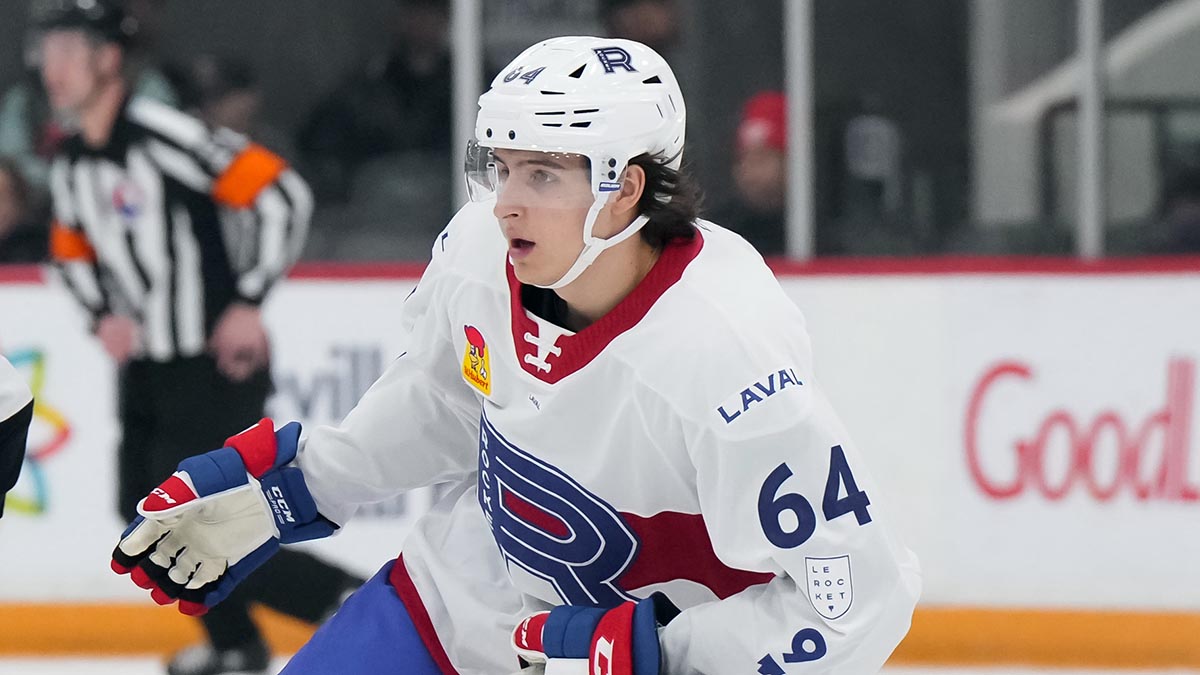
The Montreal Canadiens have another high-quality prospect down on the farm, right-handed defenceman David Reinbacher. Now, his selection in Nashville at the 2023 NHL Entry Draft was controversial among the Canadiens fanbase, as many were hoping to add the Russian offensive winger Matvei Michkov. However, with the arrival of Ivan Demidov, it seems that the gamble paid off for team management as they now also await someone who is seen as a defenseman who can be a number-two in the NHL alongside Lane Hutson.
Part of the problem is that he doesn’t play a flashy style, which limits any fanfare he would otherwise get. His style is highly effective. He plays with a defence-first approach, mobility and ability to launch transitional plays means he will be an impact player that coaches will love. At 21 years old, the 6-foot-3, 207-pound right-shot defenseman maintains a rare profile.
Photo: Jana Chytilova/Freestyle Photography
In 2025-2026 with the Laval Rocket, he has 10 points in 19 games, plus-3, and 8 penalty minutes. Last season, he had 5 points in 10 games with Laval, showing progression in his offensive play. The problem with Reinbacher is that he has missed time, and that slows his curve. Yet, since the recall of Adam Engstrom by the Canadiens, the Rocket have leaned heavily on the Austrian-born defender, and he is responding by playing his best hockey since arriving in North America. Now that he is the go-to defender in Laval, he is playing heavy minutes in all situations, regularly topping 25 mins per game.
Defensively, Reinbacher excels. His defensive reads on the rotation and switches inside his own zone within the team’s defensive scheme are still a work in progress, which will become far more effective the more games he can play at the AHL level before his jump to the NHL. But these things can come with time and the sort of structure that he’s likely to find himself in at the NHL level
He maintains a tight gap, matching his opponent’s footwork and staying inside their reach. He identifies opportunities to attack the opponent and then drives through their hands or uses a strong defensive stick to strip them of the puck. Physically, he uses his footwork to guide them to the outside ,where he can then seal them off along the boards.
Once he gains possession of the puck, he quickly transitions from defence to offence.
At the net-front, he easily boxes out opponents and wins rebounds and loose pucks with urgency and physicality
Offensively, his game isn’t as polished as his defensive game, but he does have quite a lot of untapped potential. The expectation is not for him to become a dominant offensive defenseman in the NHL; instead, the expectation is that he will be a stabilizing force that complements an offensive defenceman while also providing 40-plus point offensive defenceman well while also providing 40 plus point seasons regularly.
Reinbacher is already a capable puck-mover. His first step and smooth edgework all him to explode past any forecheckers. He can make a quick and accurate first pass or activate the rush if he sees a lane open up.
He is still a more straightforward north-south attacker and will need to add more east-west movements in his game to become more deceptive, as well as gain more experience in identifying when pressure is being applied on him as the puck carrier, for him to become a more effective player at the NHL level.
Reinbacher is finally on the right track to becoming the steady 2-way defender that the Habs expected when they drafted him 5th overall in 2023? After starting the past two seasons with an injury, he has never been able to keep good momentum with his progression. This is why he has not been able to get to the level expected of him yet. Nonetheless, it is looking like it is all falling together slowly.
Mental toughness has been on display since his time at the 2023 World Junior Championships in his draft year. There, he played the entire tournament while suffering from an illness that forced him to take fluids and rest between games. Since then, he has suffered multiple injuries that have forced him to miss significant time. His steady and positive approach has been the key to his ability to navigate the pressures of those issues, as well as being a top-five pick. The organization can afford to be patient, ensuring he is given the time to be fully prepared before making a permanent jump to the NHL.
The USHL has become a major source of NHL talent: the league continues to produce dozens of Draft-eligible players every year and remains the top junior league in the U.S.A. for players who often then go on to the NCAA. The USHL has consistently produced a large group of NHL draftees annually. It is more than just depth picks as the USHL has 18 first-round picks from the 2024 and 2025 draft classes alone.
For Montreal, drafting from the USHL represents a pathway toward adding skilled players who may need more time to develop before making the leap to the professional ranks. Historically, until this past year, USHL graduates were taking the NCAA path. Now that the NCAA is accepting players from the CHL, this may affect some decisions in the future. Over the years, several Canadiens picks have come from USHL clubs; some have gone on to become important NHL players, others remain in the prospect pool. Below are some key examples and how they influenced (or may influence) the Canadiens.
USHL franchises are known for strong coaching standards, nutrition and conditioning programs, and the use of video systems. Montreal has publicly emphasized character, maturity, and professionalism, and USHL development programs have a history of development that fits their desired cultural blueprint.
Notable Past USHL Players
Cayden Primeau
Montreal’s 2019 199th overall selection, Primeau, had an award-filled NCAA career, but there is an argument that he was rushed to the pro ranks too quickly. Better to be overripe than underdeveloped.
Louis Leblanc
Leblanc has become a cautionary tale when it comes to development and media pressure. He was the symbolic “hometown pick”. Drafted in Montreal at the 2009 draft, which coincided with the franchise’s centennial. He was selected partly because Montreal felt significant pressure to draft a francophone first-rounder. This decision became a lesson in avoiding political or emotional influence in drafting, reinforcing the need to prioritize best-player-available over market expectations.
His tenure became a developmental system cautionary tale. His rushed, inconsistent development path with limited stability (playing in five different leagues within four seasons) highlighted flaws in Montreal’s development model at that time. The organization later acknowledged this internally, leading to changes in how they handle young prospects (more individualized plans, better patience, clearer development roles).
Jeff Petry
While Petry was not drafted by the Canadiens, the USHL alumnus had a massive impact over his eight seasons in Montréal. Once acquired from the Edmonton Oilers, Petry became the backbone of the Canadiens’ blue line, frequently leading all team defenders in points, with multiple 40-point seasons while playing heavy minutes.
Son nom est Jeffrey Petry et il a 10 buts en 25 matchs.
His presence gave the Canadiens a reliable puck-moving, two-way defender capable of contributing offensively and stabilizing the power play. Petry helped the Canadiens reach their first Stanley Cup Final in over 30 years in 2021. His eventual trade (to Pittsburgh in 2023) also solidified the transition for Montreal to be committed to a full rebuild.
Max Pacioretty
Pacioretty was selected 22nd overall in 2007 by Montreal. He is perhaps the most impactful USHL alumnus to ever be drafted by the Canadiens, so far. Pacioretty was a north-south skater who had a powerful stride. The 2007 USHL Rookie of the Year relied on his outside speed and quick release to score regularly in the NHL. He was the Canadiens’ most consistent offensive weapon from 2011–2018, posting multiple 30-goal seasons and finishing among the NHL’s top even-strength scorers during that stretch.
Despite his size (6’2’’ 215lbs), he was not a classic power forward. Instead, Pacioretty defined the modern power winger in Montreal: fast, heavy, goal-driven, and dangerous off the rush. His success influenced the type of forwards the Canadiens have targeted after him, scoring wingers with size, pace, and shooting talent. Pacioretty finished his Montreal tenure with 226 goals, placing him among the franchise’s top goal scorers of the post-1970s dynasty era. Despite the polarized discourse around him during difficult team stretches, his on-ice production and the long-term value of the trade (to Vegas for current captain Nick Suzuki) give him a legacy that remains both significant and positive.
Current Canadiens USHL Alumnus
Montreal’s roster would look vastly different without the USHL graduates that currently wear La Sainte Flannelle. Each plays an important role in the current rebuild and possible future success of the organization.
Mike Matheson
Matheson is the team’s “elder statesman” at only 31 years of age. He provides top-pair minutes, elite transitional skating, and veteran stability to a blue line that is still dominated by young and still developing defenders. His ability to drive offence, play heavy minutes in all situations, and mentor players like Lane Hutson, Kaiden Guhle, and, in the future, David Reinbacher, makes him both a competitive cornerstone in the short term and a developmental anchor for the franchise’s future.
Lane Hutson
Lane Hutson, drafted 62nd overall in 2022, is currently a foundational, game-changing offensive defenseman for the Montreal Canadiens, a role expected to grow as he becomes the quarterback of the power play and an offensive “engine” at five on five.
In his rookie season he tied the NHL single-season record for assists by a rookie defenseman with 60 and set a Canadiens franchise record for points by a rookie defenseman with 66, surpassing the previous mark held by Chris Chelios which led to him winning the 2024-25 Calder Trophy as the NHL’s top rookie ahead of players like Matvei Michkov, Dustin Wolf and forward Macklin Celebrini for that honor. Hutson is viewed as the Canadiens’ top offensive defenseman of the future
Jakub Dobes
The former Omaha Lancers goaltender, Jakub Dobes, was selected 136th overall (5th round) in 2020. Currently, the Canadiens rely upon his play to remain competitive and in the hunt for their second consecutive playoff berth. He is still young (24) and retains the potential to become a long-term starting goaltender. His athleticism, size (6’4’’) and highly competitive nature have allowed him to challenge Samuel Montembeault for the number one job.
Cole Caufield
Cole Caufield is a cornerstone, elite goalscorer for the Montreal Canadiens, serving as a primary offensive “engine” for the team’s present success and future competitiveness. His roots trace back to the USA Hockey National Team Development Program (NTDP) in the USHL, where he set NTDP goal-scoring records for single season (72) and career (126) goals. Previous record holders were Auston Matthews (55) and Phil Kessel (104), respectively.
He is projected to be a consistent 40-plus goal scorer, a milestone the Canadiens have not seen since Vincent Damphousse scored exactly 40 goals in the 1993-94 season. That makes him a central piece of the Canadiens’ rebuild; he is signed to a team-friendly, long-term contract extension. His line with Suzuki and Juraj Slafkovsky has become one of the most entertaining and offensive lines in the NHL.
Current Canadiens’ USHL Prospects
Sam Harris
133rd overall, 2023 NHL Entry Draft. Since being drafted, he committed to the University of Denver Pioneers (NCAA). At Denver, he’s already shown promise, winning a national title and becoming one of the team’s top offensive threats. He could become a middle-six forward option for Montreal in the future.
Michael Hage
Hage is another example of the Canadiens betting on U.S. juniors, even though he is from Canada and grew up as a fan of the Canadiens. He spent two seasons with the USHL’s Chicago Steel before being selected 21st overall in the 2024 NHL Draft by Montréal before joining the University of Michigan. Last season, he scored 34 points in 33 games, earning Big 10 Rookie of the Year honours, and this year he is on pace to more than double his offensive output.
Jacob Fowler
Drafted in the third round, 69th overall in 2023. He played two seasons in the USHL, where he was named the USHL Goaltender of the Year and won the Clark Cup championship in 2023. He went on to play two seasons with Boston College. He currently plays for the Laval Rocket in the American Hockey League (AHL) and is considered the netminder of the future for the franchise.
Sean Farrell
The undersized forward was selected by Montreal with 124th overall (4th round) in the 2020 draft. Farrell is an adept passer and a highly mobile and elusive skater. Following his draft year, he continued in the USHL, winning the 2021 USHL Player of the Year. He continues to develop in the AHL.
Luke Tuch
Luke Tuch was selected 47th overall by the Montreal Canadiens in the 2020 NHL Draft, valued for his size, physicality, and north–south power-forward game. His projection remains that of a bottom-six NHL winger who can provide forechecking pressure, defensive reliability, and complementary scoring.
LJ Mooney
L.J. Mooney was drafted 113th overall (4th round) by Montreal in 2025. He projects as a high-skill, high-tempo playmaker. He is a dynamic, creative forward who could develop into a top-six offensive option if he can overcome his smaller stature, something the Canadiens have had success in developing in past prospects.
He was drafted 197th overall (7th round) in 2023 by Montreal. He is a mobile puck-moving defender who thrives in creating offence in transitional play. He projects to be a depth defenceman if he can refine his defensive play and add strength.
Emmett Croteau
He was drafted 162nd overall in the sixth round in 2022. He is, at best, a long-term, developmental goaltending project. He is a big, athletic netminder who has shown upside (good mobility, size, and occasional strong performances).
The USHL Strategy
For the Canadiens, drafting from the USHL seems to have been a deliberate part of their strategy to add skilled players who required more time to mature physically or to solidify their skill sets. This also allowed the franchise to retain player rights for four years, instead of the two years for CHL players, allowing them to stagger signing prospects and to manage the 50-player contract limits the NHL imposes. The high level of skill and competition in the USHL means that there were no additional concerns about prospect development or skill levels compared to other junior leagues
The USHL has emerged as a meaningful and occasionally fruitful pipeline for the Montreal Canadiens. From former captain and top goal-scorer Max Pacioretty to promising recent picks like Jacob Fowler and Michael Hage, USHL players will continue to make significant contributions to the franchise. As Montréal continues its rebuild and seeks young, dynamic talent, its USHL connections may pay off, but only if those prospects are given time, proper development, and realistic expectations.
Many Blackhawks fans still remember the infamous “Kevin Korchinski Practice” on March 20 th , 2024 when coach Luke Richardson decided to “teach” a 19-year-old Kevin how to be stronger and box out NHL superstars, often 10 years older than him and almost always much heavier than him.
It was a strange practice that had Kevin participating in one-on-one puck battles in front of the goal against the likes of Nick Foligno.
“Korch definitely has got to get bigger and stronger at the net, boxing out, and that was seen on a couple of the goals,” Richardson said after arguably Korchinski’s worst game of the season against the LA Kings the night before where he recorded an assist but was a -4 and directly responsible for at least a couple of goals.
Was this the right approach to take with the undersized rookie, playing in his first NHL season on a really bad team or did Luke Richardson fail to develop a system of play that prioritized his players’ attributes and compensated for their weaknesses?
Luke Richardson came into the Blackhawks organization as a respected assistant coach that prioritized a conservative defensive approach that minimized the defenders’ involvement in offensive play and made sure the box near the goalie was protected at all costs. This system was designed for big and strong defenders to limit high danger chances in front of the net and challenging the opposing teams to beat the goalie with long range shots. Meanwhile, the three forwards were tasked with generating all the offense with limited involvement from defenders that were expected to sit on the blue line.
It was a system in which big and strong shut-down defenders like Alex Vlasic and Connor Murphy thrived in, while offensively minded puck movers like Seth Jones and Kevin Korchinski struggled in. Many fans lamented Seth Jones play in front of his net as he often got beaten while skating backwards in order to get in position to protect his net. It was even worse for a rookie defender like Korchinski.
Furthermore, it also forced Connor Bedard to generate offense by himself with his line, often without help from defenders, while being pushed off the puck and even hit as he was often crowded and double-teamed, which in part led to his injury that kept him sidelined for 14 games. Additionally, it most likely led Bedard to put on too much muscle during the Summer of 2024 which in turn slowed him down as he lost his jump and explosiveness. Something he worked on to remedy last Summer.
As such, under Luke Richardson’s system the Blackhawks became a somewhat solid defensive team, but one-dimensional in the offensive zone and unable to score goals. The team often gave up few but simply could not put the puck in the back of the net. Worst of all, it looked like Luke Richardson’s system was not designed to take advantage of the attributes of players like Connor Bedard and Kevin Korchinski but rather favored the older guard that was tasked with teaching the young core how to get stronger and get tougher.
Unfortunately, Kevin Korchinski was the biggest casualty of Luke Richardson’s stubborn approach where he was unable or unwilling to adapt his team to the way his young players needed to play to develop.
Many point to the fact that while Kevin Korchinski must indeed get bigger and stronger eventually to compete with the Blackhawks in the playoffs, he was not the first or the last undersized defender to enter the NHL.
One can look to Montreal to see how Lane Hutson, an even smaller player than Korchinski, was put in a situation to become an asset to his team and became an eventual Calder Trophy winner. While Hutson struggled defensively against big forwards just like Korchinski, coach Martin St Louis did not try to force him to box out large players in his own zone but instead got him more involved in the offensive zone, to a point where Hutson ended the year with 6 goals and 60 assists.
While Hutson was no doubt a beneficiary of playing on a more talented team than the 2023-24 Chicago Blackhawks, his coach put him into a system that magnified his strengths instead of trying to mold him into a player that he was not.
Kevin Korchinski made the 2023-24 Chicago Blackhawks roster partly because he was only 19 years old and the NHL rules prevented him from being sent to the AHL, but mostly for his elite skating ability to get out of his defensive zone and get involved in offense.
Those traits were almost instantly buried as the season started as Kevin was asked not to skate out of his zone but quickly dump the puck out to his forwards. This caused a lot of turnovers as he was struggling to adjust to the speed of the game and to find open forwards to pass to, as opposing teams covered breakout passes. In the offensive zone, he was forced to stand by the blue line and not get too involved in the offense as Richardson’s system almost made the two defenders into cones that forwards only used to bounce puck off.
While initially Kevin still found ways to use his elite skating to get into the neutral and offensive zones in dangerous ways, as the season dragged on and the Blackhawks struggled, his small size and inexperience were exposed against tougher teams. Meanwhile, Luke Richardson was so rigid in his ways, he did not change his system or make adjustments to empower his young players to thrive. Instead, tough and experienced veterans like Alec Martinez and T.J. Brodie were brough in over the Summer to fill in for Korchinski as he was sent down to the AHL for his second season in pro hockey.
While Bedard struggled in the NHL with seemingly different linemates in each game, Korchinski began to slowly regain his confidence under Anders Sorensen who was also given Frank Nazar, who failed to make Luke Richardson’s team as well. Luke Richardson’s system, that did not benefit most of the young players, and his inability to change it eventually cost him his job while Chicago hired Jeff Blashill for the 2025-26 campaign.
So far, it seems Blashill designed his system with his players in mind. He knows he has a lot of young defenders on his roster, so he is playing with seven of them to limit their minutes and to play them situationally where they can use their strengths. They are also involved in offensive play, bringing pucks out instead of dumping them out, which is benefiting players like Sam Rinzel who are elite skaters. A system that will also benefit the likes of Kevin Korchinski.
Blashill is also using other tricks to help his young players, like having all five players in the defensive zone build a box in the area that the puck is in. Such a strategy does not put pressure on young, undersized defenders to play man-on-man and to be physical, but rather to take away space to operate from the opposition.
While Kevin Korchinski did not make Jeff Blashill’s team out of camp, mostly due to the fact that Sam Rinzel and Wyatt Kaiser had such good training camps, it seems like the new coach at least knows how Kevin can become an elite NHL defender.
“Korch has to utilize his best assets. If part of that best asset is being offensive, you can’t lose that as you’re getting good defensively. But everybody has to be good defensively in order to play in this league. It’s almost impossible to outscore your mistakes. One thing is, when I talk to him about his strengths, he talks about his skating. I think he can use that skating offensively in a sense of beating people up the ice but he can also use his skating defensively to shut downplays and gap up. And if you do that, you spend more time in the ‘O’ zone.” Jeff Blashill said.
It looks like Blashill sees Kevin for the player he is and gave him specific instructions on how to play to his strengths in Rockford. As of now, Korchinski seems to be taking his new coach’s advice, already excelling in Rockford with three assists in four games while being a +2 in his own zone.
He will get tougher as he gets older, but Korchinski will never be a bulky shut-down defender that boxes out players in front of goal. He will use his skating and speed to get to pucks early and get out of trouble, while joining players like Connor Bedard and Frank Nazar in the offensive zone.
Jeff Blashill sees that, and his system is designed to empower young players to thrive, while Luke Richardson’s never was.
As Charles Dickens once wrote “It was the best of contracts, it was the worst of contracts, it was the age of wisdom, it was the age of foolishness, it was the epoch of belief, it was the epoch of incredulity, it was the season of light, it was the season of darkness, it was the spring of hope, it was the winter of despair.” Nobody expected that Charles Dickens will accurately predicted the 2025 NHL salary market. All jokes aside, on August 21 st , 2025 Frank Nazar signed a seven-year, $46.13 million contract with the Chicago Blackhawks at a $6,599,991 AAV. While the contract didn’t have the same shock as Kaprizov’s $17 million monstrosity or McDavid’s ridiculous $12.5 million “Win-Now-Or-Else” deal with the Oilers, it still sent ripples through the NHL.
The Blackhawks fans almost immediately started celebrations on social media, both because of the length of the deal but also because it looked like a steal for a player of Frank’s caliber.
Meanwhile, fans of other teams said “who?” some half-jokingly but others really not knowing who Frank was, while pundits across the league questioned Kyle Davidson’s decision to give out nearly $50 million for a player that didn’t make the team last year, had to go to the AHL and as of contract signing this Summer only played 56 games in the NHL, wile registering 13 goals and 14 assists for 27 total points. However, as often is the case, the stats don’t tell the whole picture and those who watched Frank play last Spring saw a confident player that grew well into his NHL responsibilities and helped Connor Bedard shoulder the team’s offensive load down the stretch posting eight points in the final seven games of the season, then went on to lead team USA to a gold medal at the 2025 IIHF World Championship with a team-leading six goals and six assists in 10 games.
Frank’s contract perfectly encapsulates the confusion, questions and celebrations that are now commonplace during the new wild west era of re-signing players when the NHL’s salary cap is moving up quickly after years of stagnation and a Covid-induced freeze.
These feelings are exacerbated when teams sign unproven elite prospects out of their entry level contracts in the hope they will one day become the next superstars of the league. Logan Stankoven, Luke Hughes and Lane Hutson, just to name a few, were among contracts that were signed and followed by mixed emotions throughout the league about how underpaid or overpaid the players will now become. As GMs fear a
rapid salary appreciation, they are signing players to large deals in the hope that eventually they will look like bargains. Which finally leads us to re-signing Connar Bedard. Over the Summer, a common consensus was that Connor will sign for somewhere around $10.5 AAV when factoring in percent-of-cap calculations and compared to similar forwards that signed in the past such as Jack Hughes.
Then several things happened.
Connor Bedard decided to bet on himself this year and earn a big contract after a re-worked Summer training routine that returned him to a player resembling his rookie self, when he was fast and explosive. Not an uncommon plan for elite prospects, if not for the fact that Frank Nazar decided to take the opposite route and sign for $6.59 million AAV this Summer while at the same time starting to look like a more complete player than Connor Bedard himself, which would have been unthinkable just 12 months ago when he didn’t make the opening night roster.
Nazar had an extremely impressive pre-season, netting four goals and adding an assist for a total of five points, while Connor Bedard ended the exhibition calendar with one goal and an assist for two points. As of this writing, through four regular season games, Frank Nazar is the team’s leading scorer with five points, while Bedard sits with three. Frank’s defensive game is also slightly more advanced than Bedard’s and he often plays on the penalty kill.
Therefore, while Connor Bedard will still most likely end up being the team’s highest paid player when he eventually signs with the team, him being the first overall pick, the face of the franchise and still arguably with one of the highest ceilings in the league among young players, Frank Nazar’s performances and what starts to look like a team-friendly contract opens up a number of interesting questions.
If Connor Bedard bet on himself to earn a contract well north of $10 million AAV, what happens if Frank Nazar outperforms him this year? Will it matter? Should it matter? Will Kyle Davidson use Frank Nazar’s contract and performances to negotiate with Connor Bedard’s representatives? Can he justify giving Connor a contract worth almost double against the player that just outperformed him over 82 games? Connor Bedard surely put himself in an interesting position.
It would be unthinkable for Connor Bedard, a Calder Trophy winner, and his team’s leading scorer for two years in a row as an 18 and 19-year-old to sign for less
than $10 million AAV, especially when players like Luke Hughes and Lane Hutson recently inked deals close to that number.
Furthermore, every player’s situation is different and there are other intangibles that boost a player’s value such as name recognition throughout the league and in Canada, jersey sales and marketing potential. Also, as a first line center, Connor is often faced with the opposing team’s best centers, which influences his point production while Frank can benefit from slightly easier matchups.
At the end of the day, no matter what happens, the Blackhawks are better off having two elite prospects that seem to be trending into becoming the next NHL superstars. They have recently become off-ice friends as well, attending Bears and Cubs games together. Their on-ice competition will make them better as players and make the team better moving forward.
Whatever contract Connor ends up signing, it should not cause any problems in the dressing room or friction with Frank. However, it will be interesting to watch these two future franchise cornerstones over the course of the season.
Hickey’s mobility and athleticism were evident right from the first few clips of this viewing. He moves fluidly and can contort his body to make non-traditional saves. His hip flexibility allows him to adopt a wide stance and adapt to various play developments in front of him. He was also impressive in absorbing and catching pucks cleanly. However, he sometimes relies too much on his mobility, leading to unorthodox saves that pull him out of position. Improving his overall positioning and recovery structure will be key to maximizing his save efficiency. Hickey is an intriguing overage prospect for the 2026 draft, his mobility alone could draw attention, even if the rest of his game remains average.
William Lacelle
2025-10-03 Rimouski 2 @ Québec 3 SO (QMJHL)
Lacelle displays an impressive mix of technical fundamentals and athleticism. His speed and quickness allow him to move efficiently and set up square to shooters. I was particularly impressed with his crease management as he stayed patient on his edges and setting quickly for shots or rebounds. His positioning was consistent, keeping his chest centered on the puck even deep on his shortside as he likes to use an aggressive overlap technique. One area for improvement is his butterfly seal; it’s not always tight or compact, occasionally allowing pucks through. Overall, Lacelle continues to impress with how he combines technical skill and athletic control. It’s still early in the season, but he’s already showing signs of being one of the top goalie prospects in his class, and worthy of early-round draft consideration.
Rafael Courchesne
2025-10-04 Saint John 7 @ Moncton 5 (QMJHL)
Courchesne uses his long frame well, positioning himself effectively to face initial shots. He plays relatively deep in his crease, taking short, controlled paths to stay square without overcommitting. This shows good play awareness and anticipation. However, he looked average in several key traits, particularly speed and athleticism. His mechanics appeared stiff, and he struggled to seal the ice properly in the butterfly and RVH. While Courchesne remains a prospect worth tracking because of his size alone, he’ll need to show clear progression in these areas to emerge as a legitimate candidate for the 2026 draft.
Jacoby Weiner
2025-09-19 Moncton 4 @ Newfoundland 5 OT (QMJHL)
Weiner is a tall, powerful goalie who moves with strength and control in the crease. His long, forceful strides help him beat plays on his feet and challenge shooters assertively. One of the most impressive aspects of his game was how he handled screens. He stood tall in the blue paint and used frequent head checks to locate pucks without compromising posture. His recoveries were efficient, quickly regaining squareness quickly after initial saves. However, rebound control was an issue. He bobbled several pucks in front and directed others into dangerous areas, prolonging defensive-zone pressure. Despite that, Weiner possesses the physical tools to be a draftable goalie prospect, likely in the mid-rounds, with upside to rise if his rebound control and overall play improves.
Jan Larys
2025-10-03 Shawinigan 3 @ Drummondville 5 (QMJHL)
Larys could become one of the smartest draft-eligible goalies in his class. His hockey IQ is evident in how he reads developing plays and adjusts his positioning accordingly. I liked how he glided along the crease’s red line to make small adjustments and stay square through puck movement in the defensive zone. Though not the most explosive or athletic goalie, his strong reads allowed him to make tough saves look manageable. His weight distribution, however, sometimes appears off, making him look stiff in certain movements. I also noticed he can over-anticipate passes, occasionally tilting early and exposing his short side. Even with those flaws, Larys showed enough to earn a firm spot on my ranking list this season. With a solid workload ahead in Drummondville, he’ll have ample opportunity to showcase his progress to NHL scouts leading into the 2026 draft.
Casey’s trademark explosiveness has clearly translated from the USHL to the WHL. Every movement he makes is crisp, efficient, and powerful. He’s one of the most electric goalies eligible for the 2026 draft. Beyond his athleticism, I was impressed by his puck tracking. He saw pucks all the way into his body, controlling rebounds effectively. I didn’t see him bobble a single shot to the chest or glove. However, his extreme quickness sometimes leads to positional inconsistencies, leaving holes for shooters. For example, his RVH transitions are fast but not always sealed properly. He’ll need to refine that consistency to round out his game. Even with those details to polish, Casey projects as a draftable prospect, likely in the mid-rounds of the 2026 draft.
Why is everyone bullish on Canadiens’ rookie Ivan Demidov? His skill? Yes, because Demidov is one of the most exciting, skilled players to have landed on the shores of the island of Montreal in many years. But more than that, it’s the way he is being deployed because he is not confined to just a fourth line or marginal role. Martin St. Louis eases rookies into the lineup by focusing on their main skill set, in this case, Demidov’s offensive talent, and gives them more opportunities than a restrictive defensive role, a philosophy he has used before with other rookies such as Lane Hutson. He puts a priority on playing collectively, where players are expected to play a defensive scheme that is designed to launch a transitional play. This allows individuals to use their speed and offensive skills to stand out. This allows him to build their confidence while adding to their responsibilities and ice time incrementally, allowing them to minimize their errors while showcasing the skills that got them to the NHL.
Why is he seen as a Calder Trophy-calibre rookie? Because Demidov’s game has a natural flair. What becomes obvious as soon as he steps onto the ice is his excellent puck-handling skills. Demidov has an incredible set of hands, but it is his impressive level of puck control and creativity that has set him apart from most young players today.
He manages not only to maintain control even in tight areas or when being marked closely but he also manages to adapt quickly. He can change his angle of attack with some edgework or a punch turn. He can do this due to his confidence with the puck, which allows him to generate scoring opportunities seemingly out of thin air.
He is skilled at making controlled zone entries. His use of speed and puck-handling skills allows him to open lanes. He uses speed changes to create separation and has the confidence to attack the net immediately. While this play didn’t amount to a shot on net, it is a scoring chance he generated on what seemed to be a harmless rush.
While he will improve his top speed and first-step explosiveness as he adds strength, it is Demidov’s skating mechanics that are his main strength in this area. He is proficient with the “10-2 skating style” (also called a mohawk), where he uses a heel-to-heel motion to turn by shifting weight from one foot to the other, with the “10” and “2” referring to the feet’s position in a clock-like face. He is also adept with the use of the “anchor point” as a stabilization technique, where the top hand is kept near the hip while the player uses the heel of the foot on which he wants to change direction. His deceptive edgework, offensive vision and his unpredictability keep his opponents on their heels, and that provides him an additional split second that allows him to find seams most players wouldn’t, which is another attribute that has set him apart.
Demidov displays several skills all in this one play. He joins the transitional attack, building speed up in the neutral zone. He makes a quick reaction to the broken play, a missed pass to Carrier at centre. He was able to corral the bouncing puck by reaching back behind his body and bringing it forward under control, all while retaining speed and keeping his head up the entire sequence. He then forces the defender back over the blue line because of that speed, allowing for a controlled zone entry. Once he draws Dunn in, he identifies Newhook streaking to the net. Once he sees Dunn go off balance, Demidov makes a hard stop, takes one step inwards to reset himself, turns in and places a hard, accurate pass through traffic, to an open Newhook who only needs to have his stick on the ice to redirect the puck into the net
He is still a rookie, so fans will need to remember that he’s still learning how to employ those skills on every shift. In the first five games of the season, he has averaged only 14:21 per game, but 2:44 of that has been on the power play. He still needs to improve his defensive play, but his desire to be a difference maker at both the offensive and defensive end has been on display.
He is set in his position on the power play, doing his job in helping win the faceoff. Once he is set on the half wall, he is positioned to scan the entire ice surface. He quickly identifies that the pass from Laine will be cut off and quickly adjusts from offence to defence. He turns up ice and uses strong, long strides while cutting at an angle to reduce the distance to the puck carrier on the breakaway and build speed. He overtakes not only Dobson but also catches Foligno as he reaches the high slot. Most rookies would use their stick to hamper the puck carrier, or even take a penalty; instead, Demidov uses his body positioning to force Foligno to his backhand, then uses physical contact to gently separate the player from the puck. More plays like this will allow the coaching staff to trust him in any situation, allowing him to gain more ice time
Demidov is learning what it takes to compete at the NHL level. It isn’t just about systems or talent; it is mental, it is about confidence. His belief and ability to remain calm when he is in control of the puck give him an edge as he is not only capable of creating plays in the offensive zone, but also willing to make the attempt when most players would make the safest play or dump the puck into a corner. It is this poise that will allow him to accelerate his development and make him a favourite for the Calder Trophy in 2025-26.
Matthew Schaefer is, without a doubt, one of the most exciting prospects heading into the 2025 NHL Draft. At 6’2″ and 175 pounds, he combines elite skating, high-end hockey IQ, and a complete two-way game that sets him apart from virtually every defenseman in his class. Ten out of ten scouts have him pegged as the projected No. 1 overall pick, and seven of those scouts believe the gap between Schaefer and the next tier—names like James Hagens, Michael Misa, and Porter Martone—is substantial.
His trajectory this season has been electric. With 22 points in just 17 OHL games, he’s crushed last year’s totals, where he recorded 17 points in 56 games. His goal count has more than doubled—from 3 to 7 in a fraction of the games. And while a broken collarbone at the U20 World Juniors will sideline him for around three months, it has done nothing to diminish his stock. If anything, it only magnified his resilience.
I had the privilege of speaking with Matthew for about 20 minutes, and in that time, it became abundantly clear that his maturity and mindset are just as elite as his on-ice play. When I asked him who his NHL comparison would be, he answered without hesitation: “It would probably be Cale Makar, that’s pretty easy. He is a great skater, really good hockey IQ, so I like to watch bits and parts of his game and try to put it in my game.”
But what struck me even more came when I asked what the biggest lesson he’s learned during his recovery process was. He responded, “I think the biggest thing I’ve learned is when you lose someone you love you don’t really expect it and life can throw so much stuff at you. I am just happy to be here everyday… after I lost my mom it made me look at life so much differently.” That kind of perspective, from a 17-year-old, tells you everything you need to know about his character.
On the ice, Schaefer’s skating defines his game. His stride is powerful, fluid, and efficient, letting him close gaps in the defensive zone or lead rushes up the ice. His edgework is elite—smooth pivots, agile turns, and the ability to evade pressure with ease make him a nightmare for forecheckers. This blend of speed and balance makes him dominant in transition.
Offensively, he’s a weapon. Schaefer thinks the game at a high level, processes plays in real-time, and delivers pinpoint passes whether he’s springing a forward on a breakaway or navigating a tight power play setup. At the Hlinka Gretzky Cup, he showcased his dynamic skill set, dancing through defenders before setting up a crucial goal. He also owns a heavy, accurate shot that he’s not afraid to unleash from the point or in transition.
Defensively, Schaefer is as responsible as they come. He maintains strong positioning, closes gaps quickly, and uses his frame effectively to protect the front of the net. He blocks shots with conviction—a skill he credits to his older brother Johnny—and shows the kind of poise that usually belongs to veteran defensemen. He rarely overcommits, plays with a calm intensity, and brings a steadying presence in high-pressure moments.
Physically, there’s still room to grow. But even now, Schaefer holds his own in puck battles, isn’t shy about contact, and knows when to deliver a timely hit. As he continues to add muscle, he’s going to become an even bigger problem for opposing forwards.
When I asked him how he sees the role of a top-tier defenseman evolving, he said, “It could be a Cale Makar role or someone who shuts down… you’re gonna need your top line, hopefully if they are more offensive to create points and be able to shutdown, but I think you’re gonna have your top line that can do both then your second line is gonna be the shutdown line for sure.”
On the topic of his own game, Schaefer said, “I want to be a two-way defenseman, I want to be known to go out on the PK, block shots, and save the lead… Whether it’s with a minute left to protect a lead or gain one, I want to be out there. I want to be a big two-way defenseman that’s not afraid to block shots, score goals, make big hits, make big plays. Just want to be an all-around player.”
And that’s exactly what he is.
Matthew Schaefer is the full package: a franchise-caliber defenseman who can lead a blue line, quarterback a power play, shut down opposing stars, and step up in the biggest moments. His elite skill, unmatched poise, and high character make him not only the safest pick in the draft—but potentially the most impactful one. Any team that lands Schaefer in 2025 isn’t just getting a top-pairing D-man. They’re getting a cornerstone for the next decade and beyond.
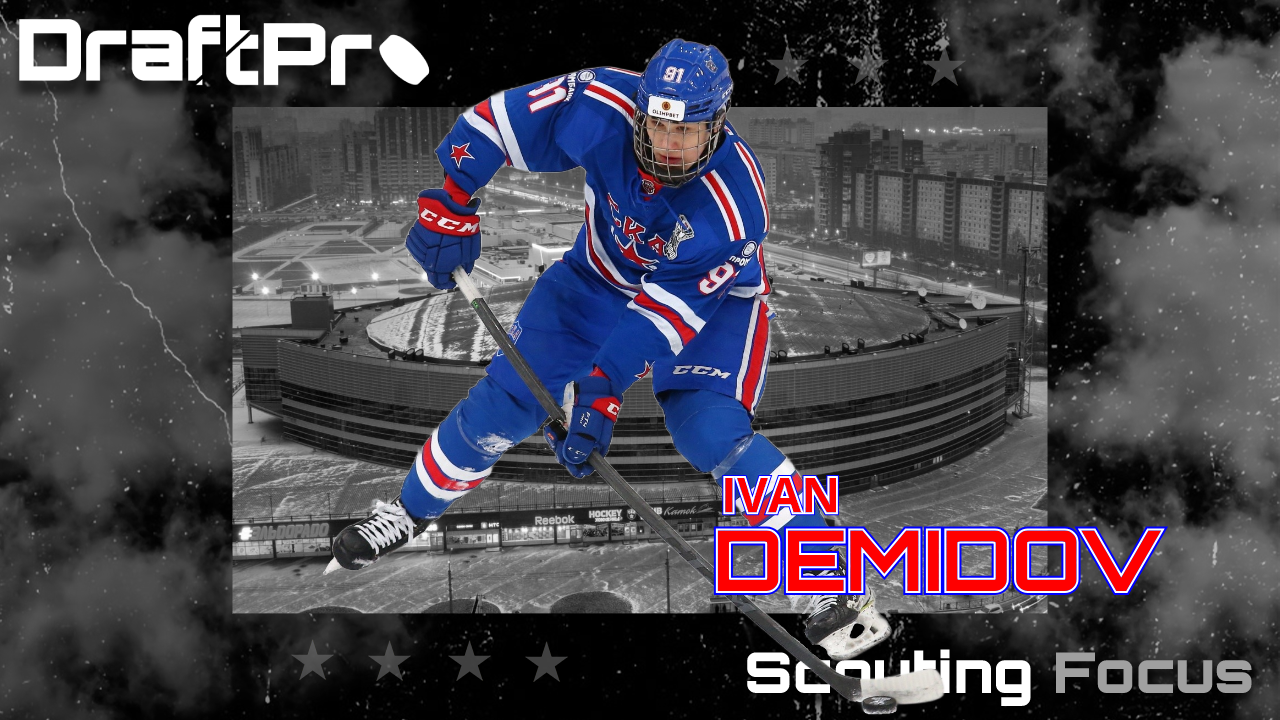
Ivan Demidov is the next big talent tearing it up in Russia.
One of the highlighting stars of the 2024 NHL Draft when it comes to European skaters who unfortunately suffered a terrible injury that may withstand him from playing. Last season in the MHL right before he entered the KHL, Ivan truly showed his worthiness as he was the best player on SKA-St. Petersburg with an outstanding 62 points in 41 games.
Ivan Demidov already was on a positive start in the KHL, however, he unfortunately is a long term injury reserve. Even though the KHL is a very defensive men’s league, Ivan kept up to solid pace as he was a crucial player on the offense while only playing 3rd line.
Here at DraftPro, we have him currently ranked at 3rd overall in our latest ranking and has gained tremendous attention from scouts all over the world due to his electric playstyle. Let’s finally dive into what makes Ivan Demidov so special who could have a potential comparison to many NHL stars, as well as him displaying his most crucial tools that will serve him in the biggest league.
The question is why is Demidov seen as a top prospect for the 2024 NHL Draft in June? Tyler Ballesteros-Willard with Draft Prospects Hockey breaks down Demidov’s game as he tries to answers that question.
As a note, Ivan Demidov would be wearing #11 or #91 in blue or white for SKA St. Petersburg.
Allusive Skating
One of the true highlighting aspects of Demidov being an electrifying player his that he shows tremendous skating ability when transitioning through each and every zone. Every time he gains possession of the puck, he shows such confidence in his ability to the point where he can beat you by skating alone. The main aspect of his skating he demonstrates very effectively is his tomahawking abilities as he will swipe from side to side to create unease for the defensemen. Due to his tremendous lateral movement, he can easily go from one direction into another in a nick of time which he will even use his quick feet to his advantage.
Speaking of quick feet, including the combination of his world class agility, he displays tremendous speed to the point where he can beat you in a drag race. With his hyperactive extension and drive, it looks like he even displays a second step which gives him a tremendous advantage over his competitors. Here is a clip that displays him beating his opponents just with his skating alone.
Here is a short clip on how he uses his tomahawk skating abilities to confuse the opposition to create space for himself to make the best play available.
Here is a short demonstration on how Ivan with his quick feet can split the defense and put himself in an odd chance against the goaltender. This is key as he understands when to use his speed and agility to his advantage and does not overuse it.
Puck Skills
In addition to his Kirill Kaprizov like skating ability, his puck skills are the absolute definition of wizardry. His stick handling and deking ability are so fast to the point where his hands are as quick as his feet. What is so unique about his puck handling abilities to is that he does not telegraph his movements very easily which creates a lot of confusion for the opponents to the point where Ivan will deke out two to three opponents at once to give himself the space that he needs. Even when describing his puck control, he does not give that puck up very easily to the point where it is almost glued. Even with little time and space with the defenseman trying to hit him or poke the puck away from him, his stick handling is the definition of precision as there is a high percentage rate of him passing by his opponents with ease.
His passing ability, just the absolute definition of outstanding. How, very simple, he can dish the biscuit with ease to the point where it is threading the needle through two to three players at once. Each pass that he creates, they look so soft as he just lobs it like it is nothing, but in reality, they also come very crisp and hard which does not come very easily from many NHL players today such as mainly Patrick Kane with the elite puck skills that Ivan has in his toolbox.
Here is a clip below of Ivan just absolutely crippling the defense with his NHL like stick handling and deking abilities. This shows while he is facing two to three opponents at once, Ivan has such confidence to the point where he will take it himself.
Here is another clip of Ivan but this time using his tremendous passing abilities just absolutely threading the needle between the defensive players.
Locked-in Marksmanship
When it comes to picking targets from any location on the ice, there is none better in Europe of the 2024 NHL draft than Ivan Demidov. The fact of the matter is each puck he shoots is off in a heartbeat. When shooting from up close, he is so accurate to the point there may be only a puck size open, and he will thread it through like no tomorrow. The key for him is him in the slot, he knows in advance where he wants to shoot, and he does not even take his time which for him is absolutely key. When discussing the power of his shot, while it may not be Alex Ovechkin level yet, not only he can get it off quick, but they can also be heavy. When discussing the shots from the outside the circles or further out, this is where he displays his power due to his one-timers. His accuracy though, actually comes from his wrist shots. It becomes tremendously satisfying the way he displays his drag release shot as he doesn’t even take a second to create his space and power.
The clip below demonstrates how Ivan uses his tremendously quick release from in tight with high velocity as well as his precise accuracy with this very low inside the slow snapshot with no time to kill.
The following clip below demonstrates his shooting abilities from far out with his power while maintaining the accuracy with his toe-drag release mechanism as it finds its way through a crowd.
Master Offensive Awareness
Of course, the aspect that ties everything into what makes Ivan Demidov one of the more special players of the 2024 NHL Draft, that is his wizardry of a mind. Every time he is in the offensive zone, he is in his own league when it comes to playing chess as not only, he looks like he is a couple of steps ahead in front of the opposition, but he is not a cookie cutter type player. When trapped in a situation, he loves trying to figure out ways to get out of trouble creatively and very beneficial to him. He becomes similar to having the intelligence of “Mega Mind” in the offensive zone because of the fact he is always hyperactively thinking in advance. Not to mention about his hyperactive thinking, he has the vision and the intelligence of a jumping spider as not only he anticipates and telegraphs the opponents, but he also anticipates and reads his teammates at a very sufficient level.
One aspect that is key for Demidov is that he shows tremendous motivation in his game when trying to play defensive in the offensive zone when trying to retrieve the puck back. When discussing about his awareness of his surroundings such as the opponents and his players, he looks like he has eyes in the back of his head considering he can read his own teammates at first class. An underrated portion of his offensive awareness too is his positional awareness. What is unique about this is that even though he primarily plays on the wing, he will give the support as much like he were playing as a centerman which is not seen very often. A spot too he loves playing around is just near the trapezoid area which is also known as “Gretzky’s Office”. That being said, even though behind the net his favourite spot to use his incredible mind, he is versatile with his mind anywhere in the offensive zone as well as transitioning up the rush when lugging the puck.
In this following clip, Ivan demonstrates why he is incredible at anticipating his teammates when they are not even at their preferable spot yet which leaves the opposition into disbelief and unorganized off the draw.
The clip below demonstrates Ivan’s unique abilities of supporting his teammates around the boards in the offensive zone as well as creating his tremendous vision as he made this play very subtle but very transitioning which translated to a goal.
Improvement Needs
As much of a special player Ivan Demidov is, there are still some inconsistencies in his game. The aspects will be divided as follows: Minor improvements, and the major improvements. The minor improvements are detailed in mainly in his defensive game as even though he is considered average defensively for his playstyle, there are some minor inconsistencies that can be improved in a short period of time. The major improvements will be focused on his physicality aspect because not only it highlights his inactivity in throwing hits which does not correlate well with the NHL level. Another aspect that does not help Demidov’s case is that he does not handle hits well as he can get very effected by it which unfortunately led to his injury.
When discussing the minor changes needed to Ivan’s game is that yes, he is crucial when shot blocking whenever he is in position as he has good technique when blocking. The key word however as a winger, he sometimes plays too low which leaves the defense wide open due to his habits of also playing center part time. When transitioning through the neutral zone on the defense, yes he may try to stick lift a lot to try to help his defensive pair when retrieving the puck back, the problem is for Ivan is that sometimes there is a lack of motivation when playing in the defensive end similar to William Nylander. This then translates into the following risks, a penalty like hooking or slashing, or a lost odd man rush which translates into a crucial scoring chance. Another small consistency that he has to work on is him having the puck in the defensive end. Even though Ivan has a high confidence level at making plays happen from nothing, he has to play a little simpler in the defensive end to create a lower risk percentage of making a turnover. Other than those small consistencies, we absolutely believe he can overcome it in a short period of time due to his active problem-solving mind.
When discussing the major improvements needed to grow Ivan’s game is that he does not have a physical side to his game, and it mainly involves him being a finesse player. Even though Ivan has not fully matured yet, for his age, he is 170 when he should be aiming for 180 in order for him to become more durable on the ice. When discussing the physicality aspect itself, he has very little interest in throwing hits but most importantly, sacrificing his own body to weaken the opposing team. Each time he throws a hit, not only that there is lack of follow through in his checks, but what is important is that there is lack of intent to weaken the opponent. Once in a while too, he can get reversed. When taking a hit, he does not try to brace the hit as he just tries to slip away which could then place him in very vulnerable positions. The game of hockey in North America can become very rough and if Ivan does not want having to deal with anything physically, then he will have to learn the difficult way. At the end of the day, not only he needs to build the muscle in order to build his longevity, but most importantly, his confidence and intent to cause trouble and harm to the opposition.
Summary
At the end of the day, what you get in a player like Ivan Demidov is a generational offensive dynamo with the mind of a master chess player. Each time he gains possession of the biscuit, his ability to think many steps ahead of the opponent, find creative solutions involving his puck handling abilities, as well as creating tremendous execution at creating space with his skating or precisely hitting the net is considered to be up to par at the NHL level. It is so translatable as when he has the puck, he can almost have the level of “Speedy Gonzalez” by quickly transferring from one direction to the other with his incredible edgework in a short period of time. Once he develops and fixes his inconsistencies of lack of physicality as well as him having minor inconsistencies in the defensive end, due to his incredible “East-West” style of player, he will no doubt about it be a 1st line winger of the future and could be compared to a lighter end version of Alex Kovalev.